If you have ever seen a photograph of Raja Ampat, chances are you have already seen Wayag. The cluster of mushroom-shaped karst islets rising from a glassy turquoise lagoon is the image that defines Indonesia's most famous archipelago, and in 2026 it remains one of the most rewarding — and most remote — destinations in the country. Wayag is not a place you pass through on the way to somewhere else. It is a destination in its own right, reached only by boat, shared with seabirds, reef fish, and the occasional manta ray, and best experienced slowly, from the water and from the famous viewpoint above the lagoon.
This Wayag Islands travel guide covers everything you need to plan a visit: where Wayag is and why it matters, the viewpoint hike, the lagoons and beaches, snorkeling and diving, how to get there from Sorong and Waisai, permits and conservation rules, where to stay, the best time to visit, practical tips, and a suggested itinerary. Whether you arrive on a liveaboard or a speedboat day trip, Wayag rewards travelers who come prepared and travel lightly.
Where Wayag Is and Why Visit
Wayag sits in the far north of the Raja Ampat archipelago, in Southwest Papua province, well north of the main island of Waigeo. The Wayag group is made up of two main islands, Wayag Besar and Wayag Kecil, surrounded by a scattering of tiny karst islets. Unlike the larger, inhabited islands of Raja Ampat, Wayag is essentially uninhabited — there are no villages, no shops, and no roads. What it has instead is a seascape of extraordinary beauty: steep limestone islands draped in green vegetation, hidden lagoons, white-sand beaches that appear and disappear with the tide, and some of the clearest water in Indonesia.
Wayag's fame comes from its shape. Over thousands of years, rain and sea have sculpted the limestone into narrow bases topped with wider, forested crowns, so the islets look like mushrooms rising from the sea. Seen from the water, they are beautiful. Seen from the viewpoint above the lagoon, with dozens of islets scattered across shades of turquoise and deep blue, they are unforgettable. That panorama is the single most photographed view in Raja Ampat, and it is the reason most travelers make the long journey north.
Beyond the scenery, Wayag is part of one of the most biodiverse marine regions on Earth. Raja Ampat sits at the heart of the Coral Triangle, and its reefs support an extraordinary variety of coral, reef fish, turtles, and rays. Around Wayag, snorkelers and divers regularly encounter schools of fusiliers, reef sharks, turtles, and, with luck, manta rays gliding through the channels between the islets. The remoteness that makes Wayag hard to reach is also what keeps its reefs so healthy.
Wayag's mushroom-shaped karst islets rise from a turquoise lagoon.
The Viewpoint Hike: Wayag's Must-Do Experience
The climb to the Wayag viewpoint is the highlight of almost every visit, and it is worth every step. The trail starts near the beach where boats anchor and climbs steeply up a rocky, forested ridge. There is no paved path and no handrail for most of the way — the route follows natural rock, roots, and a few rough steps, and it can be slippery after rain. Most visitors reach the top in well under an hour, but the climb is steep and exposed in places, so it should not be underestimated.
Good footwear is essential. Wear sturdy shoes or sandals with grip, not flip-flops, and bring water, sun protection, and a small bag so your hands stay free for the steeper sections. Your boat crew or guide will usually lead the way and point out the safest footholds. Take your time, rest when you need to, and keep an eye on the weather — the rock becomes much more slippery when wet, and guides may advise against climbing in heavy rain.
At the top, the effort pays off immediately. The viewpoint looks out over a maze of karst islets and lagoons, with the sea shifting from pale aqua near the sand to deep sapphire further out. Early morning and late afternoon offer the softest light for photographs, and the breeze at the summit is a welcome relief after the climb. Spend time simply looking: the scale of the seascape only sinks in slowly, and no single photograph quite captures it. Bring a hat and sunscreen, because there is little shade at the top, and take all litter back down with you.
The viewpoint hike above Wayag rewards climbers with a panorama of islets and lagoons.
Lagoons and Beaches
Wayag's lagoons are as much a part of the experience as the viewpoint. Sheltered between the karst islands, the lagoons are calm, shallow in places, and brilliantly colored — perfect for swimming, floating, and kayaking. Many liveaboards and speedboats anchor in or near a lagoon, and small dinghies or kayaks are the best way to explore the narrow channels between islets, where the water turns an almost unreal shade of green-blue.
The beaches at Wayag are small, wild, and wonderfully quiet. Expect powdery white sand fringed by forest, with no facilities of any kind — no warungs, no sun loungers, no shade structures. That is part of the appeal, but it also means you should bring everything you need: drinking water, snacks, reef-safe sunscreen, and a dry bag for cameras and phones. Some beaches are nesting areas for turtles or seabirds, so follow your guide's instructions, keep your distance from wildlife, and never leave anything behind.
Because Wayag is uninhabited, the rhythm of a visit is set by the sea and the sun. Mornings are usually calm and clear, making them ideal for snorkeling and kayaking. Around midday the light is at its brightest and the water at its bluest, which suits photography from the boat. Late afternoon brings softer light and, often, a breeze. If your trip allows it, staying overnight on a liveaboard near Wayag lets you experience the lagoons at dawn and dusk, when the islets are at their most atmospheric and the water is at its calmest.
Snorkeling, Diving, and Manta Encounters
The waters around Wayag offer excellent snorkeling, even for beginners. Coral gardens fringe many of the islets, and just below the surface you can expect to see clouds of small reef fish, anemones, giant clams, and the occasional turtle cruising past. Visibility is often superb, but currents can be strong in the channels between islands, so always snorkel with a buddy, wear a life jacket if you are not a confident swimmer, and follow your guide's advice about where it is safe to enter the water.
For divers, Wayag and the surrounding northern reefs are a highlight of any Raja Ampat itinerary. The area is known for healthy hard and soft corals, dramatic underwater topography, and abundant fish life. Dive sites vary from gentle coral slopes to current-swept channels, so operators match sites to the experience level of the group. If you are a certified diver, check with your liveaboard or dive operator in advance about which sites are planned and what experience they recommend.
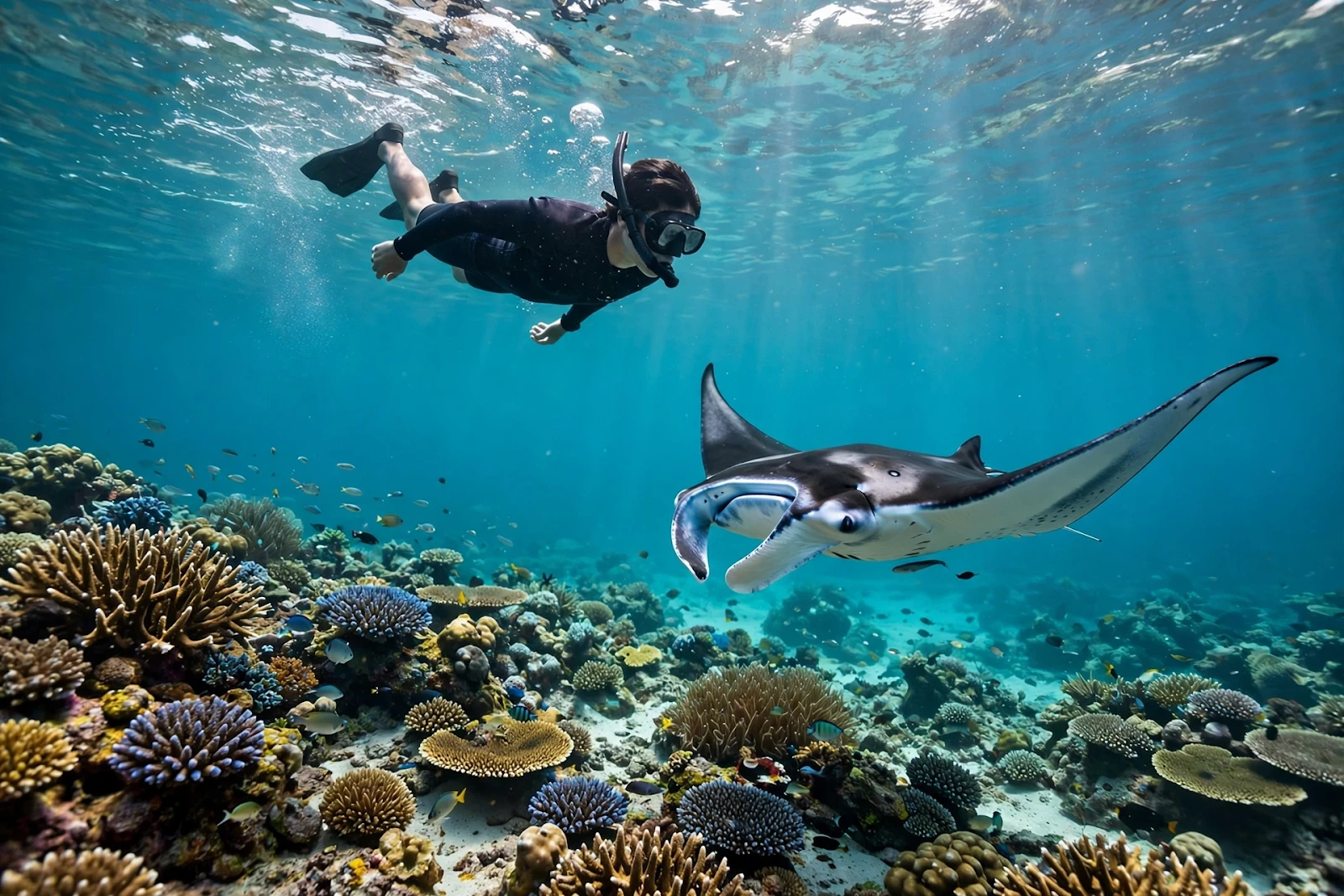
Manta rays are one of Raja Ampat's signature encounters, and the waters around Wayag are one of the places where they are seen, particularly at cleaning stations where mantas circle slowly while small fish clean their skin. Sightings are never guaranteed — mantas are wild animals, and their presence depends on season, tides, and luck — but patient snorkelers and divers are often rewarded. If you are lucky enough to meet a manta, keep a respectful distance, never chase or touch it, and let it set the pace of the encounter. The same rule applies to turtles, sharks, and all other marine life: observe quietly, and the animals will stay relaxed and close.
Snorkeling near Wayag brings encounters with manta rays and reef life.
How to Get There: Via Sorong, Waisai, and the Sea
Getting to Wayag takes planning, and that is part of why it feels so special when you arrive. Most international and domestic travelers fly first to Sorong, the gateway city for Raja Ampat, then continue by ferry or speedboat to Waisai, the main town on Waigeo. From Waisai, Wayag is a long boat journey north — far too far for a casual day trip by slow boat, and best reached as part of a multi-day liveaboard itinerary or a dedicated speedboat tour.
Liveaboards are the most popular way to visit Wayag. A typical Raja Ampat liveaboard spends several days cruising the archipelago, and the northern route includes Wayag alongside other highlights such as the Fam Islands and the northern reefs. Liveaboards handle navigation, meals, guides, and dive and snorkel logistics, which makes them an excellent choice for travelers who want to see Wayag without organizing every leg themselves. Boats range from simple budget vessels to comfortable mid-range and luxury options, so compare itineraries carefully and confirm that Wayag is actually on the route — not every Raja Ampat cruise goes that far north.
Speedboat tours from Waisai are the alternative for travelers short on time. These are long, fast, and exposed to open sea, so they suit confident travelers and calm-weather days, and they should always be booked through a reputable local operator with proper safety equipment. Check locally what is running in your travel window, how long the journey takes in current conditions, and what is included, such as snorkeling gear, meals, and park permits. Whatever route you choose, build flexibility into your schedule: sea conditions in northern Raja Ampat can change quickly, and captains may adjust plans for safety.
Permits and Conservation Rules
Raja Ampat operates a marine park permit system, and visitors are expected to hold the relevant permit before entering the archipelago's protected areas. Permits are normally arranged through your tour operator, liveaboard, or homestay, but it is wise to confirm this when you book and to carry proof of your permit with you. Check locally for the current rules and arrangements before you travel, as permit systems and fees can change, and the most reliable information comes from your operator or the local tourism office.
Conservation rules at Wayag are straightforward and worth taking seriously. Do not stand on or touch coral, do not collect shells, coral, or sand, and do not feed fish or other wildlife. Use reef-safe sunscreen, take all rubbish back to your boat, and avoid single-use plastics where you can. On land, stay on established paths during the viewpoint hike, keep noise down near nesting birds, and respect any areas your guide asks you to avoid. Wayag's beauty survives because it is remote and lightly visited — every traveler who treats it gently helps keep it that way.
Local communities are central to Raja Ampat's conservation story. Many homestays, guides, and boat crews come from villages across the archipelago, and tourism income supports both livelihoods and local marine protection efforts. Choosing locally owned operators, hiring local guides, and respecting village customs when you pass through inhabited islands are simple ways to make your visit a positive one for the people who call Raja Ampat home.
Where to Stay: Liveaboard vs Homestay Bases
There is no accommodation on Wayag itself, so the choice is between sleeping on the water or basing yourself further south. A liveaboard is the simplest option for Wayag: you sleep on the boat, wake up near the islets, and spend your days snorkeling, hiking, and cruising between sites without long daily transfers. Liveaboards suit travelers who want to cover a lot of Raja Ampat in a few days and who are comfortable with boat life.
The alternative is to stay in a homestay or small resort on Waigeo or a nearby island and visit Wayag on a longer speedboat trip or as part of a multi-day charter. Homestays offer a closer connection to local island life, home-cooked meals, and a slower pace, and they are often the most affordable way to experience Raja Ampat. The trade-off is distance: Wayag is a long way from the main homestay areas, so a Wayag trip from a land base is a full, long day on the water and depends heavily on weather and sea conditions. Whichever option you choose, book well in advance for peak season, and confirm exactly what is included — transfers, meals, snorkeling gear, guides, and permits — before you pay.
Best Time to Visit Wayag
The most popular time to visit Raja Ampat is generally the drier, calmer period from around October to April, when seas are usually calmer and visibility is at its best. This is also peak season, so liveaboards and homestays fill up early, and booking ahead is essential. Within that window, conditions still vary from week to week, and northern areas like Wayag can be rougher than the sheltered southern islands, so always check the forecast and listen to your captain's judgment.
The wetter months, roughly from May to September, can bring stronger winds and rougher seas, particularly in the north. Some operators run fewer trips in this period, and Wayag may be harder to reach. That said, Raja Ampat is a year-round destination in the sense that diving and snorkeling continue through the year, and quieter months can offer lower prices and fewer visitors. If you travel outside peak season, choose an operator with experience in northern routes, allow extra days in case of weather delays, and be prepared to adjust your itinerary.
For the viewpoint hike specifically, aim for a clear morning if you can. Early light is beautiful, the rock is usually dry, and you will be back down before the heat of the day. For mantas and marine life, there is no single guaranteed week — your best strategy is a multi-day trip that gives you several chances in the water, rather than betting everything on a single snorkel session.
Practical Tips for Wayag
What to Pack
Pack light but thoroughly. Essentials include sturdy footwear for the hike, reef-safe sunscreen, a hat, a reusable water bottle, a dry bag, and a basic first-aid kit. Bring your own snorkeling gear if you prefer a good fit, although most operators provide it. Cash is useful in Waisai and in villages, as card facilities are limited, and a power bank is worth its weight on a boat with shared charging points. There are no shops at Wayag, so double-check your supplies before leaving Waisai.
Health, Safety, and Connectivity
Wayag is remote, and medical facilities are far away, so prevention matters. Bring any medication you need, protect yourself against sun and dehydration, and tell your guide about any health conditions or swimming ability before you get in the water. Mobile signal is unreliable or absent around Wayag, so download offline maps, let family know your itinerary in advance, and enjoy the disconnection — it is part of the experience. Travel insurance that covers remote evacuation and water activities is strongly recommended; check locally what your policy covers before you travel.
Responsible Travel Checklist
Keep your visit light on the environment: refill water bottles, avoid single-use plastics, use reef-safe sunscreen, never touch coral or marine life, and carry out everything you carry in. Ask before photographing people in villages, dress modestly when visiting inhabited islands, and support local guides and homestays. Small choices, repeated by every visitor, are what keep Wayag's reefs and lagoons in the condition that makes them famous.
Suggested Itinerary: Wayag in a Northern Raja Ampat Trip
A Wayag visit works best as part of a northern Raja Ampat route rather than a standalone dash. On a typical multi-day liveaboard, you might spend the first days around the Dampier Strait and the Fam Islands, getting used to the water and the pace of boat life, before heading north to Wayag. Arrive at Wayag in the afternoon, anchor in a sheltered lagoon, and spend the rest of the day swimming and kayaking among the islets.
The next morning, rise early for the viewpoint hike while the light is soft and the rock is dry. After the climb, spend the late morning snorkeling the nearby reefs, then cruise slowly through the lagoons in the afternoon, stopping at a beach for a swim. If your itinerary allows a second day at Wayag, use it for diving or a longer kayak exploration — the second day is when the scale and quiet of the place really sink in, and it gives you another chance at a manta encounter.
On the way back south, many routes stop at the Fam Islands or the Penemu viewpoint, which offers a smaller-scale version of Wayag's famous panorama and a good comparison. Finish your trip in Waisai with a relaxed evening, a local meal, and time to sort photographs before your onward journey. If you are short on time, a dedicated speedboat trip can compress the Wayag highlights into a single long day, but the multi-day version is far more rewarding — and far less rushed.
Sponsored: see today's best travel deals and offers
Frequently Asked Questions
Where exactly are the Wayag Islands?
Wayag is a small, uninhabited island group in the far north of Raja Ampat, in Southwest Papua, Indonesia. It lies well north of Waigeo, the archipelago's largest island, and is reached only by boat, usually as part of a liveaboard itinerary or a dedicated speedboat tour from Waisai.
How difficult is the Wayag viewpoint hike?
The hike is short but steep, following rocky and sometimes slippery natural terrain with no paved path for most of the way. Most reasonably fit visitors reach the top in well under an hour, but sturdy footwear, water, and a guide are essential, and the climb should be avoided in heavy rain when the rock becomes slippery.
Can I visit Wayag on a day trip?
It is possible via a long speedboat trip from Waisai, but it makes for a very long day on open water and depends on weather and sea conditions. A multi-day liveaboard is the more comfortable and reliable way to visit Wayag, and it gives you time for the viewpoint, snorkeling, and the lagoons without rushing.
Do I need a permit to visit Wayag?
Yes, visitors to Raja Ampat's protected marine areas are expected to hold the relevant marine park permit, which is normally arranged through your tour operator, liveaboard, or homestay. Confirm the current arrangements when you book and carry proof of your permit with you, as rules can change — check locally for the latest information.
When is the best time to visit Wayag?
The calmer, drier period from around October to April is generally the most popular time for Raja Ampat, with better sea conditions and visibility, though it is also peak season and books up early. Outside that window, Wayag can be rougher and harder to reach, so allow extra days and choose an operator experienced with northern routes.
Wayag is the kind of place that stays with you long after the boat ride home — a maze of green-topped islets, impossibly blue lagoons, and a viewpoint that lives up to every photograph. Plan carefully, travel lightly, and give yourself enough days to enjoy it properly. Have you visited Wayag, or is it on your Raja Ampat list for 2026? Share your plans, questions, and tips in the comments below — we would love to hear about your trip.




Comments
Post a Comment