At the far eastern tip of Madura Island, where the Java Sea meets a slower, older rhythm of life, sits Sumenep — a regency that surprises almost everyone who makes the journey. Most travellers crossing the Suramadu Bridge from Surabaya head for Madura's better-known western towns and stop there. Those who keep going east, however, are rewarded with something rare in modern Indonesia: a royal town that still feels like a royal town, a coastline dotted with small islands, and beaches where the sand blushes pink under a tropical sun.
Sumenep is not a resort destination, and that is precisely its charm. There are no crowded beach clubs here, no long queues for a photo spot, and no feeling that the place was built for visitors. Instead you will find a working harbour town with a palace at its centre, grand old mosques, batik workshops, fishing villages, and a scatter of Gili islands offshore that remain blissfully quiet. This Sumenep travel guide brings it all together: the royal heritage, the old town, the island hopping, the food, and everything you need to plan a trip in 2026.
Why Visit Sumenep in 2026?
Sumenep rewards curious travellers. It is one of the few places in Indonesia where you can stand inside a genuine royal palace in the morning, eat lunch in a traditional market, and swim off a pink-sand beach in the afternoon. The regency combines three kinds of travel in one compact area: culture, coast, and island adventure. The town itself is walkable and relaxed, the surrounding countryside is green and dotted with teak trees and salt ponds, and the sea to the east hides islands that feel genuinely remote.
For travellers who have already seen Bali, Yogyakarta, or Lombok, Sumenep offers a different side of Indonesia — quieter, more traditional, and refreshingly unpolished. Madurese culture is strong here: the language, the food, the batik, and the famous bull-racing tradition of karapan sapi all belong to this island. Visiting with respect and an open mind is the key to enjoying it. Come for the palace and the beaches, and you will leave remembering the people just as much as the places.
Royal Heritage: Keraton Sumenep and the Palace Museum
The heart of Sumenep is its keraton, the royal palace built in the 18th century during the reign of Panembahan Somala. Unlike many Indonesian palaces that feel like museums frozen behind glass, Keraton Sumenep still feels alive. Its whitewashed walls, carved wooden pavilions, and elegant courtyards reflect a blend of Javanese, Madurese, Chinese, and European influences — a reminder that Sumenep was once a trading port open to the wider world.
Keraton Sumenep, the royal palace at the heart of Madura's heritage.
Inside the complex, the palace museum displays royal heirlooms, traditional weapons, ceramics, old photographs, and everyday objects from court life. Guides are usually available and can explain the history of the Sumenep sultanate, its rulers, and its role in Madura's story. Take your time here. The details matter: the carved doors, the painted ceilings, the layout of the courtyards, and the quiet gardens where court life once unfolded.
A practical note: dress modestly when visiting the palace and other historic sites in town, and check locally for opening hours, as they can vary on public holidays and during religious observances. Morning visits are best, when the light is soft and the courtyards are at their most photogenic.
The Old Town: Mosques, Markets, and Colonial-Era Streets
A short walk from the palace brings you to Sumenep's old town, where the Masjid Agung Sumenep — the grand mosque — stands as one of Madura's most beautiful religious buildings. Its distinctive architecture, with a tiered roof and a striking gateway, blends Javanese and Chinese design elements. Even if you do not enter during prayer times, the exterior and the surrounding square are well worth a slow wander.
Nearby, the town's markets and shophouse streets offer a glimpse of everyday Sumenep. Look for batik Sumenep, known for its fine patterns and bright colours, sold in small workshops and family shops around town. If you have time, ask about visiting a batik maker — watching the wax-and-dye process up close is far more memorable than simply buying a finished piece. The old harbour area, meanwhile, is a good place to watch fishing boats come and go, especially in the early morning.
Other historic stops worth adding to your walk include the royal cemetery complex at Asta Tinggi, set on a hill with views over the town and countryside, and the old Dutch-era buildings scattered through the centre. None of these places are polished tourist attractions, which is part of their appeal: they are real places, still used by real people, and best enjoyed slowly.
Island Hopping: The Gilis of Sumenep
Off Sumenep's coast lies a string of small islands — the Gilis — each with its own character. Island hopping here is low-key and flexible. Boats can usually be arranged from the mainland harbours, and local operators or your guesthouse can help with arrangements. Because schedules and sea conditions change, it is wise to confirm boat times the day before and to build a little slack into your plans.
The best-known islands include Gili Genting, Gili Iyang, and Gili Labak. Gili Labak is the classic day-trip beach island, with white sand and clear water that draws weekend visitors from across Madura. Gili Genting offers a quieter, more village-like atmosphere alongside its famous pink beach. Gili Iyang, meanwhile, is known for its fresh air and dramatic coastline. Together, they make a wonderful two- or three-day island-hopping circuit from a Sumenep base.
Pack for island days the simple way: sun protection, plenty of water, a dry bag for your phone and camera, and cash, since small islands may have limited card payment options. Snorkelling gear can often be rented locally, but if you have your own mask, bring it — the clear water around the Gilis rewards a good look below the surface.
Pink Beaches: Gili Genting's Sembilan Beach
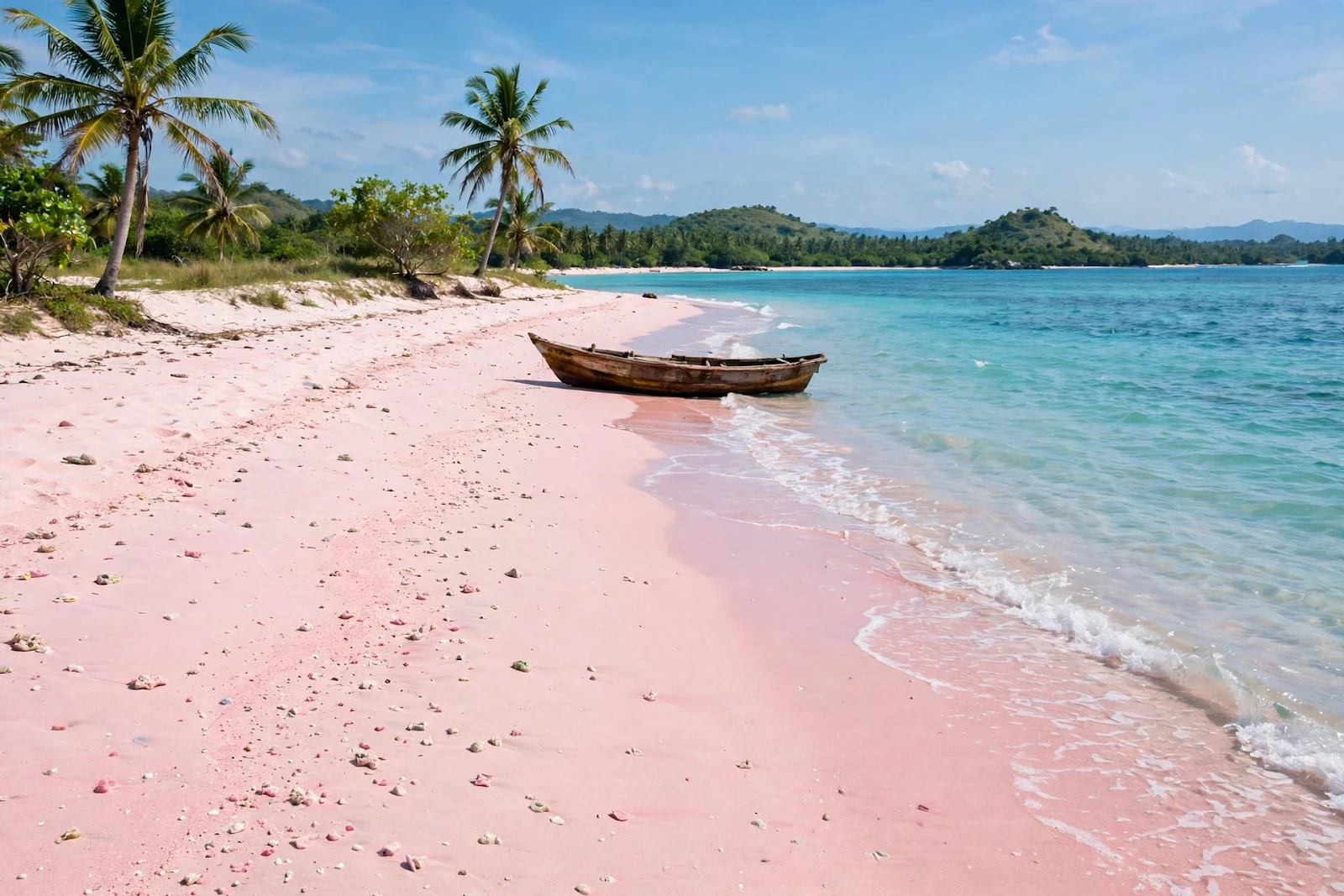
One of Sumenep's most delightful surprises is the pink sand of Gili Genting. At Sembilan Beach, tiny fragments of coral mix with white sand to give the shoreline a soft pink tint, most visible in bright sunlight and at the water's edge. It is not the dramatic bubblegum pink of some famous beaches elsewhere in the world — it is subtler, prettier, and far less crowded.
Gili Genting's pink sand and turquoise water.
Come here to swim, walk the shoreline, and enjoy a long, lazy beach afternoon. The water is typically calm and turquoise, making it good for wading and snorkelling close to shore. Small warungs near the beach serve simple food and drinks, but it is still a good idea to bring water and snacks, especially if you plan to stay through the afternoon. As with all of Sumenep's islands, take your rubbish with you and leave the beach as clean as you found it.
If you can, time your visit for a weekday. Weekends bring local families and day-trippers, which adds a lively atmosphere but also more boats and noise. On a quiet weekday, Sembilan Beach can feel almost private — just pink sand, turquoise water, and the sound of the waves.
Gili Iyang: The Island of Fresh Air and Rugged Cliffs
Gili Iyang has earned a nickname as an island of fresh air, and visitors often remark on how clean and easy the air feels here. Whether or not you notice a scientific difference, the island's atmosphere is genuinely refreshing: open skies, sea breezes, and a landscape of limestone cliffs, coastal vegetation, and quiet villages.
Gili Iyang, famous for its fresh air and rugged coastline.
The island's rugged coastline is its star attraction. Limestone cliffs drop to clear blue-green water, and viewpoints along the coast offer sweeping panoramas that photographers love. Inland, the pace is slow: small roads wind past gardens and village houses, and the island is best explored on foot or by rented motorbike. There are caves and natural rock formations to discover too, so ask locals about the current must-see spots when you arrive.
Gili Iyang is also a good place to simply slow down. Stay a night if you can, rather than rushing through on a day trip. Watching the sunset from a cliff viewpoint, eating a simple seafood dinner in a village warung, and waking to birdsong and sea air is the kind of experience that stays with you long after the trip ends.
What to Eat in Sumenep
Madurese food is bold, savoury, and deeply satisfying, and Sumenep is a wonderful place to try it at its source. Start with soto Madura, a rich beef soup served with rice or lontong, and bebek songkem, a slow-cooked duck dish wrapped and steamed in banana leaves that is a Sumenep speciality. Satay Madura, with its thick peanut sauce, is famous across Indonesia, but it tastes best here, close to home.
Seafood is another highlight. Grilled fish, squid, and prawns appear on menus across town and on the islands, often served with rice, sambal, and fresh vegetables. For snacks, look for traditional cakes and sweets in the markets, and try the local coffee in a small warung while watching town life go by. If you are unsure what to order, ask your host or a friendly local — Madurese hospitality is warm, and food recommendations are given generously.
How to Get to Sumenep from Surabaya
Most travellers reach Sumenep via Surabaya, East Java's capital. From Surabaya, cross to Madura over the Suramadu Bridge — the longest bridge in Indonesia — then continue east through Bangkalan, Sampang, and Pamekasan before reaching Sumenep. The full drive from Surabaya typically takes around four to five hours depending on traffic and stops, so an early start is wise.
Public transport is available, with buses running from Surabaya's bus terminals towards Sumenep, but schedules can be irregular, so check locally on the day. Many travellers prefer to hire a car with a driver for the day or for the whole trip, which makes the journey far more comfortable and allows stops along the way — for example at Sampang's beaches or Pamekasan's batik villages. If you plan to island-hop, arrange your Sumenep base first, then sort boats locally with help from your accommodation.
Where to Stay in Sumenep
Sumenep town has a range of simple hotels and guesthouses, from budget rooms to more comfortable mid-range options. Staying in town puts the palace, mosques, markets, and restaurants within easy reach, and makes day trips to the islands straightforward. For island nights, accommodation on Gili Genting and Gili Iyang is more basic — small guesthouses and homestays rather than resorts — so set expectations accordingly and book ahead in busy periods.
Whatever you choose, confirm your booking before arrival and ask your host about boat arrangements, local guides, and current conditions on the islands. Hosts in Sumenep are often the best source of up-to-date practical information, and a good host can transform a good trip into a great one.
Best Time to Visit Sumenep
The dry season, roughly from April to October, is generally the best time to visit Sumenep, with calmer seas for island hopping and sunnier days for beach time. The wet season, from around November to March, can still be enjoyable, but rougher seas may disrupt boat schedules, so keep your island plans flexible if you travel then.
If your dates are flexible, consider timing your visit around a local cultural event. Karapan sapi, Madura's famous bull racing, is held at various times and places across the island, and other festivals and ceremonies take place through the year. Dates vary, so check locally before you travel — and remember that event days can be busy, so book accommodation early.
Practical Tips for Visiting Sumenep
A few practical tips will make your Sumenep trip smoother. First, bring cash: ATMs exist in Sumenep town, but small islands and rural warungs are cash-only. Second, dress modestly, especially in town and at religious sites — Madura is a predominantly Muslim region, and respectful dress is appreciated. Third, learn a few Indonesian phrases; English is not widely spoken outside hotels, and even basic greetings go a long way.
Fourth, protect yourself from the sun and stay hydrated, particularly on island days when shade can be limited. Fifth, be patient with transport: boat times and bus schedules can shift, and a relaxed attitude is the best travel companion in Sumenep. Finally, travel responsibly — support local guides, buy batik directly from makers where possible, and leave beaches and islands cleaner than you found them.
Suggested 3-Day Sumenep Itinerary
Day one: arrive from Surabaya, settle into your Sumenep town hotel, and spend the afternoon exploring Keraton Sumenep and the palace museum, followed by Masjid Agung Sumenep and the old town streets. End the day with soto Madura and a sunset walk near the harbour.
Day two: take an early boat to Gili Genting and spend the day at Sembilan Beach — swimming, snorkelling, and walking the pink sand. Return to town in the late afternoon, or stay overnight on the island if you prefer a slower pace.
Day three: head to Gili Iyang for its cliffs, viewpoints, and fresh sea air, with a seafood lunch in a village warung. If time allows, add Gili Labak for a final swim before returning to Sumenep town and onward to Surabaya. Three days gives you the highlights without rushing; four or five days lets you add Asta Tinggi, batik workshops, and a second island night.
Sponsored: see today's best travel deals and offers
Frequently Asked Questions
Is Sumenep worth visiting?
Yes, especially if you enjoy culture, history, and quiet beaches. Sumenep combines a real royal palace, a charming old town, and island hopping to pink beaches and rugged cliffs, all without the crowds of better-known Indonesian destinations. It suits travellers who like slow, authentic places.
How many days do I need in Sumenep?
Three days is a good minimum: one day for the town and palace, and two days for island hopping. With four or five days you can add extra islands, batik workshops, and a more relaxed pace, including an overnight stay on Gili Genting or Gili Iyang.
How do I get to Sumenep from Surabaya?
Drive or take a bus from Surabaya across the Suramadu Bridge and east through Madura to Sumenep town, a journey of around four to five hours by road depending on traffic. Hiring a car with a driver is the most comfortable option, and boats to the Gili islands are arranged locally from Sumenep's harbours.
When is the best time to visit Sumenep?
The dry season from around April to October is generally best, with calmer seas for island hopping and sunnier beach days. The wet season can still work, but boat schedules may be disrupted by rougher seas, so keep island plans flexible.
Is Sumenep suitable for families?
Yes. The palace, old town, and calm island beaches are family-friendly, and children often enjoy the boat trips and beach days most of all. Just plan for basic facilities on the smaller islands, bring sun protection and water, and allow extra time for transport between islands.
Sumenep is the kind of destination that rewards the extra effort it takes to get there. A royal palace at the centre of town, mosques and markets full of everyday life, pink sand under your feet, and limestone cliffs above a clear sea — all of it within a few days of easy, unhurried travel from Surabaya. If you are planning an East Java trip in 2026 and want somewhere genuinely different, put Sumenep on your list. Have you visited Madura before, or is Sumenep on your travel wishlist? Share your plans, questions, and tips in the comments below — we would love to hear from you.




Comments
Post a Comment