Most travellers heading to Borneo fly straight to the orangutan country of Tanjung Puting or the diving of Derawan, and they skip the island's largest city entirely. That is a mistake. Palangkaraya — the capital of Central Kalimantan, built on the banks of the great Kahayan River — is one of the most rewarding gateways into Indonesian Borneo: a river city of Dayak culture, floating markets, peat-swamp rainforest and some of the closest, most ethical orangutan encounters in the country.
This Palangkaraya travel guide covers the best things to do in the city in 2026, how to reach the orangutans of Sebangau National Park and Nyaru Menteng, the Dayak culture that defines the city, and the practical details — flights, river cruises, costs and the best season — for a trip into the heart of Kalimantan.
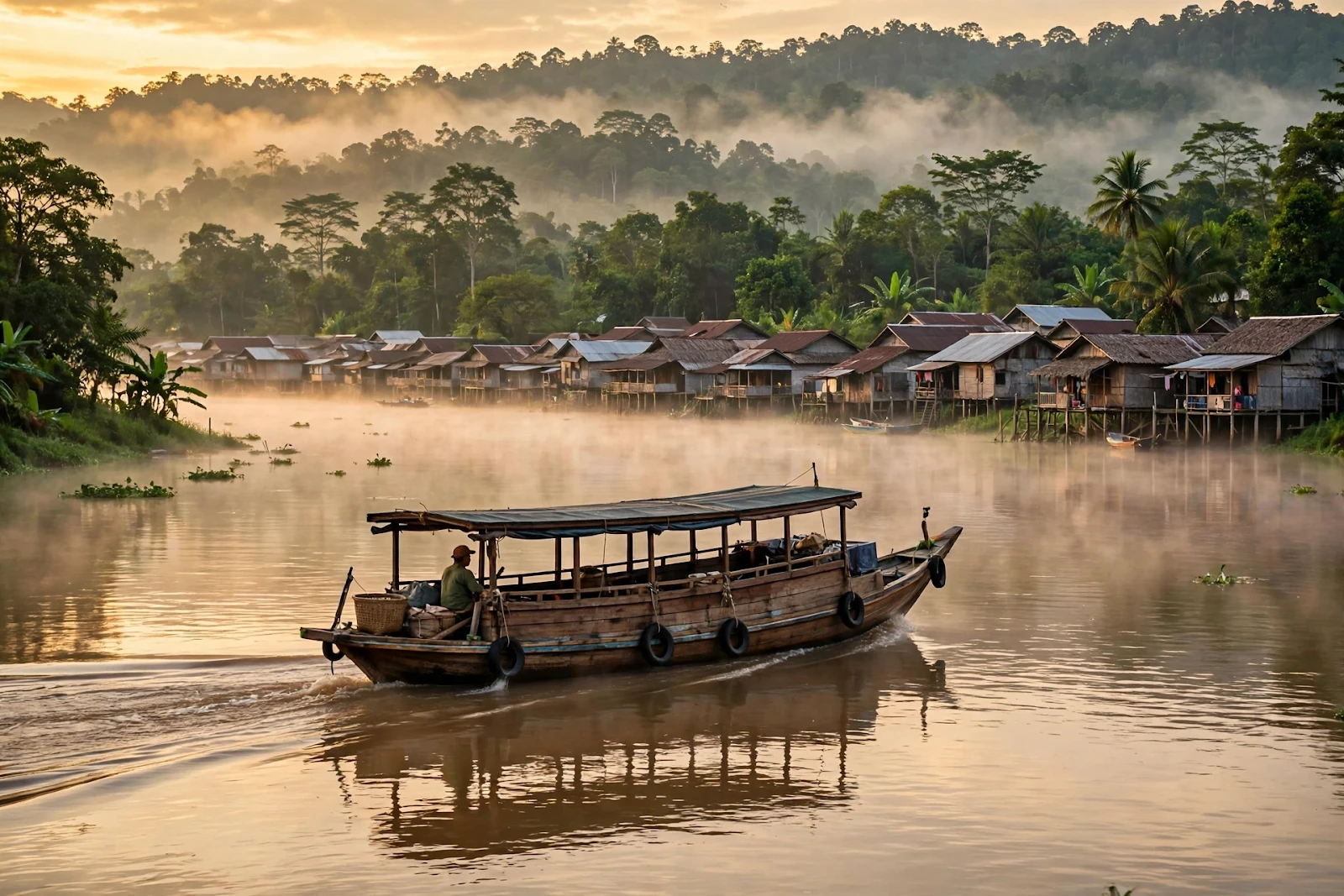
A klotok long boat on the Kahayan River at golden hour — the river is the lifeblood of Palangkaraya.
Why Visit Palangkaraya?
Palangkaraya was founded in 1957 as a planned city in the middle of the Bornean rainforest — Indonesia's first president, Sukarno, once envisioned it as a future capital — and it still feels like a frontier town: wide avenues, river air, and jungle never far away. It is the capital of Central Kalimantan and the home of the Dayak people, the indigenous peoples of Borneo, whose longhouses, dances and carvings give the city a cultural depth that few Indonesian provincial capitals can match.
What brings most visitors here is the wildlife. Palangkaraya is the gateway to Sebangau National Park, one of the world's largest peat-swamp forests and a stronghold of the Bornean orangutan, and to Nyaru Menteng, the famous orangutan rehabilitation centre. Both are reachable as day trips or overnight tours from the city, and both offer a far more intimate wildlife experience than the crowded circuits elsewhere in Borneo.
Getting to Palangkaraya
Most visitors fly into Tjilik Riwut Airport (PLM), about 10 kilometres from the city centre, with direct flights from Jakarta, Surabaya, Balikpapan and Banjarmasin. A taxi or ride-hailing car into town takes 20–30 minutes. There are no direct international flights, so international travellers route through Jakarta or Surabaya.
Overland, Palangkaraya connects by road to Banjarmasin in South Kalimantan (around 4–5 hours) and to Pangkalan Bun, the gateway to Tanjung Puting National Park (around 6–7 hours). The roads are mostly good, and the drive through palm plantations and forest is part of the experience. River travel is also possible: boats run along the Kahayan and its tributaries to Dayak villages upstream, and a river cruise is one of the classic Palangkaraya experiences.
Best Things to Do in Palangkaraya
Cruise the Kahayan River
The Kahayan is one of Kalimantan's great rivers, and the best way to understand Palangkaraya is from the water. Hire a klotok — a traditional wooden long boat — for a morning or sunset cruise from the riverfront, and watch the city slide past: stilt houses, fishing boats, floating markets, and children swimming from wooden jetties. Longer cruises run upstream to Dayak villages, where you can see longhouses (betang) and meet communities that still live by the river. A half-day private boat typically costs a few hundred thousand rupiah — agree on the route and price before you board.
Visit the Floating Market
At dawn, boats gather on the Kahayan near the city for a small floating market, where traders sell fruit, vegetables and breakfast from their canoes. It is smaller and quieter than the famous floating markets of Banjarmasin, but it is also more authentic — a working market, not a show. Arrive by 6:00 AM, buy a coffee and some fried snacks from a boat, and watch the river wake up.
Rumah Betang and Dayak Culture
The Dayak longhouse, or betang, is the heart of Dayak culture: a huge wooden house on stilts where extended families once lived together under one roof. In Palangkaraya you can visit a betang, see the carved pillars and shields, and learn about the Dayak way of life. The Museum Balanga, the provincial museum in the city centre, is the best place to start: its collection of Dayak carvings, textiles, weapons and ceremonial objects explains the culture you will see all around you. If your visit coincides with a cultural festival — the Isen Mulang festival in May is the biggest — you may see traditional dances, boat races and Dayak ceremonies in full colour.
Tangkiling Hill and the City Viewpoint
About 30 minutes north of the city, Tangkiling Hill (Bukit Tangkiling) rises above the forest and offers the best viewpoint near Palangkaraya: a panorama of green canopy stretching to the horizon, with the Kahayan winding through it. The climb is short and easy, and the hill is a popular spot for sunrise and sunset. It is also the gateway to the Tangkiling Nature Tourism Park, a pocket of forest with walking trails and a small river — a good half-day escape from the city.
Orangutans: Sebangau National Park and Nyaru Menteng
Palangkaraya's greatest draw is its orangutans, and there are two very different ways to see them — both worth doing.
Sebangau National Park
Sebangau is one of the largest peat-swamp forests in the world, a vast, waterlogged jungle of tall trees, black-water rivers and extraordinary biodiversity. It is home to one of the largest remaining wild populations of Bornean orangutans, along with gibbons, proboscis monkeys, hornbills and clouded leopards. Tours from Palangkaraya typically run by boat up the Sebangau River, with a chance to spot orangutans in the canopy, walk a forest boardwalk, and learn about the peatland — a landscape that stores enormous amounts of carbon and is one of the most important ecosystems on Earth. Trips run from a full day to three days; book through a reputable local operator and expect simple, comfortable conditions rather than luxury.
A Bornean orangutan in the Sebangau peat-swamp forest — one of the largest wild populations left on Earth.
Nyaru Menteng Orangutan Rehabilitation Centre
About 28 kilometres from the city, Nyaru Menteng is one of the world's largest orangutan rehabilitation centres, run by the Borneo Orangutan Survival Foundation. Orphaned and rescued orangutans are cared for here and prepared for release back into the wild. The centre opens to visitors on certain days — traditionally Sundays, with advance booking — and a visit usually includes a talk from the staff, a look at the nursery and forest school areas, and a walk through the surrounding forest. It is a moving, educational experience, and your visit directly supports the rehabilitation work. Check the current visiting schedule with the foundation before you plan your trip, as days and arrangements change.
Seeing Orangutans Responsibly
- Keep your distance: never approach or touch a wild orangutan, and follow your guide's instructions at all times.
- No feeding: feeding changes wild behaviour and spreads disease. Let the animals be wild.
- Book with reputable operators: choose tours that employ local guides, respect park rules and contribute to conservation.
- Be patient: wild orangutans are not guaranteed on any single trip — the forest is vast, and a sighting is a privilege, not a promise.
Day Trips and Longer Trips from Palangkaraya
Dayak Villages on the Kahayan and Rungan Rivers
A full-day boat trip upstream takes you to Dayak villages where life still revolves around the river: fishing, rattan weaving, and longhouses that have stood for generations. Some villages welcome visitors for a meal and a dance performance — arrange these visits through a local operator, bring a small gift or donation for the community, and ask before taking photographs.
Tanjung Puting National Park (via Pangkalan Bun)
Palangkaraya is the natural starting point for a combined Central Kalimantan trip that continues overland to Pangkalan Bun and the famous klotok cruises of Tanjung Puting National Park, where semi-wild orangutans come to feeding stations along the Sekonyer River. Allow at least three to four days for the full combination, and book the Tanjung Puting boat in advance.
Bukit Raya and the Heart of Borneo
For serious trekkers, the mountains of Bukit Baka-Bukit Raya National Park lie to the north, on the border with West Kalimantan. Multi-day treks through primary rainforest, river crossings and Dayak villages are possible with experienced local guides — a genuine expedition, and one of the wildest treks in Indonesia.
Where to Stay and Eat in Palangkaraya
Palangkaraya has a decent range of hotels, from simple guesthouses to comfortable business hotels in the city centre. Staying near the riverfront puts you close to the floating market and the boat jetties; staying in the centre is better for restaurants and the museum. Mid-range rooms typically cost IDR 300,000–600,000 per night.
Dayak and Banjarese food dominate the local table. Try ikan patin (catfish) grilled or in a sour soup, soto banjar, and the local freshwater fish dishes served with rice and sambal. The night market near the riverfront is the best place to eat like a local: grilled fish, satay, fried snacks and sweet iced drinks, all for a few thousand rupiah. For something different, look for the small restaurants serving Dayak specialities — jungle vegetables, river fish and smoked meats.
Dayak dancers in traditional dress at a betang longhouse — the living culture of Central Kalimantan.
Best Time to Visit Palangkaraya
The dry season, roughly June to September, is the best time to visit: river levels are lower but still navigable, forest trails are drier, and orangutan sightings are more likely as fruit concentrates in smaller areas. The wet season (October to May) brings heavy rain, higher rivers and lush forest, but some trails become muddy and boats may be delayed. Haze from forest fires can affect the region in very dry years — check conditions before travelling in August and September, and be flexible with your plans.
Practical Tips for Visiting Palangkaraya
- Book tours in advance: Sebangau and Nyaru Menteng visits need arranging ahead — contact a local operator at least a few days before you arrive.
- Bring cash: ATMs exist in the city, but boats, villages and small restaurants are cash-only.
- Pack for the jungle: light, quick-dry clothing, sturdy walking shoes, rain gear, insect repellent and sunscreen. A dry bag is useful on boats.
- Language: Indonesian is widely spoken; English is less common than in Bali or Jakarta, so basic Indonesian phrases help a lot.
- Health: check current advice on malaria precautions for Central Kalimantan and bring any medication you need — pharmacies in the city are well stocked, but remote areas are not.
- How long to stay: two days for the city, the river and the museum; four to five days with Sebangau and Nyaru Menteng; a week or more if you add Tanjung Puting.
Sponsored: see today's best travel deals and offers
Frequently Asked Questions
How do I get to Palangkaraya?
Fly into Tjilik Riwut Airport (PLM), with direct flights from Jakarta, Surabaya, Balikpapan and Banjarmasin. The airport is about 10 kilometres from the city centre, and a taxi or ride-hailing car takes 20–30 minutes. Overland, the city connects by road to Banjarmasin (4–5 hours) and Pangkalan Bun (6–7 hours).
Can I see orangutans from Palangkaraya?
Yes — Palangkaraya is one of the best bases in Borneo for orangutan encounters. Sebangau National Park offers wild orangutan spotting on boat and forest trips, and Nyaru Menteng rehabilitation centre welcomes visitors on scheduled days. Book both in advance through a local operator.
What is the best time to visit Palangkaraya?
The dry season, roughly June to September, is best for river trips, forest walks and orangutan spotting. The wet season brings lush forest but muddier trails and heavier rain. Check for haze conditions in August and September before travelling.
Is Palangkaraya safe for tourists?
Yes, Palangkaraya is generally safe and welcoming for travellers. Take normal precautions, travel with a reputable guide in the forest and on the rivers, and be careful with strong river currents and slippery trails during the wet season.
How many days do I need in Palangkaraya?
Two days covers the city, the Kahayan River cruise, the floating market and the museum. Four to five days lets you add Sebangau National Park and Nyaru Menteng, and a week or more allows a combined trip on to Tanjung Puting National Park.
Palangkaraya is not a polished tourist destination, and that is precisely its appeal: a river city where Dayak culture is alive, the forest is an hour away, and an orangutan in the canopy is a real possibility rather than a brochure promise. Come with an open mind, a good guide and a few extra days — Borneo rewards the travellers who slow down. Have you been to Central Kalimantan, or is it on your list? Share your orangutan stories and your best Palangkaraya tips in the comments below.



Comments
Post a Comment