Most travellers flying into East Kalimantan head straight for the orangutans of Tanjung Puting or the diving of Derawan, and they treat Balikpapan as nothing more than an airport stop. That is a mistake. Balikpapan — the oil city turned gateway to Indonesia's new capital — is one of the most underrated bases in Borneo: a clean, easy-going coastal city with long beaches, mangrove forests full of proboscis monkeys, and the brand-new capital city of Nusantara rising just across the bay.
This Balikpapan travel guide covers the best things to do in the city in 2026, where to see proboscis monkeys in the wild, the beaches worth your afternoons, and the practical details — flights, ferries, costs and the best season — for a trip to East Kalimantan's gateway city.
Sunset at Kemala Beach — Balikpapan's city beach faces the Makassar Strait.
Why Visit Balikpapan?
Balikpapan sits on the eastern shore of Borneo, on the Makassar Strait, and it has long been East Kalimantan's working city: oil, timber and trade built it, and the money shows in its wide roads, shopping malls and comfortable hotels. But the city is also greener than its reputation suggests. Mangrove forests fringe the bay, proboscis monkeys — the big-nosed icons of Borneo — live within the city limits, and the beaches that line the coast are some of the most accessible in Kalimantan.
What makes 2026 a special time to come is Nusantara. Indonesia's new capital is being built across the bay in Penajam Paser Utara, and Balikpapan is its gateway: the airport, the hotels and the boats all run through here. Visiting now means seeing a city at the start of a historic transformation — and using it as a base for beaches, mangroves and orangutan country in every direction.
Getting to Balikpapan
Most visitors fly into Sultan Aji Muhammad Sulaiman Sepinggan International Airport (BPN), about 15 minutes from the city centre, with direct flights from Jakarta, Surabaya, Makassar, Banjarmasin and Singapore. A taxi or ride-hailing car into town is quick and cheap. There are no direct long-haul international flights, so international travellers route through Jakarta or Singapore.
Overland, Balikpapan connects by road to Samarinda, the provincial capital, in about two to three hours, and to the orangutan country of Samboja in under an hour. Ferries and speedboats cross Balikpapan Bay to Penajam, the gateway to Nusantara, from Semayang port — the crossing takes around 30 minutes. A new toll road and the Balang Island Bridge have made the drive to Penajam and the new capital faster than ever.
Best Things to Do in Balikpapan
Sunset at Kemala Beach
Kemala Beach is Balikpapan's city beach, a short drive from the centre, and it is the best place to end the day. The sand is dark gold, the water is calm, and the sun sets directly over the Makassar Strait in a wash of orange. Food stalls line the shore selling grilled fish, satay and iced coconut, and families gather here every evening. Come at 5:00 PM, claim a spot on the sand, and stay for the light show.
Manggar Beach
About 25 minutes east of the centre, Manggar Beach (Pantai Manggar Segara Sari) is Balikpapan's longest stretch of sand, fringed with pine and coconut trees. The waves are gentle, the beach is wide, and on weekends it fills with local families picnicking under the trees. It is a better swimming beach than Kemala and a good place for a slow afternoon — bring a book, rent a beach umbrella, and try the grilled seafood from the stalls behind the sand.
Melawai Beach and the City Waterfront
Closer to the centre, Melawai Beach is a smaller, rockier shore that locals love for its views across the bay to the oil rigs and the ships at anchor. The waterfront promenade nearby is good for an evening walk, and the seafood restaurants along the coast road are among the best in the city — order the grilled fish and the local amplang fish crackers.
Balikpapan Botanical Garden
For a green escape inside the city, the Balikpapan Botanical Garden (Kebun Raya Balikpapan) protects a patch of lowland rainforest about 15 kilometres from the centre. Walking trails wind through the trees, and the garden is a good place to spot birds and butterflies. It is quiet on weekdays and makes a refreshing contrast to the city's malls and traffic.
Proboscis Monkeys in the Mangroves
Balikpapan's wildlife star is the proboscis monkey — the pot-bellied, big-nosed primate found only in Borneo — and you do not need to travel far to see one.
Mangrove Boat Trips in Balikpapan Bay
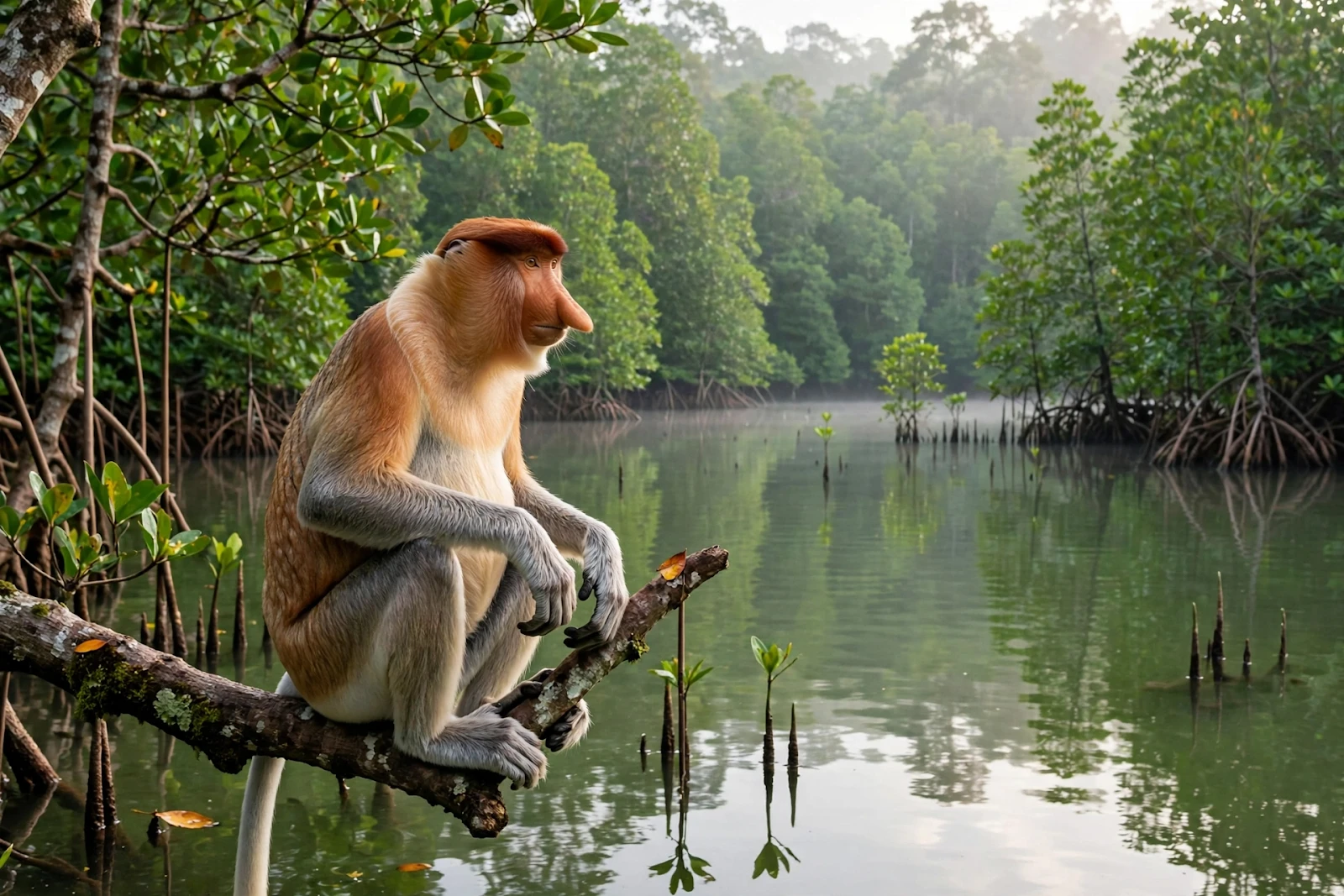
The mangrove forests of Balikpapan Bay, around Margomulyo and the Wain River, are home to troops of proboscis monkeys that feed in the trees at dawn and dusk. Local operators run small-boat trips from jetties around the bay, usually in the late afternoon, when the monkeys come down to the water's edge. A two-hour trip typically costs a few hundred thousand rupiah for a private boat — go with a local guide who knows where the troops are feeding, and bring binoculars.
A proboscis monkey in the Balikpapan Bay mangroves — look for them at dawn or dusk.
Sungai Wain Protection Forest
Just north of the city, the Sungai Wain Protection Forest is one of the last large blocks of lowland rainforest near an Indonesian city, and it shelters proboscis monkeys, orangutans, sun bears and hornbills. Guided walks are possible with advance arrangement through local conservation groups. It is not a polished tourist attraction — that is the point — and a morning here is a reminder of what Borneo's forests once were.
Seeing Wildlife Responsibly
- Keep your distance: never approach or feed wild monkeys or orangutans, and follow your guide's instructions at all times.
- Go at dawn or dusk: proboscis monkeys are most active and visible in the early morning and late afternoon.
- Book local guides: choose operators who employ local boatmen and respect the mangrove habitat.
- Be patient: wild animals are never guaranteed — the mangroves are vast, and a sighting is a privilege, not a promise.
Day Trips and Longer Trips from Balikpapan
Nusantara — Indonesia's New Capital
Across the bay in Penajam Paser Utara, the new capital city of Nusantara is rising out of the forest, and 2026 is a fascinating time to see it. Access rules and visiting arrangements change as construction continues, so check the current situation before you go: some areas, viewpoints and the new government district can be visited on organised tours from Balikpapan, while other zones remain closed. Even from the outside, the scale of the project — a capital being built from scratch in the Bornean jungle — is extraordinary.
Samboja Lestari and the Orangutans
About 45 minutes north of Balikpapan, Samboja Lestari is one of the world's most important orangutan rehabilitation centres, run by the Borneo Orangutan Survival Foundation. Rescued orangutans are cared for on forested islands here and prepared for release into the wild. Visits are possible on scheduled days with advance booking, and usually include a talk from the staff and a look at the islands from the viewing platforms. It is a moving, educational experience — check the current visiting schedule before you plan your trip.
Bukit Bangkirai Canopy Bridge
About an hour and a half from the city, Bukit Bangkirai is a rainforest reserve famous for its canopy bridge — a swaying walkway strung between giant bangkirai trees, 30 metres above the forest floor. The climb to the bridge is a short hike through the trees, and the view from the top, over an unbroken sea of green, is one of the best in East Kalimantan. Go early in the morning for the birdsong and the mist.
Where to Stay and Eat in Balikpapan
Balikpapan has the best hotels in East Kalimantan, from business hotels in the centre to beachfront resorts near Manggar. Staying in the centre puts you close to the malls, restaurants and the waterfront; staying near the beach is better for slow mornings and sunsets. Mid-range rooms typically cost IDR 400,000–800,000 per night.
The table here is all about the sea. Grilled fish and crab are the local stars — try kepiting (crab) cooked in black pepper or chilli sauce — and amplang, the crunchy fish crackers that are Balikpapan's famous souvenir, are sold everywhere. The night markets near the waterfront are the best place to eat like a local: grilled fish, satay, fried snacks and sweet iced drinks, all for a few thousand rupiah. For a special meal, the seafood restaurants along the coast road serve the day's catch with a view over the bay.
Manggar Beach — the longest stretch of sand in Balikpapan, perfect for a slow afternoon.
Best Time to Visit Balikpapan
The dry season, roughly June to September, is the best time to visit: the beaches are at their best, the mangrove boat trips run smoothly, and the forest trails are drier. The wet season (October to May) brings heavy afternoon rain, but the city rarely floods badly and the forest is at its greenest. Balikpapan is equatorial, so temperatures stay around 27–32°C all year — pack light clothes, rain gear and sunscreen whatever the month.
Practical Tips for Visiting Balikpapan
- Book wildlife trips in advance: mangrove boat trips and Samboja Lestari visits need arranging ahead — contact a local operator at least a few days before you arrive.
- Bring cash: ATMs and card payments work in the city, but boats, markets and small restaurants are cash-only.
- Getting around: ride-hailing cars and taxis are easy in the city; hire a car with a driver for day trips to Samboja, Bukit Bangkirai and Nusantara.
- Language: Indonesian is widely spoken and English is common in hotels; basic Indonesian phrases still help a lot outside the centre.
- Check Nusantara access: visiting rules for the new capital change often — confirm what is open before you set out.
- How long to stay: two days for the city, the beaches and the mangroves; four to five days with Samboja, Bukit Bangkirai and Nusantara.
Sponsored: see today's best travel deals and offers
Frequently Asked Questions
How do I get to Balikpapan?
Fly into Sultan Aji Muhammad Sulaiman Sepinggan International Airport (BPN), with direct flights from Jakarta, Surabaya, Makassar, Banjarmasin and Singapore. The airport is about 15 minutes from the city centre by taxi or ride-hailing car. Ferries and speedboats also cross Balikpapan Bay to Penajam from Semayang port.
Can I see proboscis monkeys in Balikpapan?
Yes — Balikpapan is one of the easiest places in Borneo to see proboscis monkeys in the wild. Local operators run mangrove boat trips in Balikpapan Bay at dawn and dusk, when the monkeys feed in the trees at the water's edge. The Sungai Wain Protection Forest, just north of the city, is another good spot with a local guide.
Can I visit Nusantara, the new capital, from Balikpapan?
Yes, Balikpapan is the gateway to Nusantara, across the bay in Penajam Paser Utara. Access rules change as construction continues, so check the current visiting arrangements before you go — some areas can be visited on organised tours from Balikpapan, while other zones remain closed.
What is the best time to visit Balikpapan?
The dry season, roughly June to September, is best for beaches, mangrove boat trips and forest walks. The wet season brings heavy afternoon rain but the forest is at its greenest, and temperatures stay warm all year.
How many days do I need in Balikpapan?
Two days covers the city, Kemala and Manggar beaches, and a mangrove boat trip. Four to five days lets you add Samboja Lestari, Bukit Bangkirai and a trip across the bay to Nusantara.
Balikpapan is not a polished resort town, and that is precisely its appeal: a real Bornean city where you can watch the sunset on a city beach, spot a proboscis monkey in the mangroves before breakfast, and look across the bay at a capital city being born. Come with an open mind and a few extra days — East Kalimantan rewards the travellers who slow down. Have you been to Balikpapan, or is it on your list? Share your beach tips and your best mangrove stories in the comments below.




Comments
Post a Comment