Bali is famous for its temples, rice terraces, and beaches, but for many travelers the real surprise is the food. Balinese cuisine is bold and aromatic, built around a fragrant spice paste called base genep — turmeric, galangal, lemongrass, garlic, chili, and shrimp paste — and often cooked slowly over coconut husks or open fire. Eating in Bali is not a side activity to sightseeing; it is one of the best ways to understand the island itself.
This Bali food guide for 2026 covers everything you need to eat well across the island: the must-try Balinese dishes and where to find them, how to eat at a local warung, the best food scenes in Ubud, Seminyak, and Canggu, what to expect at night markets, how much meals cost, and how to stay safe while eating adventurously. Whether you have one day or one month, this guide will help you eat like a local and taste the real Bali.
Must-Try Balinese Dishes
Balinese food rewards curiosity. The flavors are layered rather than simply hot: sweet, sour, salty, and spicy all appear in a single plate, and the textures range from crispy pork skin to soft steamed vegetables. Start with the classics below, and you will have tasted the heart of the island's cooking. Most appear on warung menus across Bali, and many are also served at festivals and family celebrations.
Nasi Campur: The Perfect Introduction
Nasi campur is the single best dish for a first-time visitor. It is a plate of steamed white rice surrounded by small portions of many different dishes — perhaps shredded chicken, spiced coconut, fried tempeh, green vegetables, a boiled egg, and a spoonful of sambal. No two warungs serve exactly the same version, which is part of the fun. Point at the dishes you like in the glass display case and the server will build your plate. A typical warung nasi campur costs around 25,000 to 40,000 rupiah, roughly one to three US dollars, making it one of the best-value meals in Bali.
Nasi campur is the classic way to taste many Balinese dishes at once.
Babi Guling: Bali's Famous Roast Pork
Babi guling is Bali's most celebrated dish. A whole pig is stuffed with turmeric, chili, garlic, and aromatic leaves, then roasted slowly over coconut husks until the skin turns golden and crackling-crisp. It is served with rice, lawar, spicy sausage, and a fiery sambal. The best babi guling warungs are famous institutions, and many sell out by early afternoon, so go for lunch rather than dinner. Expect to pay 40,000 to 70,000 rupiah for a generous plate. Note that this dish is pork, so it is not halal.
Babi guling, Bali's famous roast pork, is a must-try for meat eaters.
Bebek Betutu and Ayam Betutu: Slow-Cooked in Banana Leaves
Betutu is a slow-cooking technique in which duck (bebek) or chicken (ayam) is rubbed with a rich spice paste, wrapped tightly in banana leaves, and steamed or roasted for hours until the meat falls off the bone. The result is deeply spiced and tender, with a smoky, earthy flavor from the leaves. Bebek betutu is traditionally a ceremonial dish that takes a full day to prepare, so many restaurants ask you to order it in advance. A betutu meal usually costs 60,000 to 120,000 rupiah and is served with rice, vegetables, and sambal.
Sate Lilit: Bali's Signature Satay
Unlike the skewered satay found across Indonesia, Balinese sate lilit is made from minced fish, chicken, or pork mixed with grated coconut and spices, then wrapped around a lemongrass stalk or bamboo stick and grilled over charcoal. The lemongrass infuses the meat with a fresh, citrusy aroma as it cooks. Sate lilit is served at warungs, night markets, and ceremonies alike, often as part of a larger meal. A portion of five or six skewers typically costs 20,000 to 35,000 rupiah.
Lawar: The Ceremonial Salad
Lawar is a traditional Balinese salad of finely chopped vegetables, grated coconut, minced meat, and spices, and it appears at almost every ceremony on the island. The green-bean and young-jackfruit versions are the most common, and many warungs serve a vegetarian lawar alongside their rice dishes. It is fresh, crunchy, and fragrant, and it shows how Balinese cooking balances rich meats with bright, herbal vegetables.
Keep an eye out too for nasi jinggo, small banana-leaf packets of rice and shredded chicken sold for a few thousand rupiah at night markets; tipat cantok, rice cakes with vegetables and peanut sauce; and soto ayam, a comforting chicken soup with turmeric broth. For dessert, try klepon, glutinous rice balls filled with palm sugar, and bubur injin, a warm black-rice pudding with coconut milk.
Warungs vs Restaurants: How to Eat Like a Local
A warung is a small, family-run eatery, and it is where the best Balinese food lives. Warungs range from roadside stalls with plastic stools to charming garden cafes, but they share a few things: a short menu, honest home cooking, and prices a fraction of what you will pay in a tourist restaurant. Most warungs open early and serve lunch as their main meal; many close by late afternoon or sell out of their signature dish by 2 p.m., so arrive hungry and arrive early.
Ordering at a warung is simpler than it looks. Many display their dishes in a glass case or on a buffet counter — simply point to what you would like and hold up fingers for how many portions. A few useful phrases help: "nasi campur" for mixed rice, "pedas" for spicy, "tidak pedas" for not spicy, and "bungkus" for takeaway. Cash is still common at small warungs, so carry small notes, and do not be surprised if there is no printed menu. A full warung lunch for two people rarely costs more than 100,000 rupiah.
Restaurants in the tourist areas serve a different role. They are comfortable, air-conditioned, and happy to explain the menu in English, and they are the best place to try refined versions of Balinese dishes or to enjoy a long dinner with a view. Prices run two to five times higher than a warung, so the smartest approach is to mix the two: warungs for lunch and everyday eating, restaurants for special dinners and occasions. You will eat better and spend less.
Ubud Food Scene
Ubud is Bali's culinary capital and the best place on the island to explore food in depth. The town has everything from humble warungs along the main streets to elegant restaurants set among the rice fields. Start with the warungs around the Ubud market and Jalan Goutama for babi guling, nasi campur, and bebek betutu at local prices.
Ubud is also famous for its healthy, plant-based scene. Dozens of cafes serve smoothie bowls, fresh salads, tempeh dishes, and cold-pressed juices, many in beautiful garden settings. In the evening, Ubud's restaurants come into their own: candlelit tables, live gamelan music, and menus that blend Balinese flavors with modern techniques. Cooking classes are another highlight — a morning market tour followed by a hands-on class costs 350,000 to 600,000 rupiah including lunch. Book a day ahead, as the best classes fill quickly.
Seminyak and Canggu: Cafes and Fine Dining
If Ubud is the heart of Balinese cooking, Seminyak and Canggu are where Bali's international food scene shines. Seminyak is home to some of the island's finest restaurants, including tasting-menu venues that reinterpret Balinese ingredients with modern techniques, as well as beach clubs where you can eat grilled seafood with your feet in the sand. Expect dinner prices of 200,000 to 600,000 rupiah per person at the top restaurants, and book ahead for weekends.
Canggu, a short drive north, is younger and more casual. Its streets are lined with brunch cafes, smoothie bars, and surf-town eateries serving everything from smashed avocado toast to wood-fired pizza. Canggu is also a great base for food lovers who want variety: Indonesian, Western, Japanese, and vegan restaurants sit side by side, and the coffee is among the best in Bali. The area is busy and traffic can be slow, so plan your meals around your location rather than crisscrossing the island at rush hour.
Night Markets and Street Food
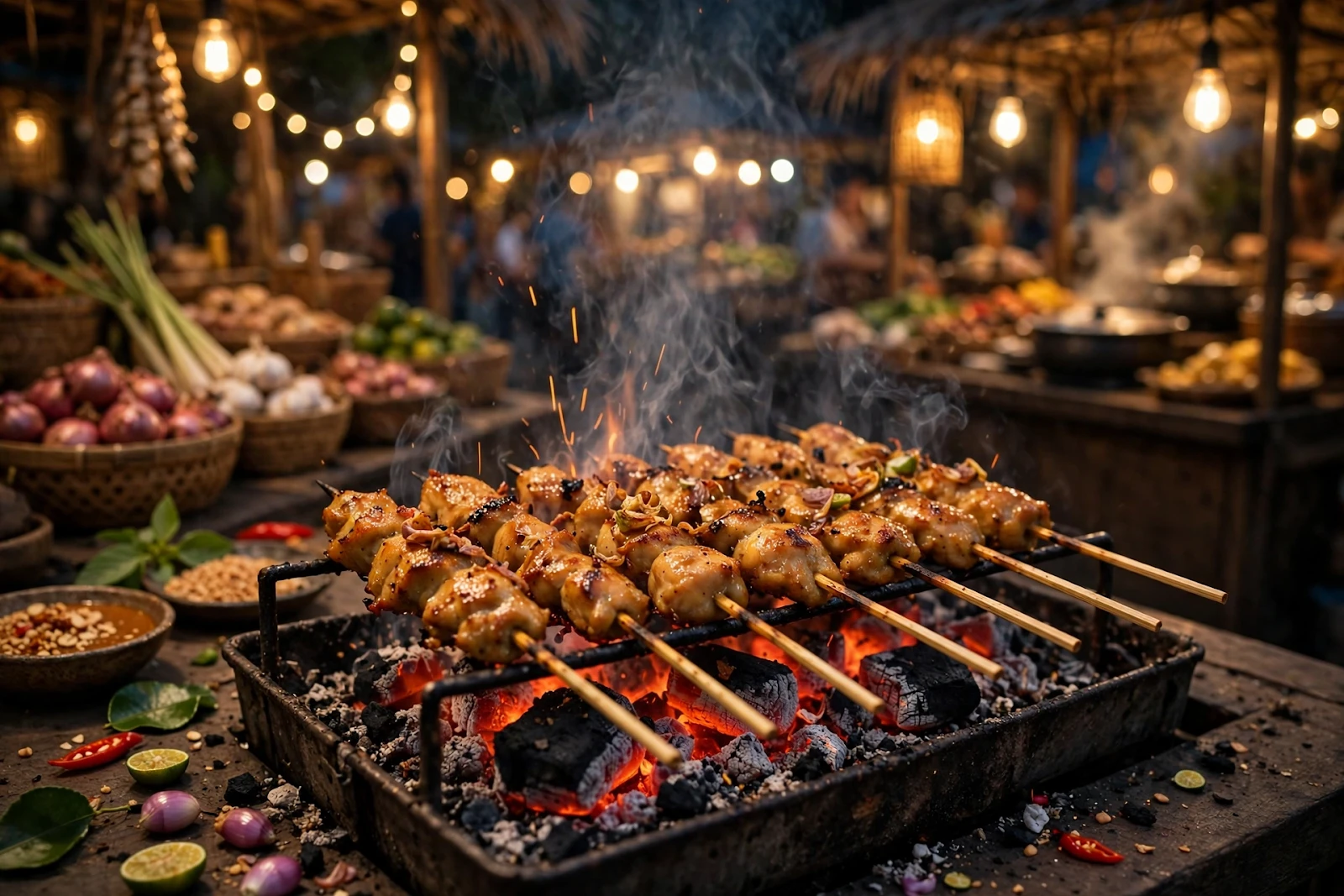
Bali's night markets, called pasar malam, are where the island's street food comes alive. Stalls light up in the early evening selling satay grilling over charcoal, fried noodles, sweet martabak pancakes, fresh fruit juices, and grilled corn. The Gianyar night market, near Ubud, is one of the most famous and a favorite with locals: arrive around 6 p.m., follow the crowds, and eat your way from stall to stall. The Sanur night market and the markets in Denpasar are also excellent and less crowded with tourists.
Night markets serve smoky satay and snacks for just a few dollars.
Street food in Bali is cheap, fast, and fun: a skewer of satay costs a few thousand rupiah, a plate of mie goreng around 15,000 to 25,000, and a fresh coconut or fruit juice 10,000 to 20,000. Choose stalls that are busy with locals, watch the food being cooked fresh in front of you, and eat food that is served piping hot. The busiest stalls are almost always the best ones. Bring cash in small notes, as most street vendors do not take cards.
Coffee and Balinese Drinks
Bali takes its coffee seriously. Kopi Bali is a strong, dark brew made from robusta beans, served black and sweetened, often with the grounds settling at the bottom of the cup. You will find it at every warung and market stall for a few thousand rupiah, and it is the perfect companion to a spicy breakfast. For a gentler cup, Bali's specialty coffee shops in Ubud, Canggu, and Seminyak serve excellent arabica from the Kintamani highlands, where beans grow in volcanic soil beneath Mount Batur.
Beyond coffee, try jamu, the traditional Indonesian herbal tonic made from turmeric, ginger, tamarind, and honey. Jamu sellers carry bottles of the golden drink through markets and villages, and many cafes now serve it fresh each morning. Arak, a distilled spirit made from palm sap or rice, is Bali's traditional liquor and the base of the famous arak madu cocktail with honey and lime — but only drink arak from reputable bars and restaurants, as homemade versions can be unsafe. Fresh young coconut water is the safest and most refreshing drink on a hot day, sold everywhere for 10,000 to 20,000 rupiah.
Vegetarian and Vegan Eating in Bali
Bali is one of the easiest places in Southeast Asia to eat vegetarian or vegan. Hindu Balinese cuisine has a long tradition of vegetable dishes: lawar, sayur urap (vegetables with spiced coconut), tempeh and tofu cooked in turmeric and chili, and gado-gado (vegetables with peanut sauce) are all naturally plant-based or easy to adapt. Most warungs will happily make a vegetarian nasi campur if you ask — say "saya vegetarian" or point to the vegetable dishes in the display case.
Ubud and Canggu are the vegan capitals of the island, with dedicated plant-based restaurants, raw-food cafes, and menus that mark vegan options clearly. Seminyak and Sanur also have plenty of choice. One caution: shrimp paste (terasi) and fish sauce appear in many spice pastes and sambals, so strict vegans should ask whether a dish contains them — "apakah ada terasi?" is the question to ask.
Food Safety and Practical Tips
Most travelers eat their way through Bali without any trouble, and a few simple habits keep it that way. Eat where locals eat and where food turns over quickly — a busy warung with a line is a good sign. Choose food that is cooked fresh and served hot, and be cautious with raw salads and unpeeled fruit from street stalls. Drink bottled water, and use it for brushing your teeth as well. Ice in restaurants and cafes is generally made from purified water and is safe.
Wash your hands or use hand sanitizer before eating, especially at markets. If you have a sensitive stomach, ease into spicy food over the first day or two rather than ordering the hottest sambal on your first meal. Food allergies should be communicated clearly: write down your allergy in Indonesian on a card and show it when ordering. Peanuts, shrimp, and gluten are common in Balinese cooking, so ask before you eat if you are unsure.
Prices and Food Budget
Food is one of the great bargains of a Bali trip. A budget traveler eating at warungs and markets can eat very well on 100,000 to 200,000 rupiah a day, roughly 6 to 13 US dollars. A mid-range budget of 300,000 to 500,000 rupiah a day covers warung lunches, cafe breakfasts, and a nice restaurant dinner. Fine dining and beach-club meals push the daily food spend to 800,000 rupiah or more, but even Bali's best restaurants cost far less than comparable meals in Europe or Australia.
As a rough guide for 2026: nasi campur at a warung 25,000–40,000 rupiah, babi guling 40,000–70,000, a plate of mie goreng 15,000–30,000, fresh juice 15,000–25,000, kopi Bali 5,000–10,000, and a specialty coffee 30,000–45,000. Restaurant mains in tourist areas run 80,000–200,000 rupiah, and a tasting menu 500,000–900,000. Tipping is not expected in Bali, but rounding up the bill or leaving 5 to 10 percent at a restaurant is always appreciated.
One-Day Bali Food Itinerary
If you have just one day to eat your way through Bali, here is a plan that works from almost any base. Start early in Ubud with a Balinese breakfast of nasi campur and kopi Bali at a local warung, then wander the morning market and taste tropical fruit from the stalls. Late morning, join a cooking class or visit a coffee plantation in the Kintamani highlands to learn how Bali's famous beans are grown and roasted.
For lunch, head to a famous babi guling warung — go before 1 p.m. so the crispy pork has not sold out — and follow it with an iced jamu or fresh coconut. Spend the afternoon exploring temples or rice terraces, stopping for an afternoon coffee and a bowl of bubur injin. As evening falls, make your way to a night market such as Gianyar for satay, martabak, and fried snacks eaten standing among the crowds. Finish the day with a slow dinner at a restaurant in Ubud or Seminyak, ordering bebek betutu if you booked ahead. One day will only scratch the surface of Bali's food, but it will leave you planning your return before dessert is finished.
Tips for Eating Well in Bali
A few final tips will make your food adventures smoother. Learn a handful of food words before you arrive — they open doors and earn smiles. Go early for the best dishes, since warungs sell out of signature plates by afternoon. Try one new dish every day, even if you are not sure what it is. Carry cash in small notes for markets and warungs, and keep a bottle of water with you. Respect temple customs: food is sacred in Balinese ceremony, so do not photograph offerings, and always ask before photographing people eating or cooking. Finally, slow down — Bali's food is cooked with patience, served with pride, and best enjoyed at the island's own unhurried pace.
Sponsored: see today's best travel deals and offers
Frequently Asked Questions
What is the most famous Balinese dish?
Babi guling, Bali's roast pork, is the island's most famous dish, followed closely by bebek betutu and nasi campur. Babi guling is a whole pig roasted over coconut husks until the skin is crisp, served with rice, lawar, and sambal. Nasi campur is the best first dish for visitors because it lets you taste many Balinese flavors on a single plate.
Is Balinese food very spicy?
Balinese food can be spicy, but it is not always hot. The spice paste base genep is aromatic and flavorful, and the heat usually comes from the sambal served on the side, so you can control how much you add. Ask for "tidak pedas" (not spicy) if you prefer mild food, and taste the sambal in small amounts before adding more.
How much does food cost in Bali?
Food in Bali is very affordable. A warung meal costs 25,000 to 70,000 rupiah, street food snacks just a few thousand rupiah, and a restaurant main course 80,000 to 200,000 rupiah. A budget traveler can eat well on 100,000 to 200,000 rupiah a day, while a mid-range daily food budget of 300,000 to 500,000 rupiah covers cafes and a nice dinner.
Can vegetarians eat well in Bali?
Yes, Bali is one of the best places in Southeast Asia for vegetarian and vegan food. Many traditional dishes are vegetable-based, including lawar, sayur urap, and tempeh and tofu dishes, and Ubud and Canggu have many dedicated plant-based restaurants. Ask whether dishes contain shrimp paste if you are strictly vegan.
Is street food safe to eat in Bali?
Yes, street food in Bali is generally safe if you choose wisely. Eat at busy stalls where locals queue, pick food cooked fresh and served hot, and drink bottled water. Night markets are a great place to try street food, and the busiest stalls are usually the best and freshest. Wash your hands before eating and ease into spicy food over your first day or two.
Bali's food is an adventure in itself — a journey through spice pastes and slow-roasted meats, smoky night markets and quiet warungs, strong coffee and golden jamu. The island rewards travelers who eat with curiosity, who point at dishes they cannot name, who sit on plastic stools beside locals, and who come back for seconds. Whether you are tasting your first plate of nasi campur, cracking into crisp babi guling skin, or sharing satay at a night market under string lights, you are tasting the real Bali. Start planning your food journey, pack your appetite, and come hungry. Have you eaten your way through Bali, or is a food trip on your list for 2026? Share your favorite Balinese dish or your must-try restaurant in the comments below.




Comments
Post a Comment