Featured

Pekanbaru Travel Guide 2026: Siak River, Malay Culture & Riau's Gateway City

Most travellers flying into Sumatra head straight for Medan, Padang or Palembang and never look at the east coast in between — which is exactly why Pekanbaru is so rewarding. This calm river city on the Siak, the capital of Riau province, is one of Indonesia's most overlooked provincial capitals: a grand mosque with twin minarets rising over the city centre, a wide brown river crossed by graceful bridges, and a proud Malay culture expressed in stilt houses, songket weaving and some of the best river-fish cooking in Sumatra. This Pekanbaru travel guide covers the best things to do in the city in 2026, the Siak River and its bridges, the Malay heritage that defines Riau, the food worth travelling for, and the practical details — flights, costs and the best season — for a trip to Sumatra's east-coast gateway city. The Siak River at sunset — Pekanbaru's lifeline and best evening view. Why Visit Pekanbaru? Pekanbaru sits on the banks of the Siak River in eastern Sumatra, an...

Ujung Kulon National Park 2026: Javan Rhino, Peucang Island & Visitor Guide


At the very tip of Java, where the island dissolves into rainforest and sea, lies one of the most precious wild places on Earth. Ujung Kulon in 2026 is Indonesia's first national park, a UNESCO World Heritage Site, and the last refuge of the Javan rhinoceros — the rarest large mammal on the planet. It is also one of the country's most rewarding adventure destinations: pristine islands, savanna grazing grounds, rainforest rivers, and coral reefs, all reachable on a multi-day journey from Jakarta. This is not a day trip — it is an expedition, and that is exactly the point.

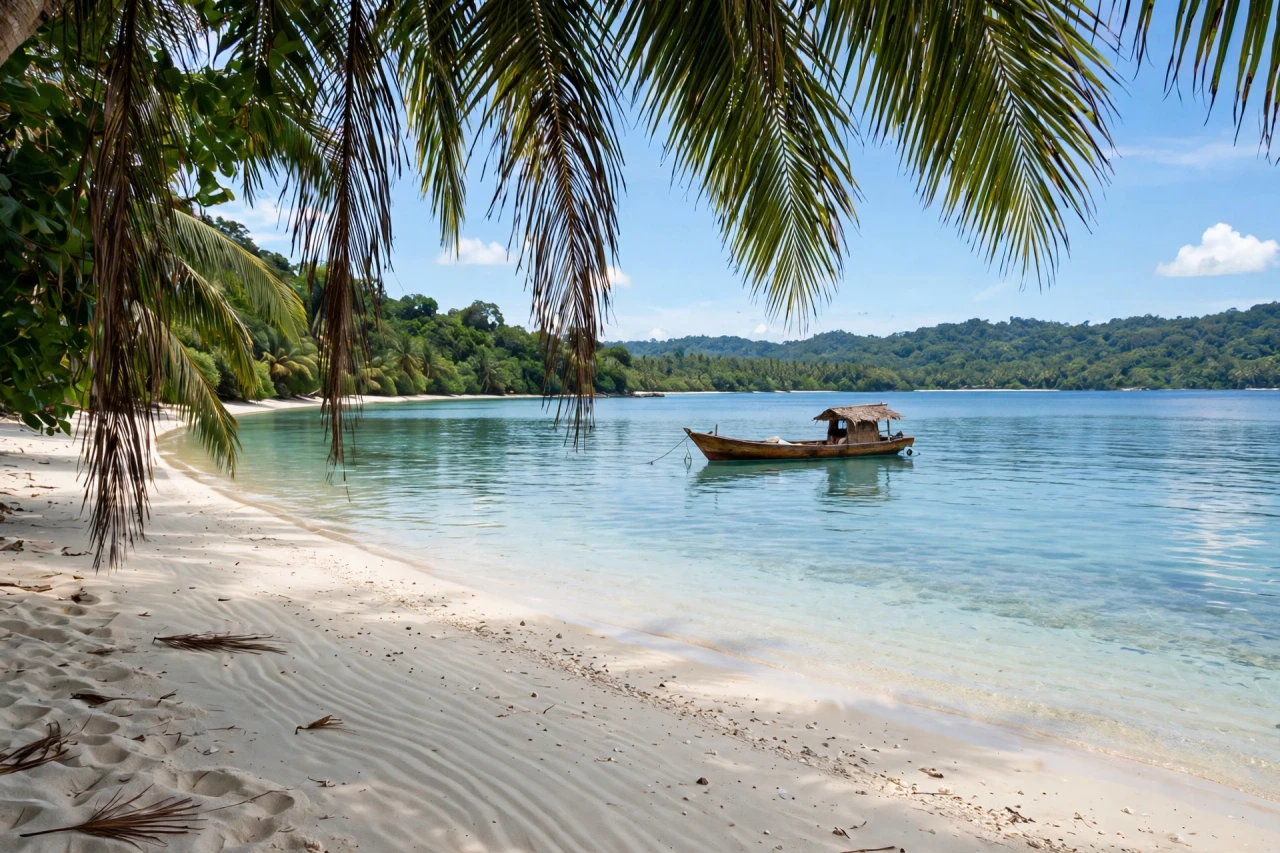
Pristine white sand and turquoise water on Peucang Island beach in Ujung Kulon.

The untouched beach of Peucang Island.

The Last Refuge of the Javan Rhino

Let us be honest from the start: you will almost certainly not see a Javan rhino. The park holds the only surviving wild population of this critically endangered species — estimated at roughly 80 individuals — and they are shy, solitary animals living deep in dense lowland rainforest. Even researchers track them with camera traps rather than sightings. Guides will tell you that a glimpse of a rhino is a once-in-a-lifetime event, and they are right.

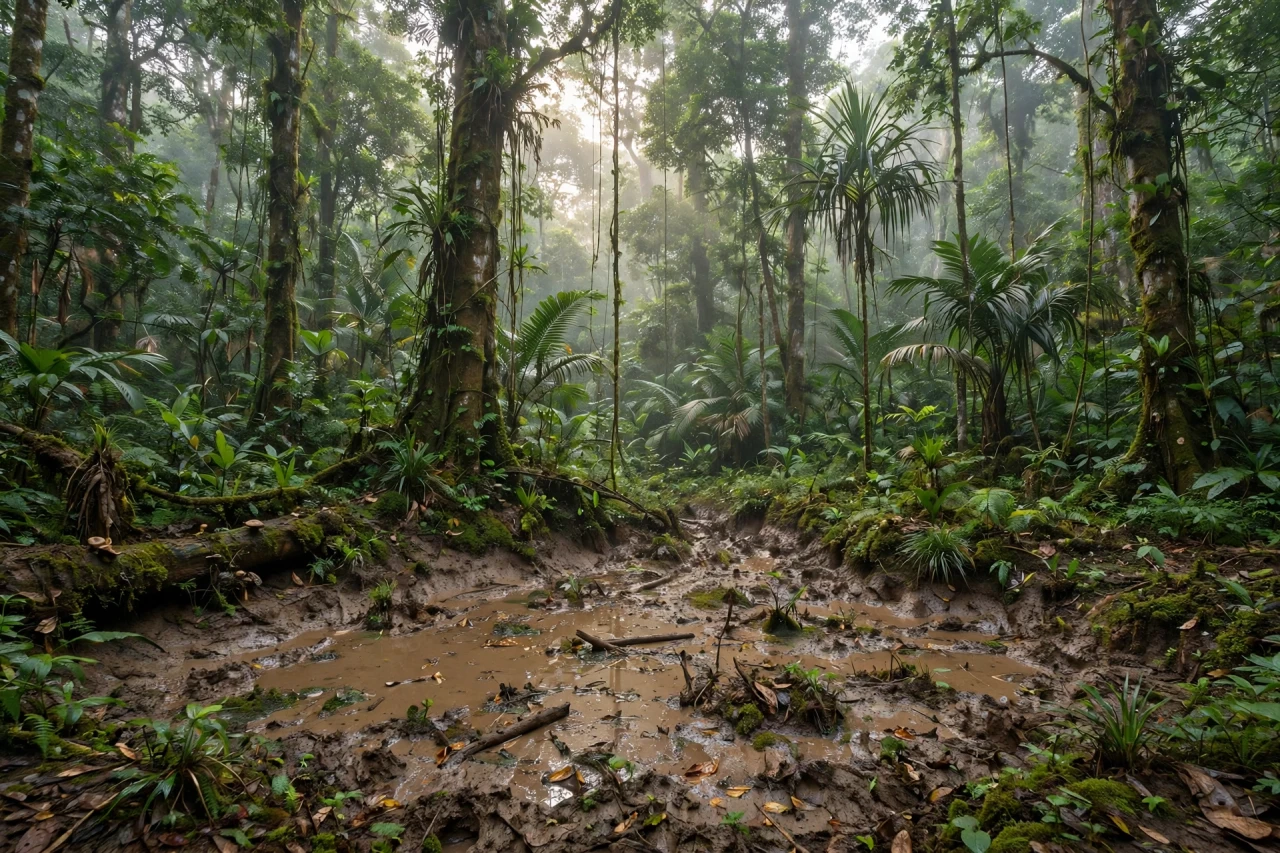
But that does not make the rhino's presence any less powerful. Walking through the forest that shelters them — hearing the dawn chorus, finding rhino footprints and wallows, understanding the conservation battle that keeps this species alive — is a genuinely moving experience. The Javan rhino is what makes Ujung Kulon globally significant: when you visit, your park fees and guide employment directly support the protection of the last of their kind. Come for the ecosystem, respect the rhino's privacy, and treat the habitat itself as the attraction.

Dense lowland rainforest, the last wild habitat of the endangered Javan rhino in Ujung Kulon.

Rainforest that shelters the Javan rhino.

Peucang Island: Pristine Beaches & Snorkeling

The jewel of any Ujung Kulon trip is Peucang Island, a small island off the park's western peninsula with some of the most beautiful beaches in Java. The white-sand shoreline curves around impossibly clear turquoise water, backed by primary rainforest where deer wander tame and unafraid between the trees. It feels like a private island — because, most days, it nearly is.

Snorkeling off Peucang is excellent: healthy coral gardens start just meters from the beach, with sea turtles, reef sharks, and clouds of tropical fish regularly spotted. There is a network of short jungle trails on the island, including one to a historic lighthouse, and the famous "Karangs" rock formations offshore. Most multi-day itineraries include at least one night on or near Peucang — sleeping to the sound of the surf with deer grazing outside your lodge is one of Java's great travel memories.


Cidaon Grazing Ground: Wildlife at Dawn

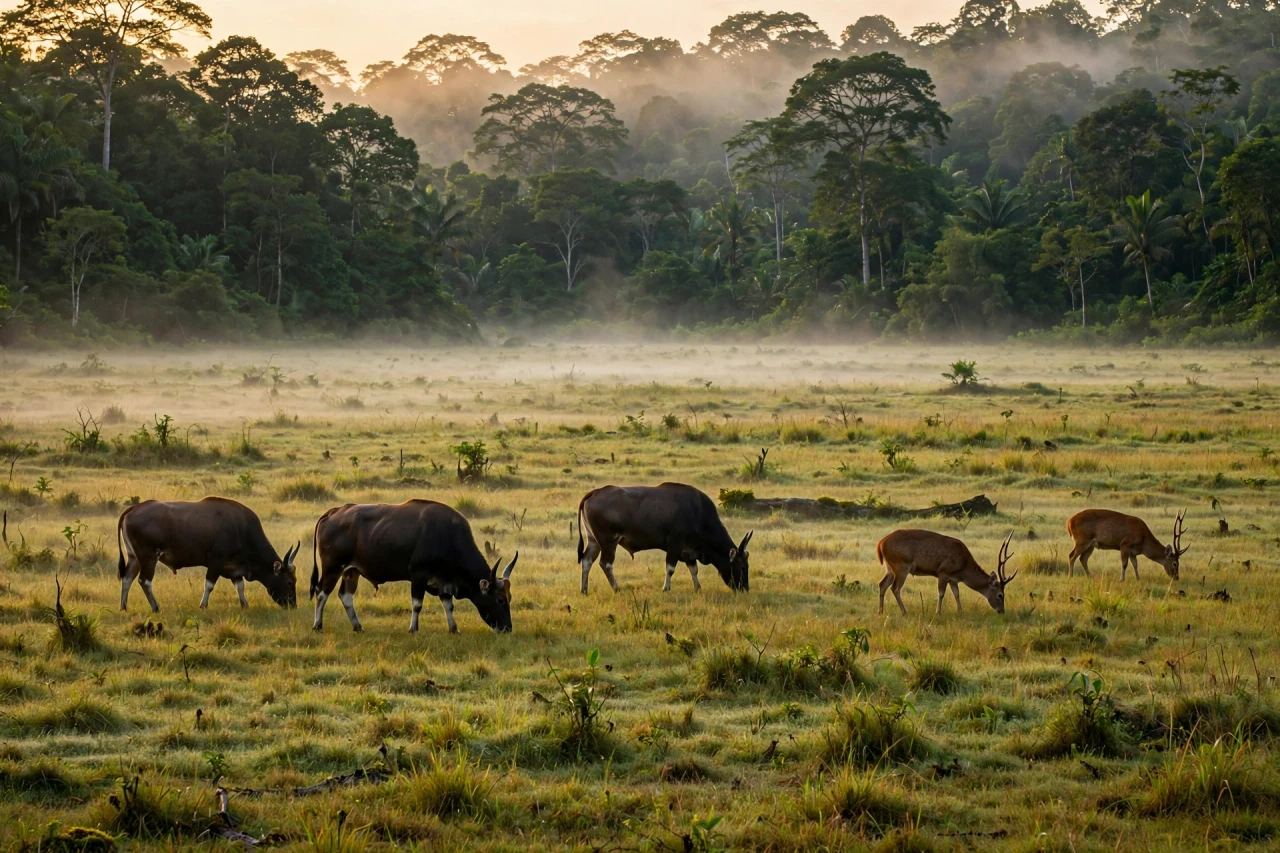
On the mainland peninsula, the Cidaon grazing ground is where Ujung Kulon shows off its wildlife. This open savanna clearing attracts herds of Javan deer, wild boar, and — if you are lucky — the magnificent banteng, a wild ox with a dark coat and distinctive white "socks." Peafowl strut through the grass, and the whole scene glows gold in the early morning light.

The trick is timing: arrive at the viewing tower before dawn and wait quietly. As the sun rises, animals emerge from the forest edge to graze, and the mist lifts off the savanna. It is the closest thing Java offers to an African safari experience, and photographers consider Cidaon the single best wildlife-watching spot in the park. Your guide will know the rhythms — trust them and bring binoculars.

Wild deer and banteng grazing on the open savanna of Cidaon grazing ground in Ujung Kulon.

Wildlife at the Cidaon grazing ground.

Handeleum Island: Canoeing Through Rainforest

For a different kind of adventure, head to Handeleum Island in the park's eastern bay. Here, narrow rivers wind through dense mangrove and rainforest, best explored by traditional wooden canoe. Your guide paddles while you drift silently beneath the canopy, watching for monitor lizards, kingfishers, hornbills, and long-tailed macaques in the branches above.

The Cigenter River on Handeleum is the classic route — a peaceful, otherworldly paddle that feels like entering a lost world. Combine it with a short jungle trek and a riverside picnic for a full day. It is also one of the best birding experiences in Java, so bring a field guide if you are a birder.


How to Visit Ujung Kulon

Visiting Ujung Kulon requires planning — this is a genuine wilderness trip, not a casual excursion. Here is the standard route:

  • Jakarta to the coast: Travel from Jakarta to the Carita/Anyer/Labuan area on Banten's west coast — roughly 3–4 hours by car. Carita is the main hub for Ujung Kulon tour operators.
  • Into the park: Boats depart for the park from Tamanjaya (on the mainland, reaching the peninsula directly) or from Sumur (for Peucang Island and the western side). The boat ride takes 1–3 hours depending on the route and sea conditions.
  • Permits: Entry permits are required and issued through the national park office (Balai Taman Nasional Ujung Kulon). Licensed guides are mandatory inside the park — you cannot explore independently.
  • Booking: The simplest approach is to book through a licensed tour operator in Carita or Tamanjaya. A typical package includes permits, boats, a licensed guide, meals, and lodging for 3–4 days. Prices vary by group size and season — expect a multi-day trip to cost roughly IDR 2,500,000–5,000,000 per person all-inclusive; get quotes from several operators.
  • Typical duration: Plan for 3–4 days inside the park (plus travel days): one day for Peucang Island, one for Cidaon and the peninsula, one for Handeleum or snorkeling, with buffer time for weather.

Where to Stay

Inside the park, accommodation is simple: park lodges and guesthouses on Peucang Island and at Tamanjaya offer basic rooms with fans, mosquito nets, and meals — clean and comfortable, but do not expect luxury. Many visitors stay one or two nights inside the park and base the rest of the trip in Carita, which has a wide range of beachfront hotels and resorts for before and after the expedition. Book park lodging well in advance during holidays and the dry-season peak.

Best Time to Visit Ujung Kulon

The dry season (approximately April to September) is the best window: calmer seas for the boat crossings, drier trails, and better wildlife viewing at Cidaon as animals concentrate around water sources. The rainy season (October to March) brings rough seas that can delay or cancel boat departures, muddy trails, and heavier mosquito activity. Avoid the trip entirely during storm warnings — the open-water crossings to Peucang demand respect for the weather.


Practical Tips

  • Mosquito protection: Ujung Kulon is a tropical wilderness — bring strong repellent, long sleeves and trousers for dawn and dusk, and consider malaria prophylaxis after consulting your doctor before the trip.
  • Waterproof everything: Dry bags or zip-lock bags for electronics, documents, and spare clothes are essential on the boat rides and river trips.
  • Bring cash: There are no ATMs inside the park. Pay operators in advance where possible and carry cash for tips, snacks, and small fees.
  • Book ahead for holidays: Licensed guides, boats, and park lodging are limited. During Indonesian public holidays, arrange your trip weeks or months in advance.
  • Pack light but complete: Sunscreen, a hat, a headlamp, binoculars, a reusable water bottle, and sturdy sandals or water shoes cover nearly every situation.
  • Respect the park: This is a UNESCO site protecting the world's rarest rhino. Follow your guide's instructions, never feed wildlife, and take all litter out with you.

Sponsored: see today's best travel deals and offers

Frequently Asked Questions

Can I see a Javan rhino in Ujung Kulon?

Almost certainly not — and any operator promising a sighting is misleading you. The roughly 80 remaining Javan rhinos are extremely shy and live deep in dense forest. Visitors come for the rhino's habitat: its rainforest, footprints, wallows, and the conservation story. The wildlife you WILL reliably see includes deer, wild boar, banteng at Cidaon, monkeys, and superb birdlife.

How do I get to Ujung Kulon from Jakarta?

Drive or take transport from Jakarta to Carita/Anyer/Labuan on Banten's west coast (3–4 hours), then join a licensed tour with boat transfers into the park from Tamanjaya or Sumur. Independent travel inside the park is not permitted — book a licensed operator that handles permits, boats, guides, meals, and lodging.

Do I need a permit to visit Ujung Kulon National Park?

Yes. Entry permits are issued through the national park office (Balai Taman Nasional Ujung Kulon), and a licensed guide is mandatory. Reputable tour operators arrange all permits and guiding as part of their packages — confirm this when booking.

How many days should I spend in Ujung Kulon?

Three to four days inside the park is ideal: Peucang Island's beaches and snorkeling, dawn wildlife watching at Cidaon, canoeing at Handeleum, and jungle trails on the peninsula. Add travel days on each side from Jakarta. Rushing it into two days means missing the park's best experiences.

Is Ujung Kulon safe to visit?

Yes, with a licensed guide and sensible precautions. The main risks are boat crossings in rough weather (go in the dry season), mosquitoes (use repellent and consult your doctor about malaria prophylaxis), and the remoteness itself — there are no hospitals inside the park, so travel insurance and a basic first-aid kit are wise.

Ujung Kulon in 2026 is Java's wild heart: the last forest of the rarest rhino on Earth, an island of white sand and tame deer, savanna dawns with wild banteng, and silent rivers under the rainforest canopy. It demands effort — permits, boats, guides, and days of travel — and returns something no easy destination can: the feeling of standing in a place the modern world has barely touched. Have you made the journey to the tip of Java? Tell us about it in the comments below.

Comments