East of Lombok, across a strait most travelers never cross, lies Sumbawa — a big, rugged island of world-class surf, whale sharks, empty white-sand beaches and a culture all its own. While the crowds pack Bali and the Gilis, Sumbawa rewards the curious with Indonesia at its most unfiltered.
This Sumbawa travel guide covers the island's three big draws: surfing at Lakey Beach, whale shark encounters in Saleh Bay, and the pristine escape of Moyo Island — plus how to get there and where to stay.
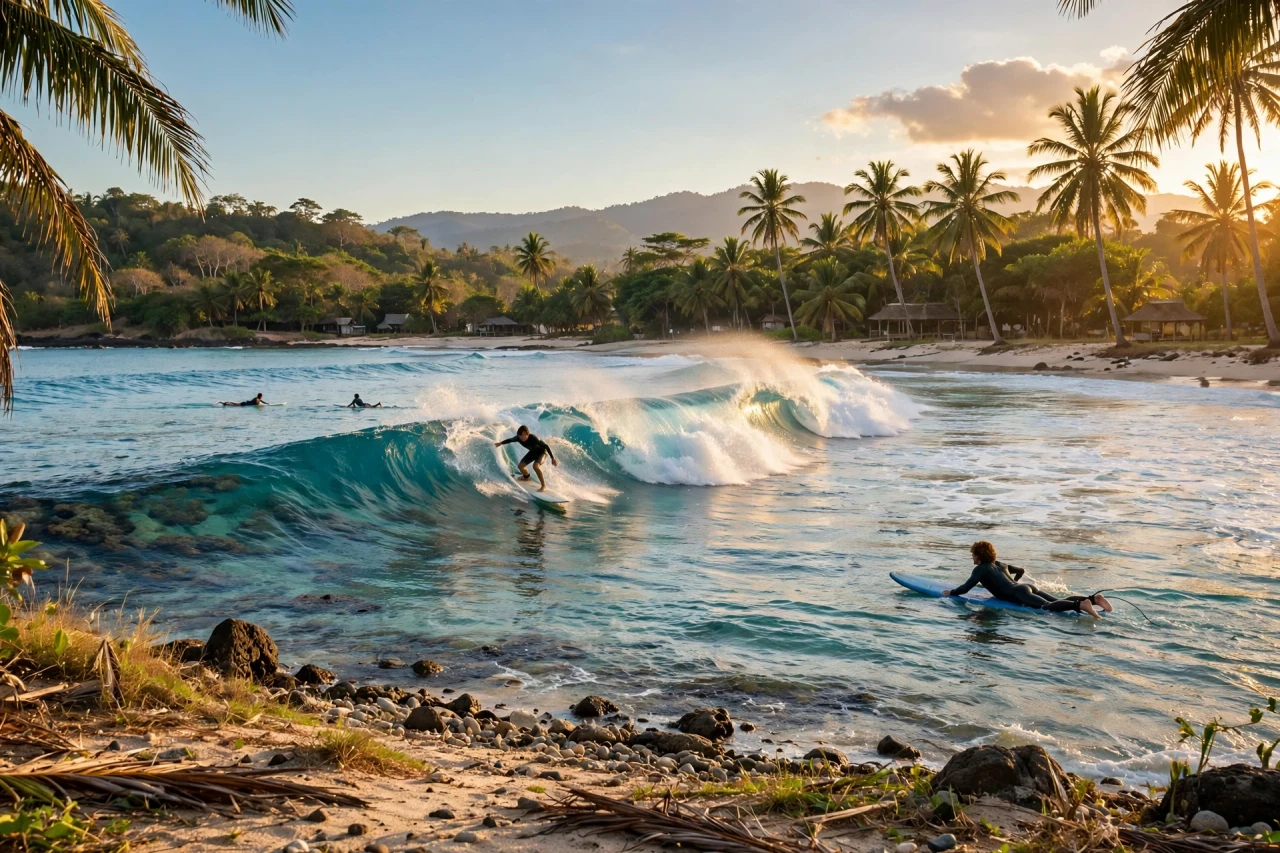
Lakey Beach — consistent reef-break peaks in golden afternoon light.
Lakey Beach: World-Class Surf on the East Coast
Lakey Beach (Pantai Lakey) on Sumbawa's southeast coast is one of Indonesia's most consistent surf zones — a string of reef-break peaks handling every swell direction, with the famous Lakey Peak offering hollow lefts and rights over shallow reef.
- The waves: Lakey Peak, Periscopes, Nungas and Cobblestones — something working on almost any swell, for intermediates through pros.
- Season: April–October brings the best swells and offshore winds; the wet season still has waves but gustier conditions.
- The scene: a laid-back strip of surf camps, warungs and beach bars — far cheaper and calmer than Bali's surf towns. Board rental and lessons are easy to arrange.
- Non-surfers: sunrise walks, the nearby traditional village of Hu'u, and spectacular sunsets over the bay.
Saleh Bay Whale Sharks: Swimming with Gentle Giants
Saleh Bay (Teluk Saleh) on Sumbawa's north coast is one of the few places on Earth where you can reliably snorkel with whale sharks. The giants gather around the bagan (traditional lift-net fishing platforms), feeding on the small fish the nets attract.
- The experience: a dawn boat trip from the bay's fishing villages, then slipping into the water as 6–10 meter whale sharks glide past — calm, close, unforgettable.
- Season: encounters happen year-round, with the calmest seas in the dry season (April–October).
- Book smart: go with a local operator who enforces no-touch, no-flash rules — responsible tourism keeps the sharks coming back.
- Combine it: Saleh Bay pairs naturally with a trip to Moyo Island, just offshore.
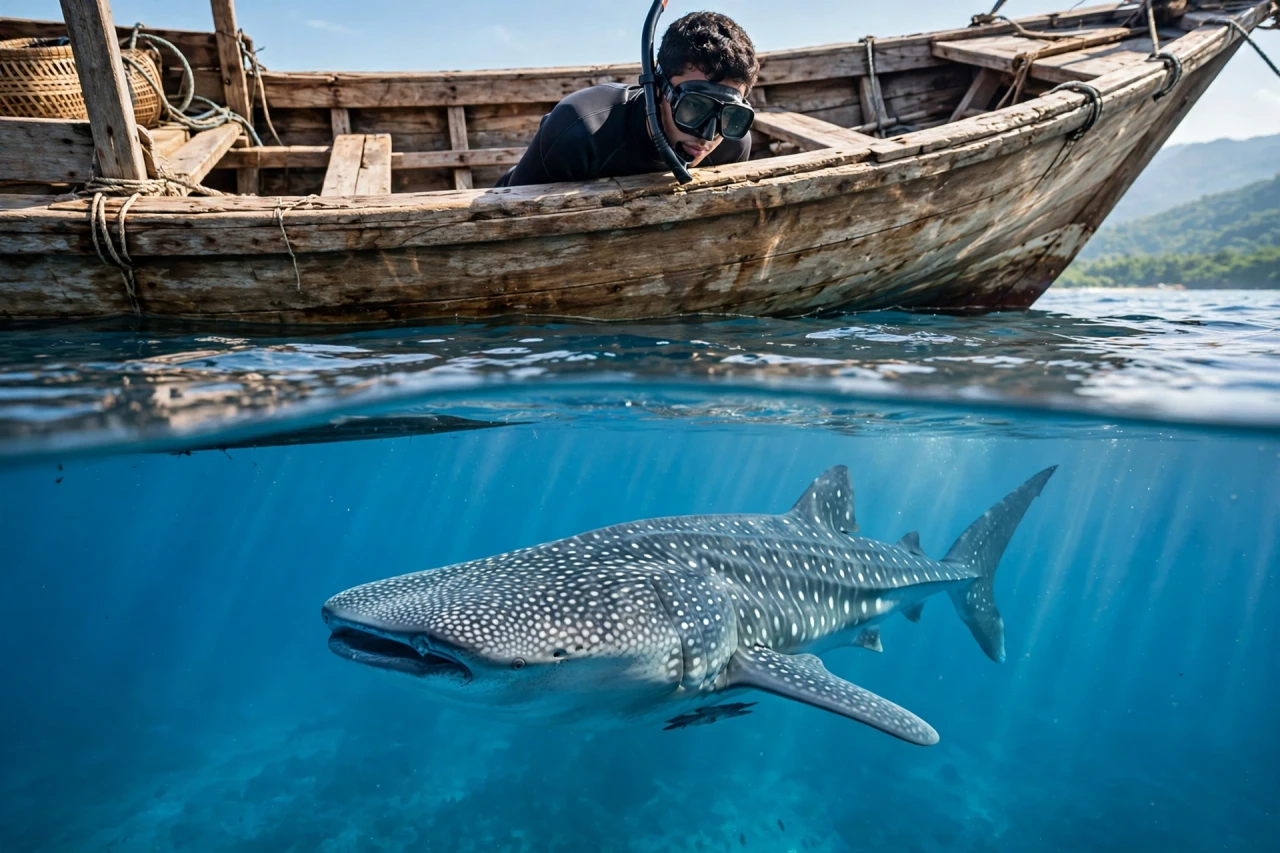
Saleh Bay's whale sharks — gentle giants at the bagan platforms.
Moyo Island & Satonda: Sumbawa's Hidden Escapes
Moyo Island, off Sumbawa's north coast, is a marine reserve of white-sand beaches, coral gardens and jungle waterfalls — including the famous Mata Jitu waterfall, a cascade of limestone pools in the forest interior. Day trips run from the mainland; a few eco-resorts offer true castaway overnights.
Further east, Satonda Island holds a crater saltwater lake formed by an ancient volcanic eruption (linked by legend to Tambora's 1815 blast) — an eerie, beautiful swim spot on multi-day boat trips.
Mount Tambora: The Volcano That Changed the World
East Sumbawa holds one of history's most famous volcanoes. Mount Tambora's 1815 eruption — the largest in recorded history — caused the "Year Without a Summer" across the globe. Today the 2,850-meter volcano is a multi-day trek through savanna, montane forest and a vast caldera, usually done from the village of Pancasila with local guides. It is remote, demanding and utterly uncrowded — a true expedition for experienced hikers.
Getting to Sumbawa
- By ferry: from Lombok's Kayangan port to Poto Tano (1.5 hours, frequent) — the classic overland route; bring a car or rent one in Sumbawa Besar.
- By plane: flights to Sumbawa Besar (SWQ) or Bima (BMU) from Lombok, Bali or Makassar.
- Getting around: the island is big — rent a car or motorbike in Sumbawa Besar. Lakey Beach is ~3 hours south; Saleh Bay ~2 hours northeast.
- How long: a week covers Lakey (3–4 days) + Saleh Bay/Moyo (2–3 days) at a relaxed pace.
Where to Stay
Lakey Beach has surf camps and bungalows for every budget, from backpacker losmen to comfortable beachfront resorts. Sumbawa Besar is the practical base for Saleh Bay trips, with decent hotels and the island's best transport links. Book Lakey accommodation ahead in July–August peak surf season. For Moyo Island, the handful of eco-resorts book out months ahead in high season — reserve early if a castaway overnight is on your list. Everywhere else on the island, simple guesthouses (penginapan) are plentiful and rarely full.
Sumbawa's Culture: Worth a Slow Day
Take a day away from the waves for Sumbawa's heritage. In Sumbawa Besar, the wooden Dalam Loka palace — built in 1885 without a single nail — shows the island's royal past, while the Bala Kuning museum holds royal regalia. The villages around Bima keep tenun Sumbawa weaving alive: hand-loomed sarongs with bold geometric patterns, sold direct from the weavers. Time your visit for a pacuan kuda (traditional horse race) if you can — small fierce horses, bareback child jockeys, and a festival atmosphere.
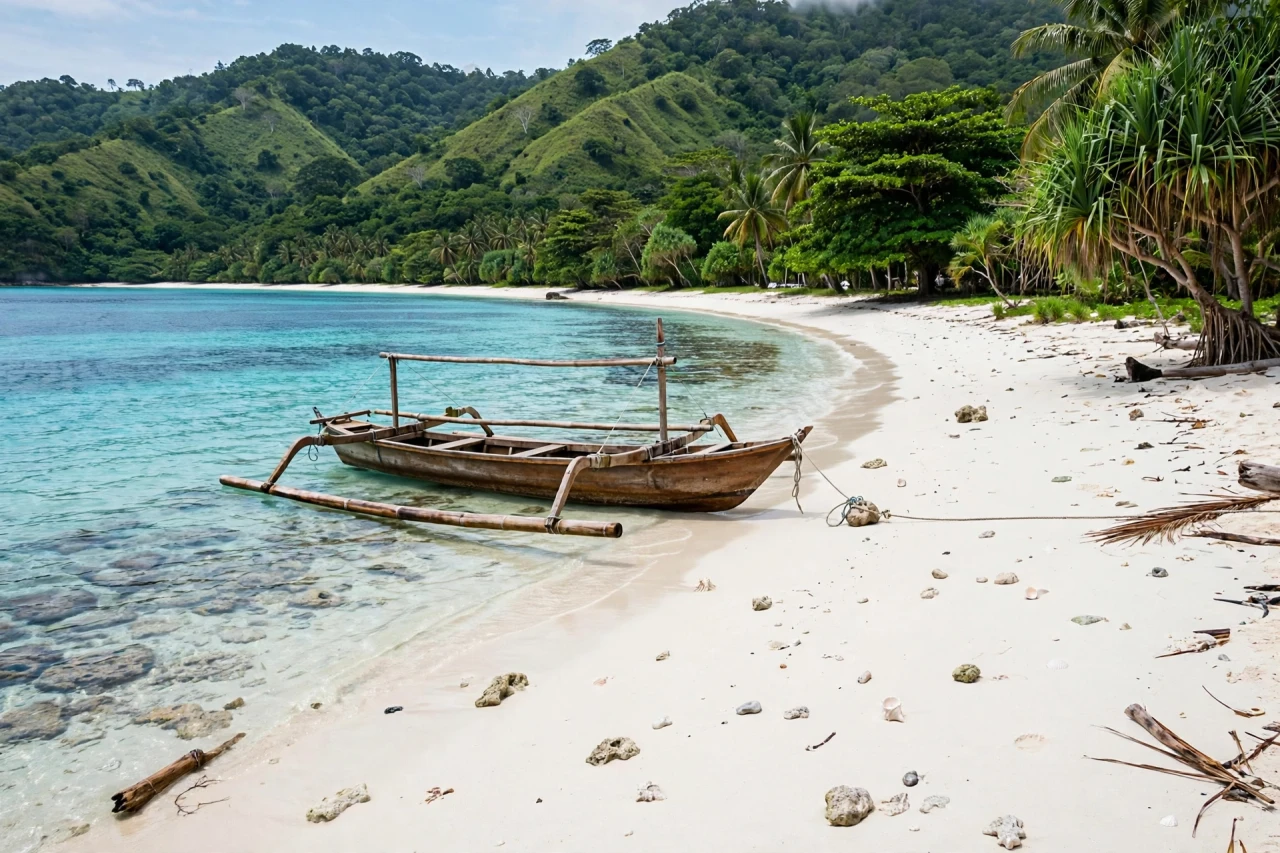
Moyo Island — white sand, clear water and total tranquility.
Sponsored: see today's best travel deals and offers
Frequently Asked Questions
Is Sumbawa good for beginner surfers?
Lakey Beach's outer reefs suit intermediates and up, but the inside sections and nearby beach breaks work for beginners with a lesson. Surf camps will point you to the right peak for your level — and the crowds are thin.
When is the best time to see whale sharks in Saleh Bay?
Year-round — the sharks visit the bagan platforms daily. The dry season (April–October) offers calmer seas and better visibility for snorkeling.
How do I get from Lombok to Sumbawa?
The Kayangan–Poto Tano ferry (1.5 hours, runs frequently through the day) is the main link. From Poto Tano it is about 2 hours by road to Sumbawa Besar.
Is Sumbawa safe for independent travelers?
Yes — Sumbawa is welcoming and low-key, with far less hassle than busier tourist islands. Standard precautions apply: secure valuables, drive carefully on rural roads, and respect local customs in villages.
Can I combine Sumbawa with Komodo or Flores?
Absolutely. Ferries and flights connect Bima (east Sumbawa) to Labuan Bajo, Flores — Sumbawa slots perfectly into a Lombok–Sumbawa–Flores overland adventure.
Sumbawa is Indonesia for travelers who thought they had seen it all — perfect peaks without the crowds, whale sharks at dawn, and islands you will have entirely to yourself. Book the Saleh Bay boat the night before, and don't leave Lakey without watching the sun drop behind the peaks. Surf trip or wildlife mission — what brings you to Sumbawa? Tell us in the comments.


Comments
Post a Comment