Far to the east of Indonesia's better-known island routes, in the scattered Barat Daya Islands of Maluku, lies Romang Island — a quiet volcanic island where the pace of life is set by the sea, the fishing boats, and the light over the hills. There are no crowds here, no long lines for viewpoints, and no resort strips. What Romang offers instead is something increasingly rare in Southeast Asia: a genuinely remote island, still shaped by its villages, its reefs, and its volcanoes, waiting for travellers who are happy to slow down and travel on local terms.
This Romang Island travel guide covers what makes the island special, how to reach it, where to stay, what to do, and how to plan a visit that respects both the place and the people who call it home. If you are dreaming of Maluku beyond Ambon and the Banda Islands, Romang deserves a place on your list for 2026.
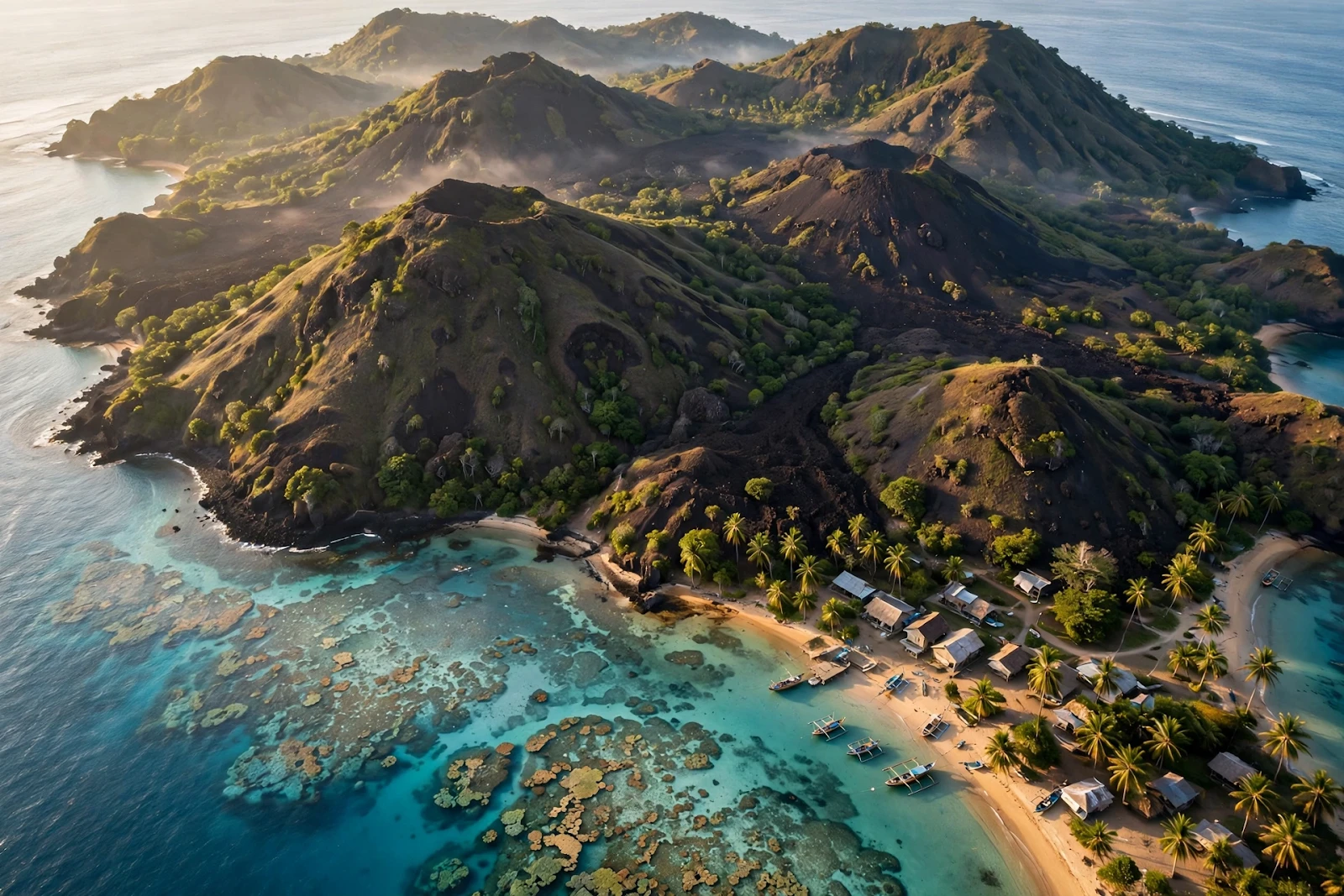
Romang's volcanic hills rise above a quiet coastline of turquoise water and coral reefs.
What Makes Romang Island Special
Romang is part of the Barat Daya Islands, a chain of small islands stretching between Timor and the Banda Sea in eastern Indonesia. The island is volcanic in origin, and that geology shapes everything you see: steep green hills, dark rocky headlands, black-sand stretches in places, and bays where the water turns a startling shade of blue over shallow coral.
Unlike the islands of Bali or Lombok, Romang has not been reshaped for tourism. Villages remain the heart of island life. Fishing boats anchor off sandy beaches, children play along the shore in the late afternoon, and church bells and village gatherings mark the rhythm of the week. For many visitors, this everyday life is the real attraction — a chance to see Maluku as it is, rather than as a postcard.
Nature is the other great draw. The waters around Romang are part of the wider Coral Triangle region, known worldwide for its marine diversity. Snorkellers and divers can expect healthy coral gardens, colourful reef fish, and the kind of clear water that makes even a short swim feel like an expedition. On land, the island's hills and coastal paths offer walks with wide sea views, birdlife, and the quiet that comes from being far from any main road.
Romang is also a place for travellers who enjoy the journey itself. Getting here takes effort and patience, and that effort is part of the reward. You will not stumble upon Romang by accident; you arrive because you chose to, and the island tends to repay that choice with empty beaches and unhurried days.
Getting to Romang Island
Reaching Romang requires a combination of flights and sea travel, and plans should be made with flexibility built in. Most travellers begin from a larger Maluku gateway such as Ambon, then continue eastward through the island chain, using a mix of domestic flights and passenger boats where available. Routes and timetables in this part of Indonesia can change with the season, weather, and vessel availability, so it is essential to check locally and close to your travel dates rather than relying on a fixed schedule found online months in advance.
Because connections are limited, allow extra days on either side of your Romang visit. A missed boat or a delayed flight should be treated as part of the adventure, not a disaster — build a buffer into your itinerary, keep your plans loose, and confirm each onward leg in person once you are in Maluku. Local guesthouse hosts, harbour staff, and fellow travellers are often the best sources of up-to-date transport information.
Pack light and practical for the crossing: a dry bag for electronics, sun protection, motion-sickness remedies if you need them, and enough cash for the journey, since card payments and ATMs cannot be relied upon on small islands. Once you arrive, walking and small local boats are the main ways to get around, which suits the island's scale perfectly.
Where to Stay on Romang Island
Accommodation on Romang is simple, small-scale, and community-based — think family-run guesthouses and homestays rather than hotels. Staying with a local family is one of the best ways to experience the island: hosts can arrange meals, boat trips, and village visits, and they know the reefs, beaches, and walking routes better than any guidebook.
Book ahead where you can, but be prepared for simple facilities. Expect fan-cooled rooms, shared or basic bathrooms in some places, and meals built around fresh fish, rice, and island vegetables. Bring any essentials you cannot do without, including toiletries, medicines, and a torch, and be ready for limited internet and phone signal. That disconnection is, for many visitors, one of Romang's greatest gifts.
If you prefer to keep your base flexible, ask your host about day trips by boat to nearby beaches and snorkelling spots. A local boat captain can tailor a day to the weather and the sea conditions, taking you to the calmest reef or the quietest stretch of sand on any given morning.
Things to Do on Romang Island
Snorkel and Dive the Coral Reefs
The reefs around Romang are the island's headline attraction. Shallow coral gardens close to shore are ideal for snorkelling, while deeper sites reward divers with drop-offs, reef fish, and the sense of exploring waters few travellers ever see. Always snorkel or dive with a local guide who knows the currents, and never stand on or touch living coral. Bring your own mask and fins if you have them, since rental gear on remote islands can be limited.
Romang's reefs are alive with coral gardens and tropical fish — best explored with a local guide.
Walk the Hills for Volcano Views
Romang's volcanic hills offer some of the island's finest viewpoints. Early morning is the best time to walk, before the heat builds: follow village paths and coastal tracks, take plenty of water, and ask a local guide to show you the safest routes. From the higher ground, you can look out across neighbouring islands, fishing boats, and the wide Banda Sea — a view that explains why travellers go to such lengths to reach this corner of Maluku.
Relax on Quiet Beaches
Romang's beaches are refreshingly undeveloped. There are no beach clubs and no rows of sun loungers — just sand, shade trees, and the sound of the water. Bring your own shade, water, and snacks, swim only where local people advise it is safe, and leave nothing behind. A slow afternoon on a Romang beach, watching the light change over the hills, is a perfect antidote to a busy travel itinerary.
Experience Village Life
Take time to visit Romang's villages respectfully. Dress modestly when walking through a village, ask permission before photographing people, and greet people politely. Many villages welcome visitors who show genuine interest — in local crafts, in the fishing catch of the day, or simply in sharing a conversation. Buying food, boat trips, and handicrafts directly from local people is the simplest way to make sure your visit benefits the community.
Evenings on Romang belong to fishing boats, village life, and long island sunsets.
Watch Birds and Island Wildlife
The Barat Daya Islands are known among birdwatchers for their distinctive island species, and Romang's forests and coastal scrub reward patient, quiet observation. Bring binoculars, walk slowly in the early morning, and consider hiring a local guide who knows where birds are most active. Even for non-specialists, the dawn chorus and the sight of seabirds over the reefs add a memorable layer to a Romang visit.
Practical Tips for Visiting Romang
A little preparation goes a long way on a remote island. Cash is king: bring enough Indonesian rupiah for your whole stay, including boat trips, meals, and any unexpected extra nights. Mobile signal and internet may be patchy, so download offline maps and any important information before you leave a larger town, and let family or friends know your rough plans.
Health and safety basics matter here. Pack reef-safe sunscreen, insect repellent, a basic first-aid kit, and any prescription medicines you need, as pharmacies are limited. Drink bottled or treated water, be careful with sun exposure during boat days, and always check sea conditions with locals before swimming or boating. Travel insurance that covers remote areas and medical evacuation is strongly recommended for a destination this far off the main routes.
Finally, travel lightly on the environment. Take all rubbish with you, avoid single-use plastics where possible, refill water bottles when you can, and respect local customs around sacred sites and village spaces. Small islands feel the impact of visitors quickly, and thoughtful behaviour helps keep Romang the quiet, beautiful place that drew you here.
Best Time to Visit Romang Island
The best time to visit Romang generally falls in the drier months, when seas are calmer and boat travel is more reliable — but conditions in the Barat Daya Islands can vary from year to year, and the wet season can bring rougher seas and disrupted transport. Before finalising dates, check locally with Maluku-based hosts, boat operators, or recent traveller reports for the current season's conditions.
Whatever month you choose, plan around the sea rather than against it. Calm mornings are best for snorkelling and boat trips, while afternoons are for shade, village walks, and long sunsets. If your dates are flexible, that flexibility is your greatest asset on Romang: a spare day can turn a weather delay into an extra reef morning or an unplanned village feast.
Sponsored: see today's best travel deals and offers
Frequently Asked Questions
Where is Romang Island?
Romang Island is in the Barat Daya Islands of Maluku, eastern Indonesia, in the Banda Sea region between Timor and the Banda Islands. It is a remote volcanic island reached via Maluku gateways and onward sea travel.
How do I get to Romang Island?
Most visitors travel via a larger Maluku gateway such as Ambon, then continue by domestic flight and passenger boat. Routes and timetables change often, so confirm each leg locally and close to your travel dates, and allow buffer days for delays.
What is Romang Island known for?
Romang is known for its volcanic hills and viewpoints, healthy coral reefs for snorkelling and diving, quiet undeveloped beaches, and traditional village life — all far from Indonesia's main tourist routes.
Where should I stay on Romang Island?
Expect small family-run guesthouses and homestays rather than hotels. Staying with a local host is recommended: hosts can arrange meals, boat trips, and guides, and offer the best advice on daily sea and weather conditions.
When is the best time to visit Romang Island?
The drier months generally offer calmer seas and more reliable boat travel, but conditions vary each year. Check locally before you travel, keep your itinerary flexible, and plan boat trips for calm mornings where possible.
Romang Island is not the easiest island to reach, and that is precisely the point. Those who make the journey find volcano views without viewpoints crowded with visitors, reefs without dive boats queuing overhead, and villages where a traveller is still a guest rather than a number. If a quiet, wild corner of Maluku sounds like your kind of adventure in 2026, start planning Romang now — and when you go, travel slowly, travel respectfully, and leave only footprints in the sand. Have you visited Maluku's remote islands, or is Romang on your list? Share your plans, questions, and tips in the comments below — we would love to hear from you.



Comments
Post a Comment