Pekalongan is one of Central Java's most rewarding surprises. It does not shout for attention the way Yogyakarta or Semarang does. Instead, it wins visitors over quietly: in a workshop where an artisan draws wax onto cloth by hand, in a market stall piled with brilliantly coloured fabric, and at a waterfront where fishing boats come home as the sun drops into the Java Sea. Known across Indonesia as the City of Batik, Pekalongan was recognised by UNESCO as a Creative City of Crafts and Folk Art, and that craft is not locked away in a museum here — it is a living, working part of everyday life.
This Pekalongan travel guide covers everything you need for a visit in 2026: the batik workshops and museums, the historic Kauman batik village, the north-coast waterfront, the local food you should not miss, where to stay, how to get there, and practical tips for exploring at an unhurried pace. One or two full days is enough to see the highlights, and the city pairs beautifully with a longer Central Java journey that also takes in Semarang, Solo, or the Dieng Plateau.
Why Visit Pekalongan in 2026
Pekalongan sits on Java's north coast, roughly halfway between Semarang and Cirebon, and it has been a trading port for centuries. Chinese, Arab, Indian, and Dutch influences all left their mark here, and nowhere is that melting pot more visible than in the city's batik. Unlike the deep browns and indigos of inland Solo and Yogyakarta batik, Pekalongan batik is famously bright: pinks, greens, blues, and yellows, with floral and coastal motifs inspired by the sea, gardens, and the city's trading history.
What makes Pekalongan special for travellers is access. In many craft towns, you admire finished products in a shop. In Pekalongan, you can watch the whole process — from plain white cloth to a finished masterpiece — often in the same family-run workshop where the cloth is dyed, dried in the sun, and sold. Add a compact, walkable old town, a working fishing harbour, and one of Central Java's most distinctive local cuisines, and you have a destination that rewards curious travellers far beyond its modest size.
Batik Workshops and the Batik Museum
No visit to Pekalongan is complete without getting close to the craft itself. Start at the Museum Batik Pekalongan, the city's dedicated batik museum. Its collection traces the history of batik in the region, displays historic cloths from different eras and influences, and explains the tools and techniques behind the art. It is a compact museum, easy to enjoy in an hour or so, and it gives you the vocabulary — motifs, dyes, wax-resist methods — that makes everything else you see in the city richer.
A batik artisan at work with a canting in Pekalongan.
After the museum, head to a workshop. Many workshops welcome visitors, and some offer short hands-on sessions where you can try drawing with a canting — the small copper tool used to apply hot wax in fine lines — onto a piece of cloth. Even a brief session changes how you look at batik forever: you quickly realise how much patience, steadiness, and skill goes into every centimetre of a hand-drawn (batik tulis) cloth, and why a single piece can take weeks or even months to finish.
When you shop, ask whether a piece is batik tulis (fully hand-drawn), batik cap (stamped with a copper stamp), or a combination of the two. Hand-drawn pieces cost more, and rightly so. If you fall in love with a particular motif, ask about its meaning — many patterns carry stories about nature, prosperity, or protection, and shopkeepers are usually happy to explain. Buying directly from a workshop also means your money goes straight to the makers, which is one of the most satisfying souvenirs you can bring home from Java.
Kauman Batik Village: The Heart of the Craft
Kauman, also known as Kampung Batik Kauman, is the historic batik quarter and the most atmospheric neighbourhood in Pekalongan. Its narrow lanes are lined with old houses, many of them still working as combined homes, workshops, and showrooms. Step inside one and you may find cloth drying in a courtyard, a dye bath steaming in the back, and a family member happy to show you around.
Kauman is best explored on foot, slowly. Wander the lanes in the morning when workshops are busy and the light is soft, stop for coffee or a snack when you need a break, and keep an eye out for the neighbourhood's distinctive architecture — a mix of Javanese, Chinese, and colonial-era details that tells the story of the traders who built this quarter. Some houses have small signs inviting visitors in; where there is no sign, a polite greeting and a smile go a long way.
If you have time, visit more than one workshop. Each family has its own style, colour palette, and speciality, and comparing them is half the pleasure. You will also find batik in every form imaginable: traditional long cloths, shirts, dresses, scarves, table runners, and bags. Whether you are looking for a statement piece or an affordable gift, Kauman is the place to find it.
The Coast and Waterfront
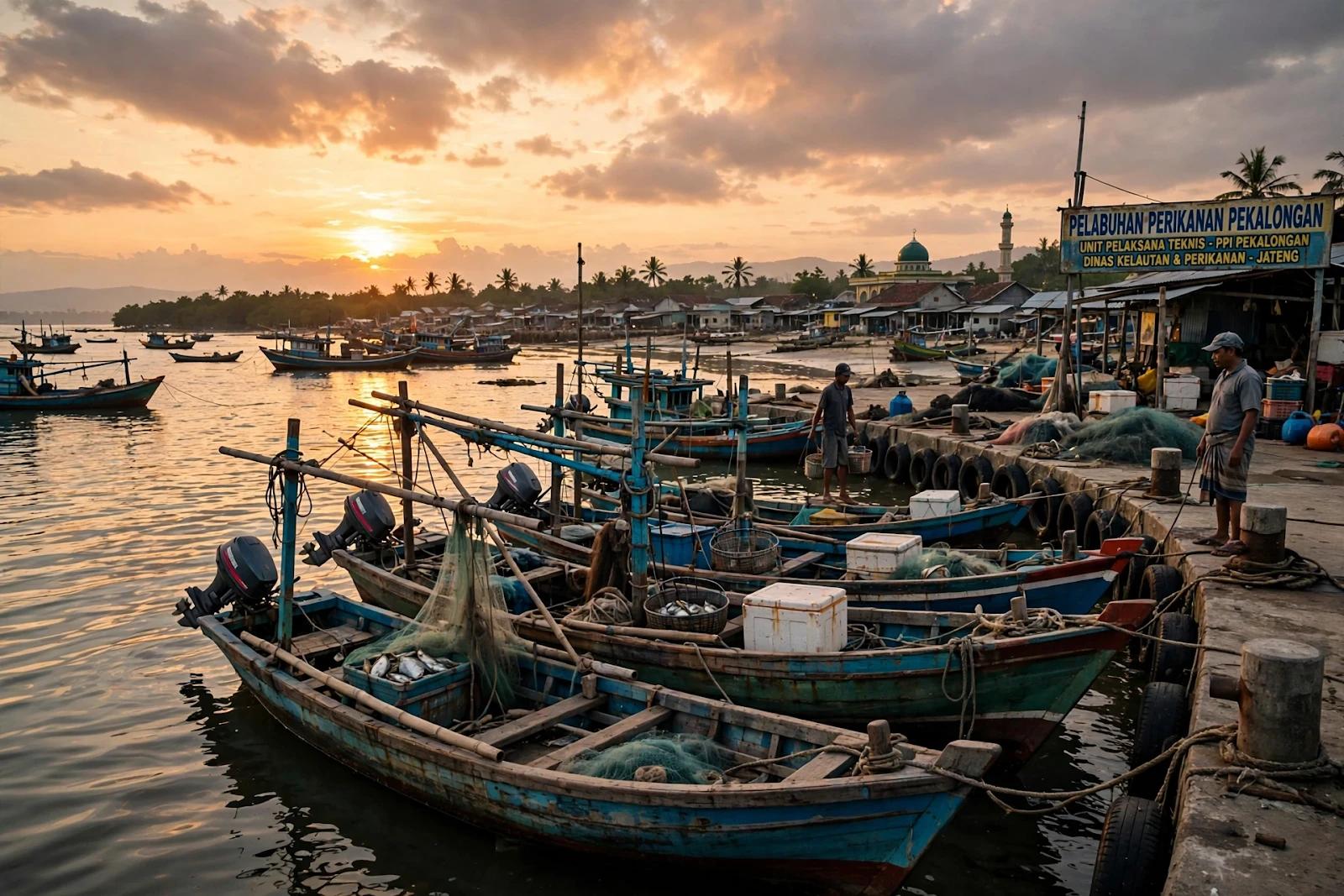
Pekalongan's identity is inseparable from the sea. The city grew up as a port, and its waterfront still hums with daily life. Head to the harbour area in the late afternoon, when fishing boats return and the light turns golden, to watch the catch being unloaded and the evening market come alive. It is a working harbour rather than a polished tourist promenade, and that is exactly its charm: nets, crates, gulls, and the smell of salt air.
Colourful batik cloth on display in Pekalongan.
The city's beaches are modest compared with the famous surf beaches of southern Java, but they offer a pleasant change of pace. Pasir Kencana Beach, near the centre, is a popular local spot for an evening stroll, street snacks, and watching the sunset over the Java Sea. Further along the coast, the Slamaran area is known for its fishing community and relaxed seaside atmosphere. Come for the breeze and the views, and manage expectations: these are local, lived-in beaches, not resort strips, and that authenticity is part of the appeal.
One practical note for coastal visitors: parts of Pekalongan's low-lying coastal area are affected by tidal flooding at certain times of year, a challenge the city shares with other north-coast towns. If you are visiting during the wet season, check local conditions, wear footwear you do not mind getting wet, and plan waterfront walks for the drier parts of the day. Locals are used to it and will happily advise you on timing.
What to Eat in Pekalongan
Pekalongan's food is a highlight in its own right, and it reflects the same coastal, multicultural history as its batik. The dish to try first is megono, the city's signature: young jackfruit, finely chopped and steamed with grated coconut and spices, usually served with rice. It is savoury, fragrant, and deeply comforting, and it tastes like nowhere else in Java. You will find it at morning markets and local eateries, often sold out by midday, so go early.
Another local favourite is soto Pekalongan, a clear, aromatic chicken or beef soup with a distinctive local seasoning that sets it apart from the soto of other Javanese cities. It is typically served with rice and a squeeze of lime, and it makes a perfect lunch after a morning in the batik lanes. For something heartier, look for tauto, a soto-style soup enriched with fermented soybean (tauco), which gives it a deeper, saltier character.
Do not skip the snacks and sweets. Pekalongan's markets are full of traditional cakes, fried snacks, and fresh tropical fruit, and the city's Chinese and Arab heritage shows up in its bakeries and dessert stalls too. A good strategy is to eat where locals eat: busy morning markets, small warungs with short menus, and stalls with a queue are almost always a safe bet. If you are unsure about spice levels, ask — most vendors are happy to adjust, and a phrase or two of Indonesian goes a long way.
Where to Stay in Pekalongan
Pekalongan has a range of accommodation, from simple guesthouses to comfortable mid-range hotels, mostly clustered near the city centre and the main road. Staying centrally puts you within easy reach of Kauman, the museum, and the food markets, and makes it simple to explore on foot or by short ride-hailing trips. If you prefer a quieter base, look for hotels slightly away from the busiest streets, but still within a short drive of the centre.
Book ahead if you are visiting during a public holiday or a batik festival period, when the city's hotels fill up. For most of the year, though, Pekalongan is relaxed enough that you can find a room without much fuss. Air conditioning is worth having — the north coast is hot and humid year-round — and a hotel with a good breakfast sets you up well for a morning of walking the batik lanes.
Getting There and Getting Around
Pekalongan is well connected. Trains on Java's northern line stop at Pekalongan station, with services from Jakarta, Semarang, Surabaya, and other major cities — the train is generally the most comfortable way to arrive. Buses also serve the city from across Java, and if you are driving, the Trans-Java toll road makes the journey from Semarang or Jakarta straightforward.
Fishing boats on Pekalongan's waterfront at sunset.
Once you are there, the centre is compact. Kauman and the museum area are walkable, and for longer hops, ride-hailing cars and motorbikes, local taxis, and becak (cycle rickshaws) are all available. A becak ride through the old town is a pleasant way to cover ground while soaking up the atmosphere. If you plan to visit beaches or villages outside the centre, a ride-hailing car or a rented vehicle with a driver is the easiest option.
Practical Tips for Visiting Pekalongan
How Long to Stay
One full day covers the museum, Kauman, and a waterfront sunset, with time for a proper food crawl. Two days lets you slow down, take a batik workshop, visit the beaches, and browse more workshops without rushing. Pekalongan also works well as a stopover between Semarang and Cirebon.
Best Time to Visit
The dry season, roughly April to October, generally brings sunnier weather and easier walking. The wet season brings short, heavy showers, but also lusher light and fewer visitors. Whenever you come, pack light, breathable clothing, sun protection, and a rain layer just in case.
Money and Etiquette
Cash is still king in markets and small workshops, so carry Indonesian rupiah in small denominations alongside a card for hotels. When visiting workshops and homes, dress respectfully, ask before photographing people at work, and remove shoes if invited indoors and you see others doing so. A little courtesy opens a lot of doors in Kauman.
Suggested One-Day Itinerary
Start with breakfast and megono at a morning market, then spend the late morning at the Batik Museum and a hands-on workshop. After lunch — soto Pekalongan, of course — wander Kauman's lanes in the afternoon, shopping and chatting with makers. Finish at the waterfront for sunset, then dinner at a local warung. It is a full day, but an unhurried one, and it captures the city at its best.
Sponsored: see today's best travel deals and offers
Frequently Asked Questions About Visiting Pekalongan
Is Pekalongan worth visiting?
Yes, especially if you love crafts, culture, and food. Pekalongan offers something rare: a world-famous craft tradition you can watch being made, in a compact coastal city that is still largely off the main tourist trail. It is an ideal stop for travellers who want a deeper, more hands-on experience of Java.
How many days do I need in Pekalongan?
One full day is enough for the highlights — the Batik Museum, Kauman batik village, local food, and a waterfront sunset. Two days is better if you want to take a batik workshop, explore the beaches, and browse workshops at a relaxed pace.
What is Pekalongan famous for?
Pekalongan is most famous for its batik, especially its brightly coloured coastal style, and for its status as a UNESCO Creative City of Crafts and Folk Art. It is also known for its fishing port, its multicultural old town, and local dishes such as megono and soto Pekalongan.
Can I try making batik in Pekalongan?
Yes. Many workshops in and around Kauman welcome visitors and offer short hands-on sessions where you can try drawing with a canting and dyeing a small piece of cloth. Ask at the Batik Museum or your hotel for current recommendations, and allow extra time if you want to take a finished piece home.
How do I get to Pekalongan?
The easiest way is by train on Java's northern line, with services from Jakarta, Semarang, and other major cities stopping at Pekalongan station. Buses and the Trans-Java toll road also connect the city, and once there, the centre is walkable with ride-hailing and becak available for longer trips.
Pekalongan rewards the traveller who slows down: the one who lingers in a workshop, asks about a motif, tastes the morning's megono, and stays for the sunset over the harbour. Come for the batik, stay for the coast and the food, and leave with a piece of cloth — and a story — that no other city in Java could have given you. Have you visited Pekalongan, or is it on your Central Java list? Share your plans, questions, and favourite batik finds in the comments below — we would love to hear them.




Comments
Post a Comment