East Nusa Tenggara is full of islands that most travelers never reach, and Pantar is one of the most rewarding of them. Sitting west of Alor in the Alor archipelago, Pantar is a rugged volcanic island of steep green peaks, crater lakes, black-sand and white-sand beaches, and villages where traditional life continues much as it has for generations. It is not an easy island, and that is precisely its appeal: the diving is superb, the landscapes are dramatic, and the welcome is genuine, because visitors are still rare here.
This Pantar Island travel guide covers why the island is worth the journey, how to reach it via Kalabahi on Alor, its volcanoes and crater lakes, its diving and snorkeling, its traditional villages and culture, where to stay and what a trip costs, and the best time to visit. If you are planning an Alor trip in 2026 and want to go one island further, Pantar is the natural next step.
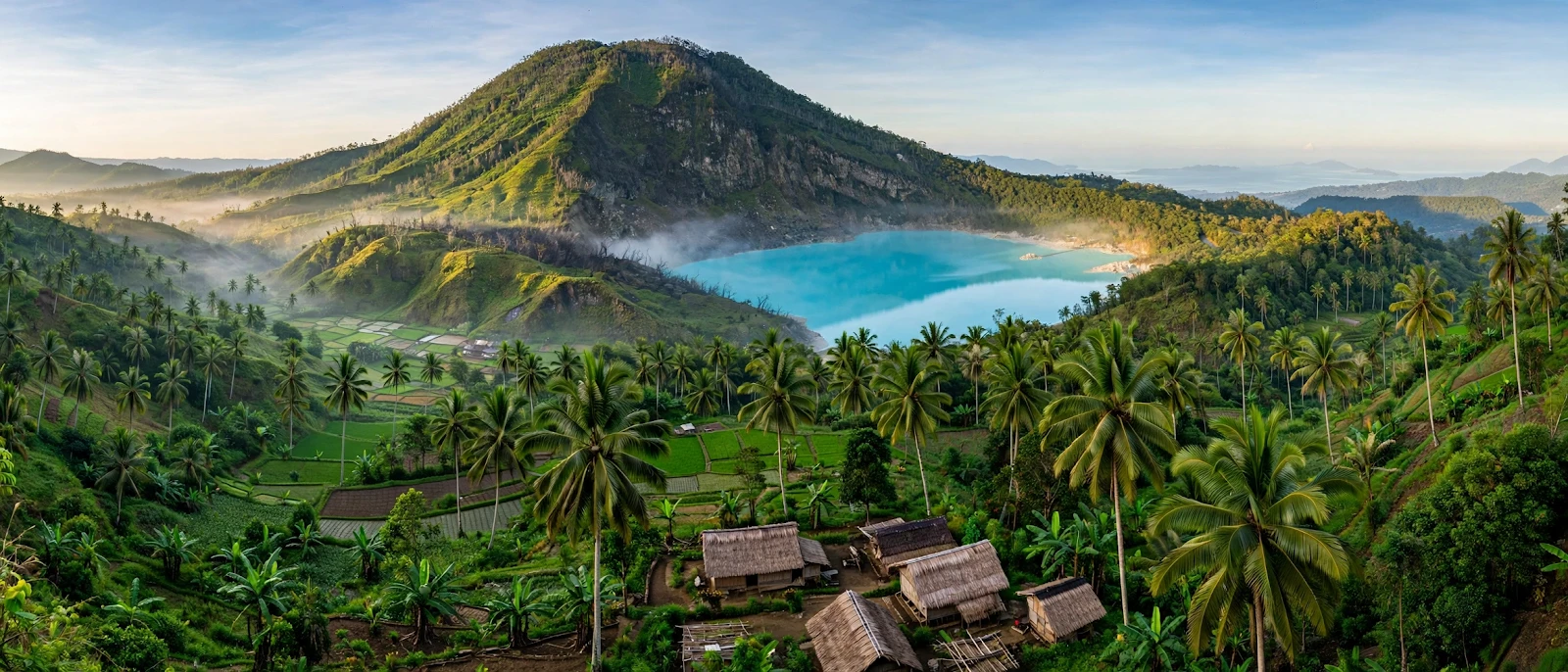
A volcanic crater lake on Pantar, where steep green peaks rise above the island's quiet valleys.
Why Visit Pantar Island?
Pantar's first attraction is its landscape. The island is volcanic through and through, with prominent peaks, crater lakes, and a coastline that swings between dark volcanic sand and pale coral beaches. Inland, hillsides are terraced for farming, and small villages sit in valleys or along the shore. The scenery changes constantly as you travel around the island, and because roads are quiet, the journey itself feels like part of the adventure.
The second attraction is underwater. The strait between Pantar and Alor is famous among divers for its currents, coral walls, and marine life, and Pantar's own reefs are far less visited than Alor's better-known sites. Snorkelers and divers who make the crossing find healthy coral, clear water, and a sense of having the sea largely to themselves.
The third attraction is cultural. Pantar's villages are home to communities with their own languages, crafts, and traditions, including the well-known moko drums of the Alor archipelago, which have long played a role in ceremonies and exchanges. Visiting respectfully, ideally with a local guide, gives you a glimpse of island life that is far removed from Indonesia's tourist trail — and a reason to travel slowly rather than rush through.
Getting There: Reaching Pantar via Alor & Kalabahi
There is no direct shortcut to Pantar: the usual route runs through Kalabahi, the main town on neighboring Alor Island. Most travelers fly to Alor's airport from Kupang, the capital of East Nusa Tenggara, and Kupang itself is reached by air from hubs such as Bali or Jakarta. From Kalabahi, boats cross to Pantar, and the crossing time depends on the boat type, the departure point, and sea conditions, so confirm schedules locally rather than relying on a fixed timetable.
Because connections in this part of Indonesia can shift with weather and season, build buffer days into your plan. An extra night in Kalabahi at either end of the trip takes the pressure off the crossing and gives you a chance to explore Alor town, its market, and its own beaches and dive sites. If you are traveling with a dive operator or a local guide, they can usually arrange the boat and the onward transport on Pantar, which is the simplest option for a first visit.
Once on Pantar, transport is basic. Roads exist around parts of the island, but services are limited, so arrange a vehicle or a guide in advance through your accommodation or a Kalabahi-based operator. Walking between nearby villages is possible and rewarding, but distances and heat make a vehicle worthwhile for longer trips, especially to the volcanoes and crater lakes.
Volcanoes & Crater Lakes
Pantar's volcanic heart is its most dramatic feature. The island's best-known volcano, Sirung, rises over the island's interior, and its crater area is a landscape of volcanic rock, steam vents, and a crater lake that changes color with the light and the season. The hike to the crater is a serious undertaking on rough, exposed ground, so go with a local guide, start early to avoid the worst of the heat, and carry plenty of water.
Even if you do not climb to the crater rim, the volcanic landscape rewards gentler exploration. Viewpoints around the island look out over green cones, terraced valleys, and the sea, and the contrast between the dark volcanic slopes and the bright coastline is one of Pantar's signature sights. The island's geothermal character also shows up in hot springs in places, which make a relaxing stop after a day of walking.
As with any active volcanic area, conditions can change. Check locally before setting out, follow your guide's advice, and be prepared to change plans if the weather or volcanic activity makes a route unsafe. Flexibility is part of traveling in the Alor archipelago, and it is usually rewarded with a better, safer day.
Diving & Snorkeling Around Pantar
The waters around Pantar are among the Alor archipelago's great diving draws. The strait between Pantar and Alor funnels currents that feed rich coral reefs, and dive sites range from gentle coral gardens to deeper walls and current-swept channels. Marine life typically includes reef fish in abundance, turtles, and, with luck, larger pelagic visitors, though sightings are never guaranteed and vary with season and conditions.
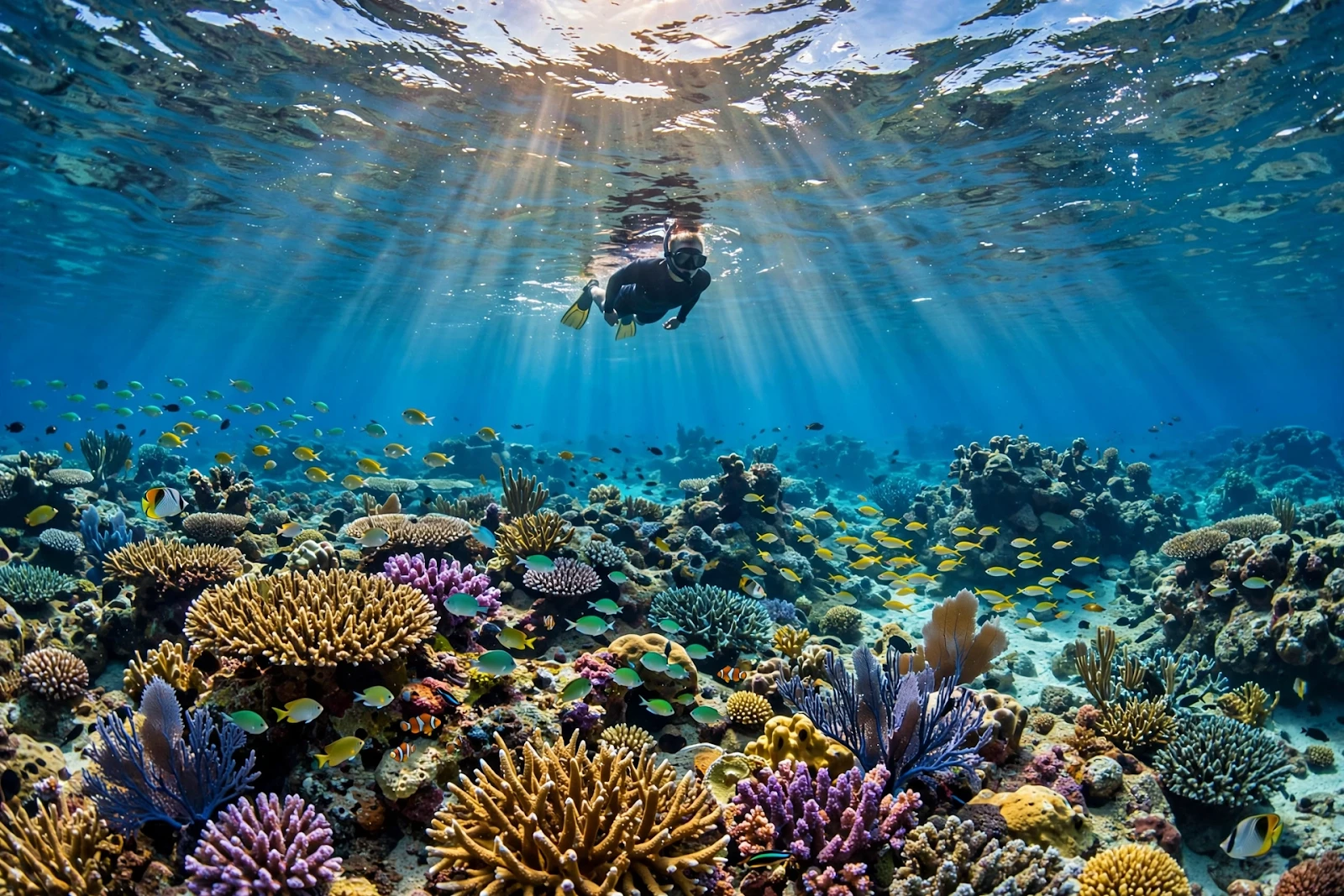
Snorkeling over Pantar's coral reefs, where clear water and healthy coral make every swim memorable.
Diving here is best done with an operator based on Alor or Pantar who knows the currents. Some sites are suitable for experienced divers only, while others are gentle enough for confident beginners and snorkelers. Be honest about your experience level, listen to the dive briefing, and respect the reef: strong currents and fragile coral demand good buoyancy and care.
Snorkelers need not feel left out. Shallow reefs near beaches and sheltered bays offer colorful coral and fish without the need for tanks, and a boat trip along the coast can combine snorkeling stops with beach time and village visits. Bring your own mask and snorkel if you can, as rental gear on Pantar is limited, and a rash guard helps against both sun and currents.
Traditional Villages & Culture
Pantar's villages are the island's living heart. Houses, gardens, and communal spaces reflect a way of life built around farming, fishing, and family, and many villages maintain traditions, crafts, and ceremonies that have been passed down for generations. The moko drums associated with the Alor archipelago are a famous example: these bronze drums have long been valued in ceremonies and exchanges, and they remain a powerful symbol of local identity.
Visiting a village well means visiting respectfully. Dress modestly, ask permission before photographing people or entering homes and sacred spaces, and go with a local guide who can explain customs and introduce you properly. Small gifts are not expected, but buying local crafts directly from makers, eating in village homes or warungs where invited, and hiring local guides are all ways to make sure your visit benefits the community.
A traditional village on Pantar at golden hour, where hillside homes overlook terraced gardens and the sea.
Language is part of the experience too: the Alor archipelago is home to many local languages, and while Indonesian is widely understood, learning a few polite phrases goes a long way. Take your time in villages, listen more than you talk, and remember that you are a guest in people's homes. The warmth of the welcome on Pantar is one of the island's greatest treasures, and it is best repaid with patience and respect.
Where to Stay & What a Trip Costs
Accommodation on Pantar is simple and limited. Expect small guesthouses, homestays, and basic lodgings rather than resorts, and book ahead where possible, especially if you are traveling with a dive group or during a busy period. Staying in a homestay or family-run guesthouse is often the best experience anyway: hosts can arrange transport, guides, and boat trips, and home-cooked meals are usually a highlight.
Costs on Pantar are modest by Indonesian island standards, but the journey itself — flights to Alor, boats to Pantar, and local transport — makes up the bulk of a trip budget. Sharing a boat or a vehicle between travelers keeps costs down, and paying in cash is the norm on the island, so bring enough rupiah from Kalabahi or Kupang, as ATMs on Pantar are scarce or unreliable. Confirm what is included in any guide, boat, or vehicle price before you set out, and agree the route in advance.
Many travelers combine Pantar with a longer Alor stay, basing themselves in Kalabahi for diving and day trips, then spending several nights on Pantar for the volcanoes, villages, and quieter reefs. This combination gives you both the archipelago's best-known diving and its least-visited island in a single trip.
Best Time to Visit & Practical Tips
Pantar can be visited year-round, but the drier months, roughly from April to November, generally offer calmer seas, clearer water for diving and snorkeling, and more reliable boat crossings. The wet season brings greener landscapes and fewer visitors, but also rougher seas, heavier rain, and a higher chance of disrupted transport. Whatever the season, keep your itinerary flexible: in the Alor archipelago, a delayed boat is a normal part of travel, not a disaster.
Practical tips: pack light but bring the essentials — sun protection, a hat, sturdy walking shoes, a dry bag for electronics, and any medication you need, as pharmacies on Pantar are limited. Bring cash, a reusable water bottle, and your own snorkeling gear. Dress modestly in villages, ask before taking photographs, and take all rubbish back with you. Finally, travel with patience: Pantar rewards travelers who slow down, accept the island's pace, and let its volcanoes, reefs, and villages unfold at their own speed.
Sponsored: see today's best travel deals and offers
Frequently Asked Questions
How do I get to Pantar Island?
The usual route is to fly to Alor and travel to Kalabahi, then take a boat across to Pantar. Flight and boat schedules in the Alor archipelago can change with weather and season, so confirm connections locally and build buffer days into your trip.
Is Pantar Island good for diving?
Yes, the waters around Pantar and the strait between Pantar and Alor are known for rich coral reefs, clear water, and abundant marine life. Some sites have strong currents and suit experienced divers, while sheltered bays are good for snorkeling, so choose sites that match your experience level.
Can I climb the volcano on Pantar?
A guided hike to the volcanic crater area is possible, but it is a serious walk on rough, exposed ground. Go with a local guide, start early, carry plenty of water, and check local conditions before setting out, as routes can change with weather and volcanic activity.
Where should I stay on Pantar?
Accommodation is simple: small guesthouses and homestays rather than resorts. Staying with a local host is often the best option, as hosts can arrange transport, guides, and boat trips, and home-cooked meals are usually a highlight.
What is the best time to visit Pantar Island?
The drier months, roughly April to November, generally offer calmer seas, clearer diving conditions, and more reliable boat crossings. The wet season is greener and quieter but brings rougher seas and a higher chance of transport disruption, so keep plans flexible.
Pantar Island is East Nusa Tenggara at its most unfiltered: volcanic peaks and crater lakes, reefs that few divers have seen, and villages where tradition is a way of life rather than a performance. It takes effort to reach, and that effort is exactly what keeps it special. Have you visited Pantar or Alor, or is this remote corner of Indonesia on your list? Share your plans and questions in the comments below.



Comments
Post a Comment