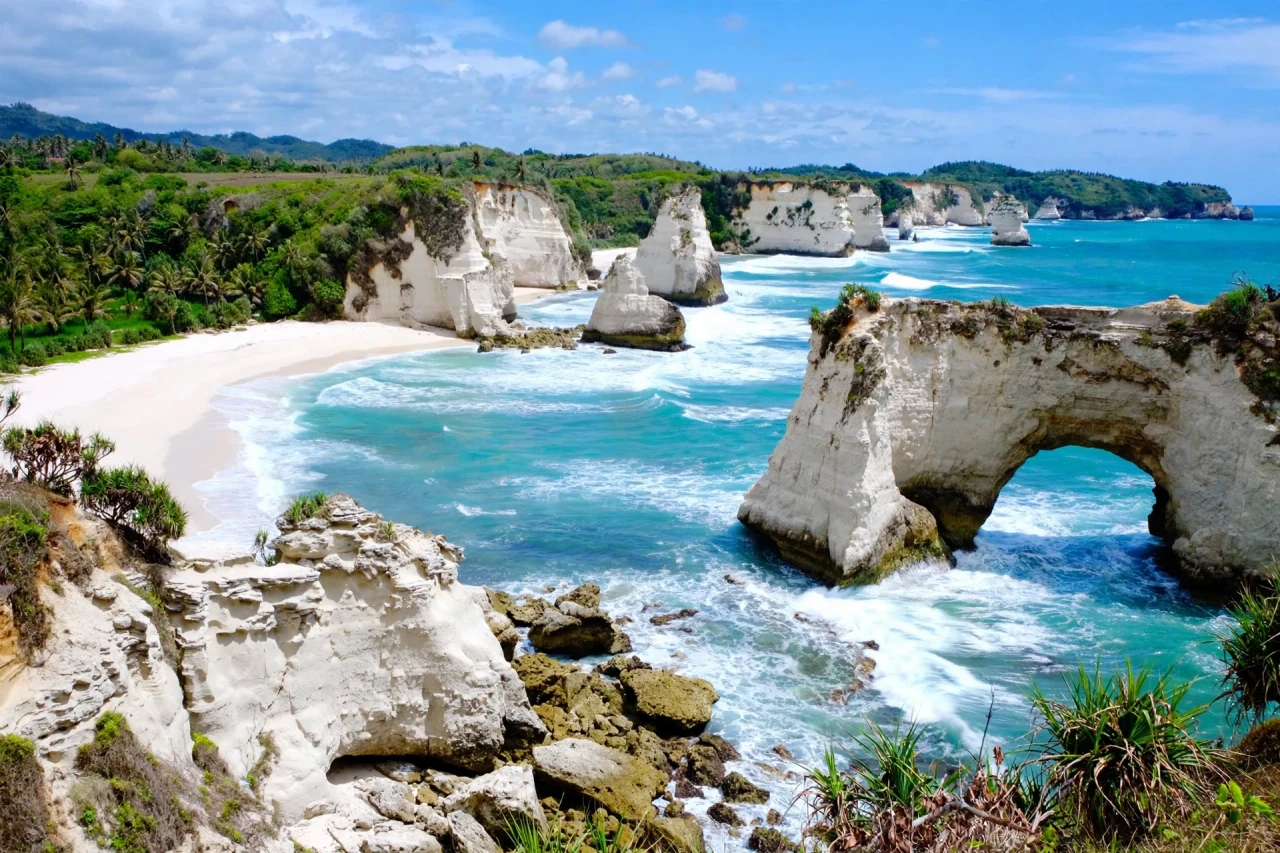
Sunset colors over Srau Beach's calm bay.
Srau is quieter than Klayar and popular with couples and photographers. A few simple homestays and warungs cluster near the beach, and the atmosphere in the late afternoon — with the smell of grilled seafood and the sound of the waves — is hard to beat. Arrive at least an hour before sunset to claim a good spot.
More Hidden Gems Around Pacitan
Buyutan Beach
A small, secluded cove reached by a short trek, Buyutan rewards the effort with pristine sand and excellent snorkeling in clear water. Facilities are minimal, so bring everything you need.
Taman Beach
Known for its long stretch of sand and big waves, Taman is a favorite among local surfers. Even if you do not surf, watching the sunset here with the sound of the breakers is memorable.
Goa Tabuhan
Pacitan is nicknamed the "city of a thousand caves," and Goa Tabuhan is another fascinating one — its stalactites produce gamelan-like tones when struck, and local musicians occasionally perform inside. It is smaller than Goa Gong but wonderfully atmospheric.
Beah Bay (Teluk Beah)
A quiet, curved bay with calm water and a fishing-village atmosphere. Beah is ideal for a slow morning: watch the boats come in, eat breakfast at a beachside warung, and swim in the sheltered shallows.
Getting to Pacitan
Pacitan sits near the border of East Java and Central Java, roughly equidistant from several major cities. The most common approaches:
- From Solo (Surakarta): About 2.5–3.5 hours by car through winding mountain roads. Solo's airport and train station make this the most convenient gateway for most travelers.
- From Yogyakarta: Roughly 3–4 hours by car, passing through Wonogiri. Many visitors combine Pacitan with a Yogyakarta trip.
- From Surabaya/Malang: Around 5–7 hours by car — a long drive, best done with an overnight stop or as part of a broader East Java loop.
- Getting around: Public transport within the regency is limited. Renting a car with a driver (around IDR 500,000–700,000 per day) or a motorbike gives you the freedom to reach beaches and caves on your own schedule.
Where to Stay in Pacitan
Pacitan town has a solid range of budget and mid-range hotels (roughly IDR 200,000–600,000 per night), many of them simple, clean, and friendly. For a more atmospheric stay, look at the small guesthouses and homestays near Klayar and Srau beaches — waking up to the sound of the ocean is worth the slightly more basic facilities. During long weekends and school holidays, book accommodation well in advance, as Pacitan is a popular domestic getaway and rooms fill quickly.
Best Time to Visit Pacitan
The dry season (approximately April to October) offers the best conditions: clearer skies for cave photography, calmer seas for beach visits, and safer driving on the mountain roads. The rainy season (November to March) can make the roads slippery and the south-coast surf dangerously rough. For the quietest experience, avoid Indonesian public holidays, when Klayar and the main beaches draw large domestic crowds.
What to Eat in Pacitan
Pacitan's food scene is humble but delicious. Do not miss:
- Grilled seafood: Fresh fish, squid, and lobster at beachside warungs in Klayar and Srau, cooked over coconut-husk fires.
- Sego godhong jati: Rice served on teak leaves, a local specialty often paired with simple side dishes.
- Tiwul: A traditional cassava-based staple, a legacy of Pacitan's agricultural heritage — try it with coconut and palm sugar as a snack.
- Fresh coconut: Sold everywhere along the coast; the perfect refreshment after the beach.
Practical Tips
- Drive carefully: The roads into and around Pacitan are winding and mountainous. If you are not confident on a motorbike, hire a car with a driver.
- Bring cash: Entrance fees, parking, and warungs are cash-only; ATMs cluster in Pacitan town.
- Respect the surf: Java's south coast is powerful. Never swim at beaches with warning signs, and ask locals about conditions.
- Protect the caves: Do not touch or break formations — they took thousands of years to form. Follow your guide's instructions.
- Start early: Beat the heat and the crowds by visiting Goa Gong in the morning and saving beach sunsets for the evening.
Sponsored: see today's best travel deals and offers
Frequently Asked Questions
Is Pacitan worth visiting in 2026?
Yes — especially if you enjoy nature and want to escape Java's tourist crowds. Goa Gong alone justifies the trip, and combined with Klayar Beach, Srau's sunsets, and the region's other caves and coves, Pacitan offers 2–3 days of outstanding exploring.
How do I get to Pacitan from Yogyakarta or Solo?
The easiest route is by car: about 3–4 hours from Yogyakarta or 2.5–3.5 hours from Solo through scenic mountain roads. Renting a car with a driver is the most comfortable option; experienced riders can rent a motorbike.
What is Goa Gong famous for?
Goa Gong is often called the most beautiful cave in Southeast Asia, known for its enormous, colorfully lit chambers of stalactites and stalagmites — and for the gong-like tones produced when water droplets strike certain formations, which gave the cave its name.
Can you swim at Klayar Beach?
Swimming is possible in calm conditions, but Klayar faces the open Indian Ocean and the surf can be strong. Always check local conditions, swim only where locals deem it safe, and never swim alone or far from shore.
How many days should I spend in Pacitan?
Two full days cover the highlights: one day for Goa Gong plus nearby caves, and one day for Klayar, Srau, and the surrounding beaches. Add a third day if you want to explore the quieter coves like Buyutan and Beah Bay at a relaxed pace.
Pacitan in 2026 is East Java's best-kept secret: a cathedral of stone inside Goa Gong, singing rocks at Klayar Beach, unforgettable sunsets at Srau, and a coastline of hidden coves waiting to be explored. It takes a little effort to reach — and that is exactly why it remains so special. Have you been to Pacitan, or is hidden East Java calling your name? Share your experience in the comments below.





Comments
Post a Comment