Mount Tambora rises quietly over the island of Sumbawa in West Nusa Tenggara, a broad volcanic massif whose green slopes hide one of the most dramatic stories in Indonesian history. Travellers who come here are usually looking for something different from the busy trails of Java and Bali: a multi-day trek through forest and savanna, a vast crater rim at sunrise, and villages where life moves at a slower, distinctly Sumbawan pace. Tambora rewards patience. It is not a quick viewpoint stop, and that is precisely its appeal.
The volcano is best known for its enormous eruption in 1815, an event that reshaped the mountain itself and left a caldera several kilometres across. Today the landscape has recovered in remarkable ways. Forests cloak the lower slopes, grasslands open out higher up, and the crater rim offers sweeping views across Sumbawa and, on a clear day, far beyond. For trekkers, Tambora combines natural beauty with a sense of walking through living history, and for many visitors the journey to reach the trailhead is part of the adventure in itself.
This guide covers what you need to know before you go: why Tambora is worth the effort, how to reach the area, what the trek is generally like, where to stay, when to visit, and how to prepare safely. Conditions, routes and local arrangements can change, so treat this as a starting point and always confirm current details with local guides and authorities before you set out.
The vast caldera of Mount Tambora seen from the crater rim at sunrise.
Why Visit Mount Tambora
Tambora stands apart from Indonesia's better-known volcanoes for several reasons. First is scale. The caldera is immense, a wide bowl carved by the 1815 eruption, and standing on its rim gives a powerful sense of the forces that shaped this island. Photographers love the changing light here, as morning mist lifts from the crater and the surrounding ridges come into view one by one.
Second is the trekking experience itself. The route climbs through distinct zones, from farmland and village gardens at the base, through tropical forest alive with birdsong, into more open grassland near the top. The change in vegetation, temperature and terrain over the course of the climb makes the journey feel like several landscapes in one walk. Wildlife sightings are never guaranteed, but the forests of Sumbawa are home to a variety of birds and other animals, and quiet walkers may be rewarded.
Third is the cultural setting. The villages around Tambora are predominantly farming communities, and visitors pass rice fields, coffee gardens and small settlements on their way to the trail. A local guide does more than navigate the path: guides share knowledge of the mountain, its history and the customs of the area, and hiring locally supports the communities that look after the trail. For travellers seeking a quieter, more reflective Indonesian trekking experience, Tambora offers exactly that.
Getting There
Mount Tambora is located on the Sanggar Peninsula on the northern side of Sumbawa island. Most visitors reach Sumbawa by air or by sea from neighbouring islands, then continue overland toward the villages that serve as trekking bases. The overland journey can take a considerable time, as roads wind through hills and rural landscapes, so it is wise to allow a generous travel margin rather than planning a tight connection on the same day.
From the main towns of Sumbawa, travellers typically arrange onward transport to a trailhead village. Public transport options may be limited in rural areas, and many visitors find it simpler to arrange a vehicle through their guide, guesthouse or a local tour operator. Confirming transport in advance avoids long waits, especially if you are arriving late in the day or travelling in a small group.
Because the trek usually takes more than one day, plan your arrival so you have time to meet your guide, check equipment and rest before starting. Registering with local authorities or the relevant park office, where required, is an important step, and your guide can advise on the current procedure. Keep copies of your identification with you and let someone outside your group know your rough itinerary.
Trekking Routes and What to Expect
Tambora is generally climbed as a multi-day trek, with camps set up along the route. The lower sections pass through cultivated land and forest, where the path can be shaded and, after rain, muddy. Higher up, the trail becomes more exposed, and the final approach to the crater rim is typically steeper and more open. Trekkers should expect long walking days, uneven ground and sections that require steady footing rather than technical climbing skills.
Fitness matters more than speed. A good level of general fitness, comfortable walking boots, and experience with multi-day walks will make the trek far more enjoyable. Altitude is a factor to respect, even though Tambora is not among Indonesia's highest peaks: pace yourself, drink regularly, and listen to your guide if they suggest slowing down or adjusting the plan. Weather on a volcano can change quickly, so a flexible mindset is part of the preparation.
Camping on Tambora is a simple affair. Expect basic campsites, tents, and meals prepared by your trekking team. Nights can feel cool at higher elevations, so a warm layer and a suitable sleeping bag are worth packing even if daytime temperatures at the base feel hot. A headlamp, rain protection, sun protection and enough water capacity are essentials, and your guide will advise on what food and supplies the team carries versus what you should bring yourself.
Trekkers following the trail through open grassland on the slopes of Mount Tambora.
Sights and Activities Around Tambora
While the crater rim is the highlight, the wider Tambora area offers plenty to enjoy before and after the climb. The coastline near the peninsula has quiet beaches and fishing villages where visitors can watch boats come in and sample freshly caught seafood. Inland, waterfalls and forest walks provide gentler day outings for those who want to explore without committing to the full summit trek.
Cultural visits add another dimension. Local markets, traditional houses and village life around the Tambora region give a glimpse of Sumbawan daily routines, from farming and weaving to food preparation. Ask permission before photographing people or entering private spaces, and dress respectfully when visiting villages or places of worship. Small gestures of courtesy go a long way and are appreciated by hosts.
For travellers with extra days, combining Tambora with other Sumbawa highlights makes sense. The island is known for its surf beaches in the west, its horse culture, and its relatively undeveloped coastline. A slower itinerary that pairs the trek with a few days of rest by the sea is often more satisfying than rushing from one attraction to the next, and it leaves room for weather delays on the mountain.
Where to Stay and Costs in General Terms
Accommodation near Tambora ranges from simple guesthouses and homestays in nearby villages to more comfortable hotels in larger towns further away. Staying close to the trailhead makes an early start easier, while staying in a bigger town offers more dining and transport choices. Either way, booking ahead is sensible during popular travel periods, as options in rural areas are limited and can fill up.
Trekking costs generally cover guiding, porters where used, camping equipment, meals on the mountain, transport to the trailhead, and any permits or entrance fees that apply. Prices vary with group size, the length of the trek, and what is included, so compare what different operators offer rather than judging on a single headline figure. A reputable guide service should be able to explain exactly what is included, how many guides and porters will accompany you, and what happens if weather forces a change of plan.
Budget travellers should factor in the overland travel to reach Tambora, which can add up across several legs, as well as food and accommodation before and after the trek. Carrying some cash is advisable, since ATMs may be scarce in rural areas and card payments are not always available. Keep a small reserve for unexpected costs, such as extra transport or an additional night if your schedule shifts.
Best Time and Practical Tips
The most popular time to trek Tambora is generally during the drier months, when trails are firmer and views from the rim are clearer. That said, mountain weather is never fully predictable, and rain or cloud can occur at any time of year. Checking recent local conditions and being prepared for wet weather, even in the dry season, is the safest approach. Avoid planning a trek during periods of heavy rain or when local authorities advise against climbing.
Safety on an active volcano deserves serious attention. Tambora is monitored by Indonesian volcanology authorities, and access may be restricted if activity increases. Before your trek, check the current alert status and follow any guidance from your guide and local officials without exception. Never stray from established routes, and do not approach crater edges or fumaroles beyond the points your guide considers safe.
A few practical tips round out the preparation. Break in your boots before the trek, pack light but complete, and protect electronics and documents from rain. Bring a basic first-aid kit and any personal medication, and tell your guide about health conditions that could matter on the trail. Travel insurance that covers trekking and emergency evacuation is strongly recommended, and it is worth confirming that your policy covers the altitudes and activities involved.
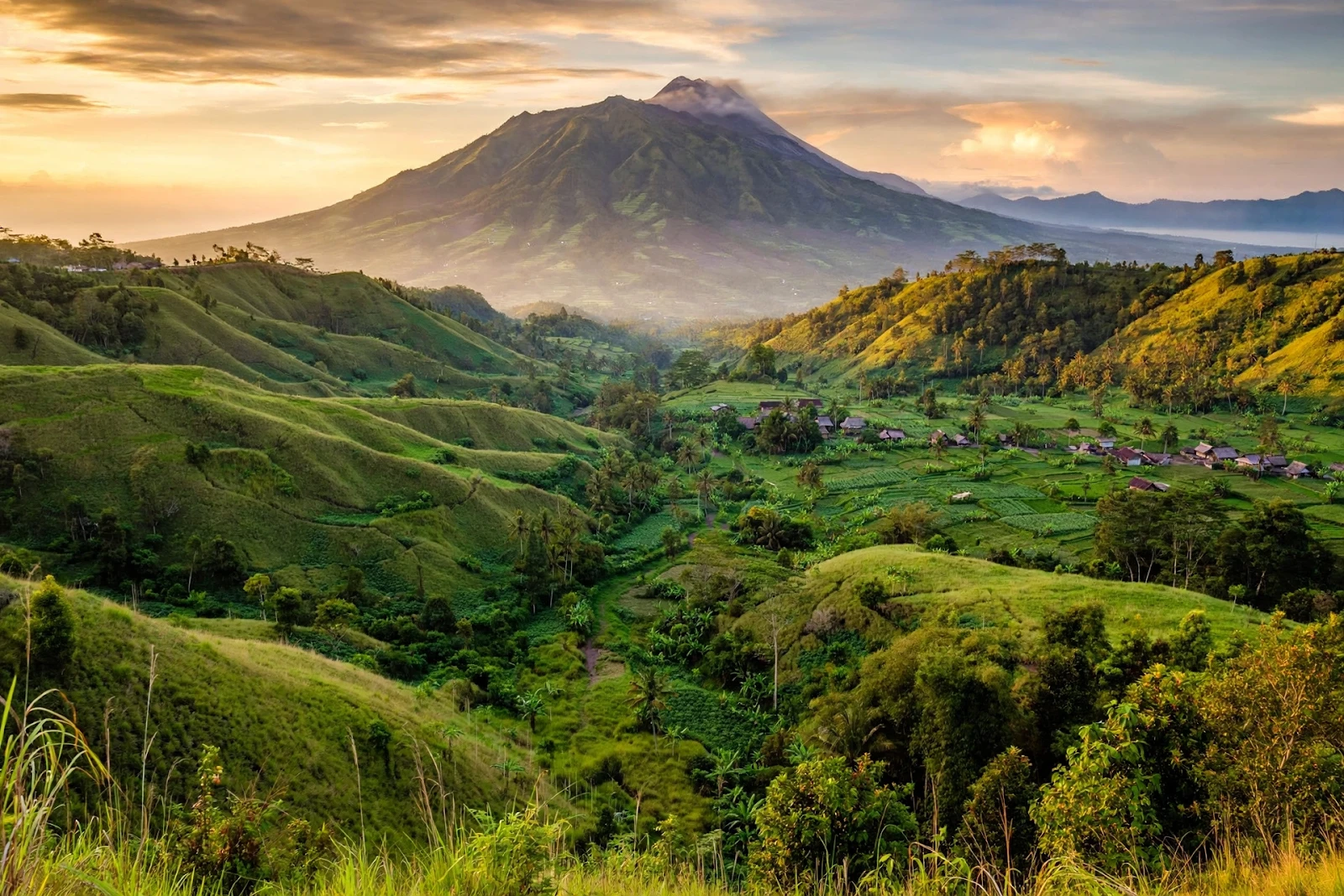
Rolling green hills and volcanic landscape around Mount Tambora at golden hour.
Sponsored: see today's best travel deals and offers
Frequently Asked Questions
How difficult is the Mount Tambora trek?
The Tambora trek is generally considered challenging because it is a multi-day walk with long days, uneven terrain and a steep final section. It does not usually require technical climbing skills, but good fitness, sturdy footwear and experience with multi-day hiking will help a great deal. Your guide can advise whether the trek suits your fitness level, and pacing the climb over enough days makes it manageable for many regular walkers.
Do I need a guide to climb Mount Tambora?
Hiring a local guide is strongly recommended and may be required by local regulations. Guides know the route, the campsites, water sources and current conditions, and they play an important role in safety if weather or trail conditions change. A guide also enriches the experience with local knowledge, and using local guides and porters supports the communities around the mountain.
How many days should I allow for Tambora?
Most treks take several days, including travel to and from the trailhead, so it is wise to allow extra days in your itinerary for transport, rest and possible weather delays. Rushing the climb increases fatigue and reduces enjoyment, while a buffer day gives you flexibility if conditions force a slower pace. Confirm the expected duration with your trekking operator when you book.
What should I pack for the trek?
Essentials include broken-in walking boots, a rain jacket, warm layers for camp, sun protection, a headlamp, a reusable water bottle, and a basic first-aid kit. Your trekking team usually provides tents and cooking equipment, but check what is included before you pack. Keep your bag as light as practical, and protect valuables and documents in waterproof bags.
Is Mount Tambora safe to visit?
Tambora can be visited safely with proper preparation, a reputable guide and attention to official advice, but as with any active volcano, conditions can change. Always check the current volcanic alert status, follow your guide's instructions, and be prepared to change plans if authorities restrict access. Travel insurance covering trekking is strongly recommended for peace of mind.
Mount Tambora is not the easiest trek in Indonesia, but for travellers who value wild landscapes, deep history and quiet trails, it is one of the most rewarding. Take your time, travel with a good local team, respect the mountain and its communities, and you will come home with a story few other Indonesian journeys can match. Have you trekked Tambora, or is it on your list? Share your plans and questions in the comments below — we would love to hear from you.




Comments
Post a Comment