Most travelers treat Medan as a transit stop on the way to Lake Toba or Bukit Lawang — and that is a mistake. As Indonesia's fourth-largest city and the cultural heart of North Sumatra, Medan in 2026 rewards those who stay: Malay palaces and Moorish mosques, a colonial-era old town, and a food culture that locals will tell you is among the best in the entire archipelago. This guide covers the landmarks, the legendary eats, and a perfect weekend itinerary.
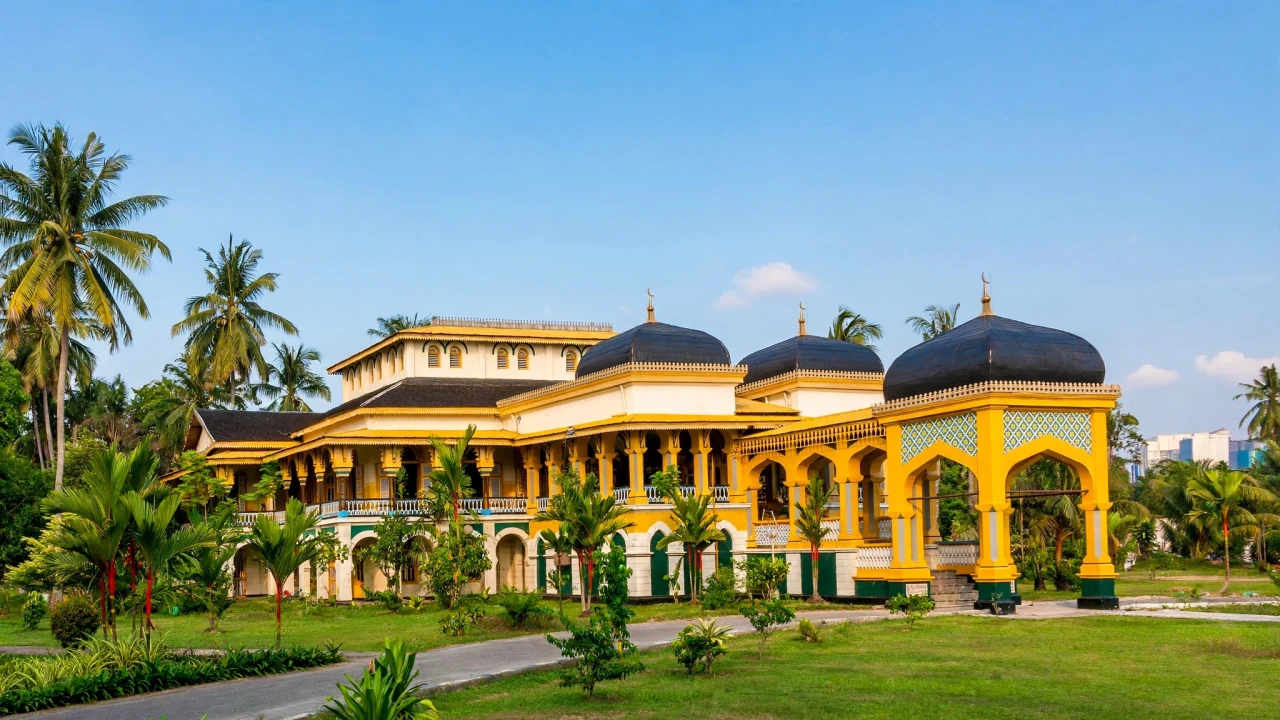
Maimun Palace, Medan's iconic landmark.
Maimun Palace: Medan's Royal Heart
You cannot understand Medan without visiting Istana Maimun. Built between 1887 and 1891 as the royal palace of the Deli Sultanate, it is one of Indonesia's most photogenic heritage buildings: bright yellow walls, Malay-Mughal-European architectural fusion, an iconic front staircase, and a throne room draped in velvet and gold.
The palace is still partly used by the Sultan's family, but the main halls are open to visitors. Inside you will find royal furniture, ceremonial keris daggers, framed photographs of the Deli sultans, and — a beloved Medan ritual — the chance to dress up in Malay, Batak, or other traditional costumes for photos on the throne. Expect small crowds on weekends; mornings are quieter and better for photos in soft light.
Entry is inexpensive (typically in the low tens of thousands of rupiah, with a small extra fee for the costume photo session). Plan for 1–2 hours here, and combine it with the Great Mosque, which sits just a short walk away.
The Great Mosque & Historic Center
Masjid Raya Al-Mashun
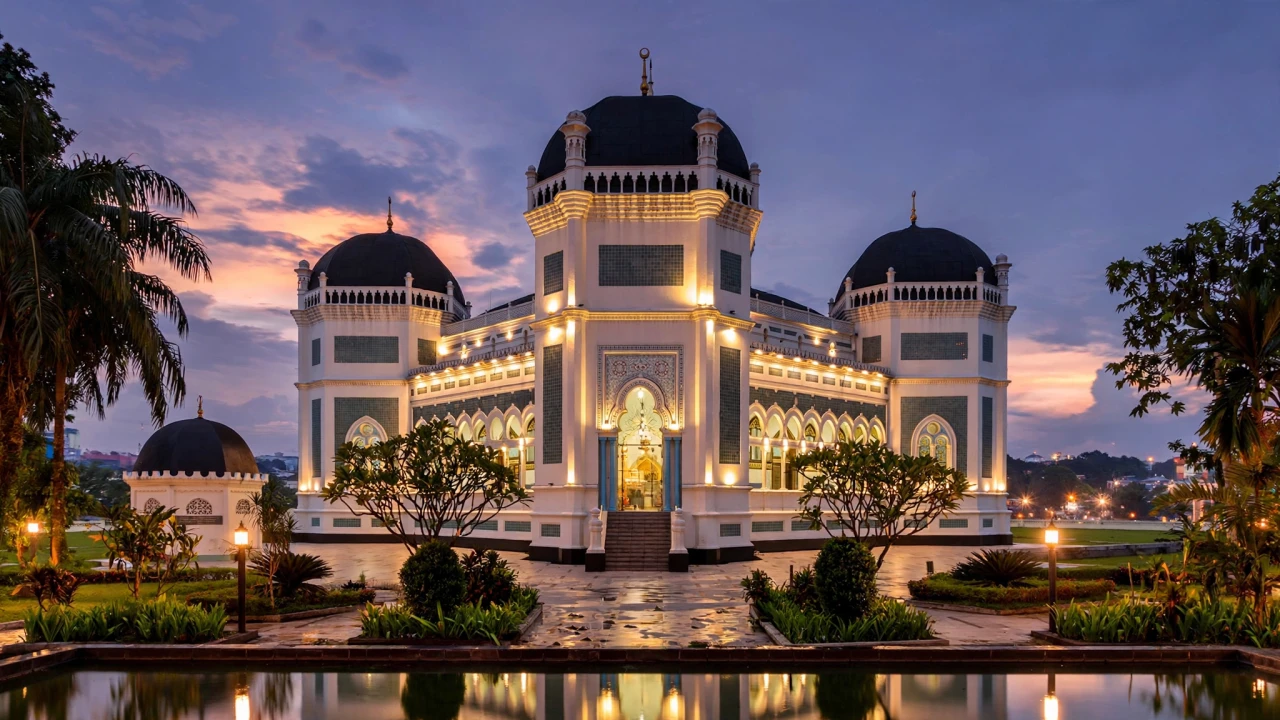
A ten-minute walk from Maimun Palace stands the Great Mosque of Medan (Masjid Raya Al-Mashun), completed in 1909 by the same Deli Sultanate. Its Moorish revival domes, striped arches, and tall minarets make it one of the grandest mosques in Sumatra — and one of the most beautiful buildings in the city. Visit in the late afternoon, when the warm light catches the domes, or at dusk when the mosque is floodlit.
Non-Muslim visitors are generally welcome outside prayer times; dress modestly, remove your shoes, and robes are usually available at the entrance if needed. Always ask before photographing worshippers.
The Colonial Old Town
From the mosque, drift toward Kesawan Square, Medan's old colonial quarter. The Dutch-era shop houses around Jalan Ahmad Yani (formerly Kesawan) house some of the city's most atmospheric eateries — none more famous than Tip Top Restaurant, a 1929 ice cream parlor with antique tiles, ceiling fans, and old-fashioned charm. Order an es krim and a light lunch, and soak up the nostalgia.
Chinatown & Kampung Keling
Medan's diversity is one of its greatest pleasures. The Chinese quarter around Jalan Semarang is the place for noodles and night snacks, while Kampung Keling (Little India) is fragrant with jasmine garlands and the smell of roti canai and nasi briyani. The Sri Mariamman Temple there, dating back to 1884, is the oldest Hindu temple in Medan and a riot of colorful gopuram sculpture.
The Great Mosque of Medan at dusk.
The Medan Food Tour: Eat Like a Local
Ask any Medan resident what their city is famous for and the answer is instant: the food. Malay, Batak, Chinese, Indian, and Minang influences collide here, and the result is a street-food scene of national legend. Wear loose pants and arrive hungry.
Soto Medan
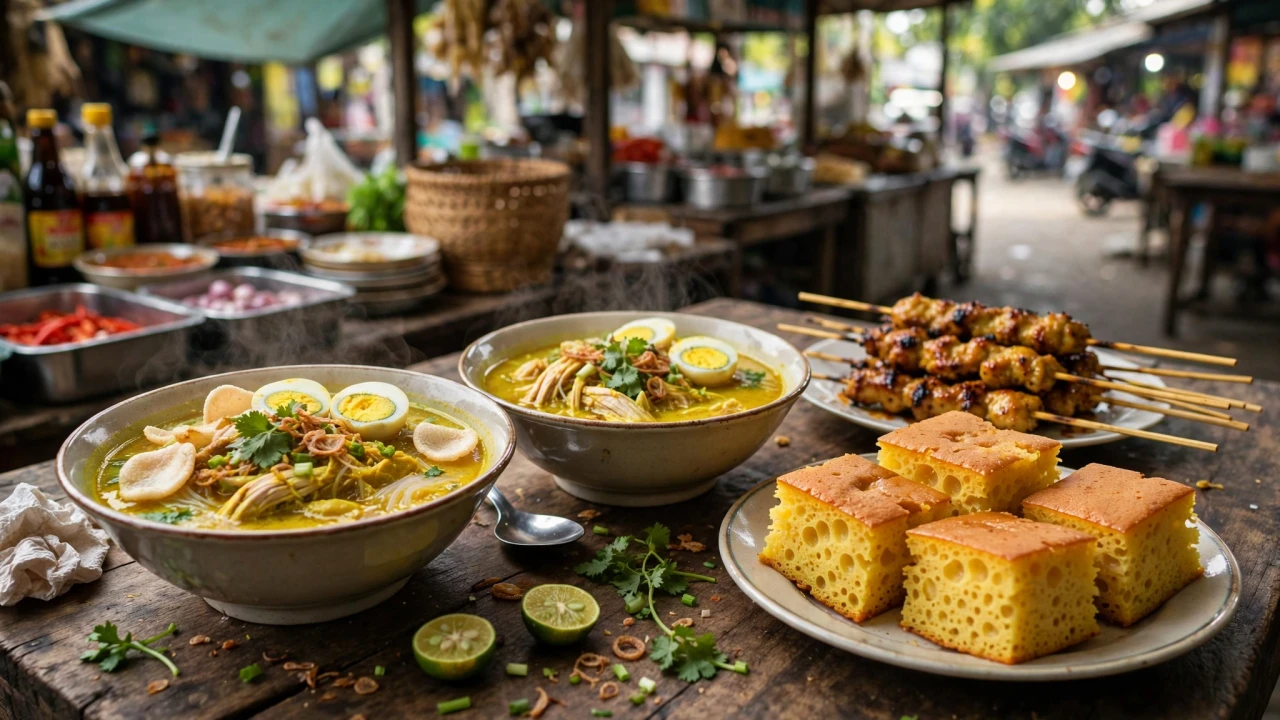
The city's signature bowl: soto Medan is a rich, coconut-milk-based chicken soup, deeper and creamier than most other sotos in Indonesia, perfumed with turmeric, lemongrass, and fried shallots. It is served with rice or lontong and a squeeze of lime. The famous Soto Kesawan and its imitators around the old town are the classic addresses — go early in the day, when the broth is at its best.
Nasi Padang-Style Spots & Malay Classics
Medan does superb Malay-influenced rice dishes. Look for nasi lemak-style breakfasts, anyang (a Batak-Malay vegetable salad with toasted coconut), and the Minang-style rumah makan padang that serve rendang and sambal lado here with a North Sumatran accent. For something uniquely Medan, try mie gomak — thick Batak-style noodles in a spiced coconut sauce, often sold at traditional markets.
Bika Ambon
Despite the name, bika ambon is pure Medan: a honeycombed, chewy pandan-flavored sponge cake with a caramelized crust, sold in every souvenir shop in the city. The classic flavor is pandan, but modern stalls sell chocolate, cheese, and durian versions. Buy it warm from the legendary Zulaikha bakery area if you can — it keeps for a couple of days, making it the perfect edible souvenir.
Durian: The King of Fruit, Medan-Style
Medan is arguably Indonesia's durian capital. The Ucok Durian phenomenon on Jalan KH Wahid Hasyim (the late Haji Muhammad Ali, fondly remembered as Ucok) put the city's durians on the map — he would crack open each fruit for you before you paid, a guarantee of quality that built a legend. Today the whole street is lined with durian stalls. Go after dark, sit on a plastic stool, and eat the season's best fruit with your hands. Prices vary with the harvest; always agree on the price per fruit before it is opened.
Medan's legendary street food.
Perfect Weekend Itinerary: 2 Days in Medan
Day 1 — Heritage & Food
- Morning: Start at Maimun Palace (open early; beat the crowds and the heat). Then walk to the Great Mosque for the late-morning light and a quiet look inside.
- Lunch: Soto Medan at a Kesawan-area institution, followed by a nostalgic ice cream at Tip Top Restaurant.
- Afternoon: Explore Kesawan's colonial shop houses, then wander Kampung Keling and the Sri Mariamman Temple.
- Evening: Durian street session after dark, then a nightcap of Medan coffee — the city takes its kopi seriously, and the old kopitiams are full of character.
Day 2 — Markets, Cake & Beyond
- Morning: Visit Pasar Beruang or another traditional market for mie gomak and market snacks, then stock up on bika ambon as souvenirs.
- Midday: Head to Merdeka Walk for lunch — Medan's pedestrian food strip — or explore the Chinese quarter's noodle shops.
- Afternoon: Optional half-day escape: the Graha Maria Annai Velangkanni (the Indo-Mogul-style Catholic church, a stunning building) or a river-front stroll at Lapangan Merdeka.
- Evening: Sunset at the Great Mosque from the outside, then one last food run — Medan deserves a big farewell dinner.
Longer trip? Medan is the natural gateway to North Sumatra's big three: Lake Toba (4–5 hours by road), Bukit Lawang orangutans (about 2–3 hours), and the Berastagi highlands. Budget an extra day each.
Where to Stay in Medan
Medan has accommodation for every budget, and most visitors are best based near the center:
- City center (Kesawan/Merdeka Walk area): The most convenient base — walking distance to the palace, mosque, old town, and the densest cluster of food spots. Mid-range business hotels here offer excellent value.
- Sunter/Sunggal area: Newer malls and modern mid-range to upscale hotels; a good pick if you prefer shiny amenities and plan to use ride-hailing anyway.
- Budget guesthouses: Plenty of clean, simple guesthouses and homestays cluster around the center — fine for a short weekend stay, and usually with strong Wi-Fi.
Book ahead on weekends and public holidays, when domestic tourists flood in. For a two-day itinerary, one central hotel booking covers everything.
How to Get There
By air: Kualanamu International Airport (KNO) serves direct flights from Jakarta, Surabaya, Denpasar, Kuala Lumpur, Penang, Singapore, and other regional hubs. From the airport, the airport rail link reaches Medan city station in about 30 minutes — fast, air-conditioned, and cheap. Taxis and ride-hailing apps are plentiful for door-to-door trips.
By road: Long-distance buses connect Medan to Lake Toba (Parapat/Ajibata), Berastagi, and Bukit Lawang from the Amplas and Pinang Baris terminals. Shared travel cars (travel) are faster and more comfortable than economy buses.
Getting around: Ride-hailing apps cover the city well and are the easiest option for visitors. Traditional becak (motorcycle rickshaws) are fun for short hops — agree on the fare first. Central Medan is walkable in the heritage zone.
Practical Tips for Medan
- Weather: Hot and humid year-round (30–34°C). Carry water, wear sunscreen, and schedule indoor or shaded sights for midday. Rain is possible any month — a compact umbrella is a year-round essential.
- Best time to visit: The drier months (roughly May to September) are the most comfortable, but Medan's food and heritage are worth visiting in any season.
- Money: Cash is still king at street stalls and markets; cards are accepted at malls and mid-range hotels. ATMs are everywhere in the center.
- Language: Indonesian (Bahasa Indonesia) is widely spoken; English is limited outside hotels and tour operators. A few food words go a long way: enak (delicious), berapa (how much), bisa kurang? (can you lower the price?).
- Religion & etiquette: Medan is majority Muslim with large Christian, Buddhist, and Hindu communities. Dress modestly at mosques and temples, and ask before photographing people at prayer.
- Durian rules: Many hotels ban durian in rooms (the smell lingers for days). Eat it at the stalls, not in your hotel.



Comments
Post a Comment