West Sumatra is famous for its highlands, its food, and its surf, but its quietest treasure sits on the coast south of Padang. Mandeh Bay is a wide, sheltered bay scattered with small green islets, fringed by mangrove forests, and dotted with fishing villages that see few visitors. Locals call it the Raja Ampat of the west, and while the comparison is generous, the feeling is real: calm water, jungle-covered islands, and a sense of discovery that is rare on Sumatra's mainland coast. For travelers in 2026 who want an island day without a long journey, Mandeh is West Sumatra's best-kept coastal secret.
This Mandeh Islands guide covers how to get there from Padang, the best island-hopping routes, viewpoints, mangrove forests, and fishing villages, plus where to stay and what a trip costs. Whether you come for a day trip or a slow weekend, Mandeh offers a gentle, affordable island experience that pairs perfectly with Padang's food scene and Bukittinggi's highlands.
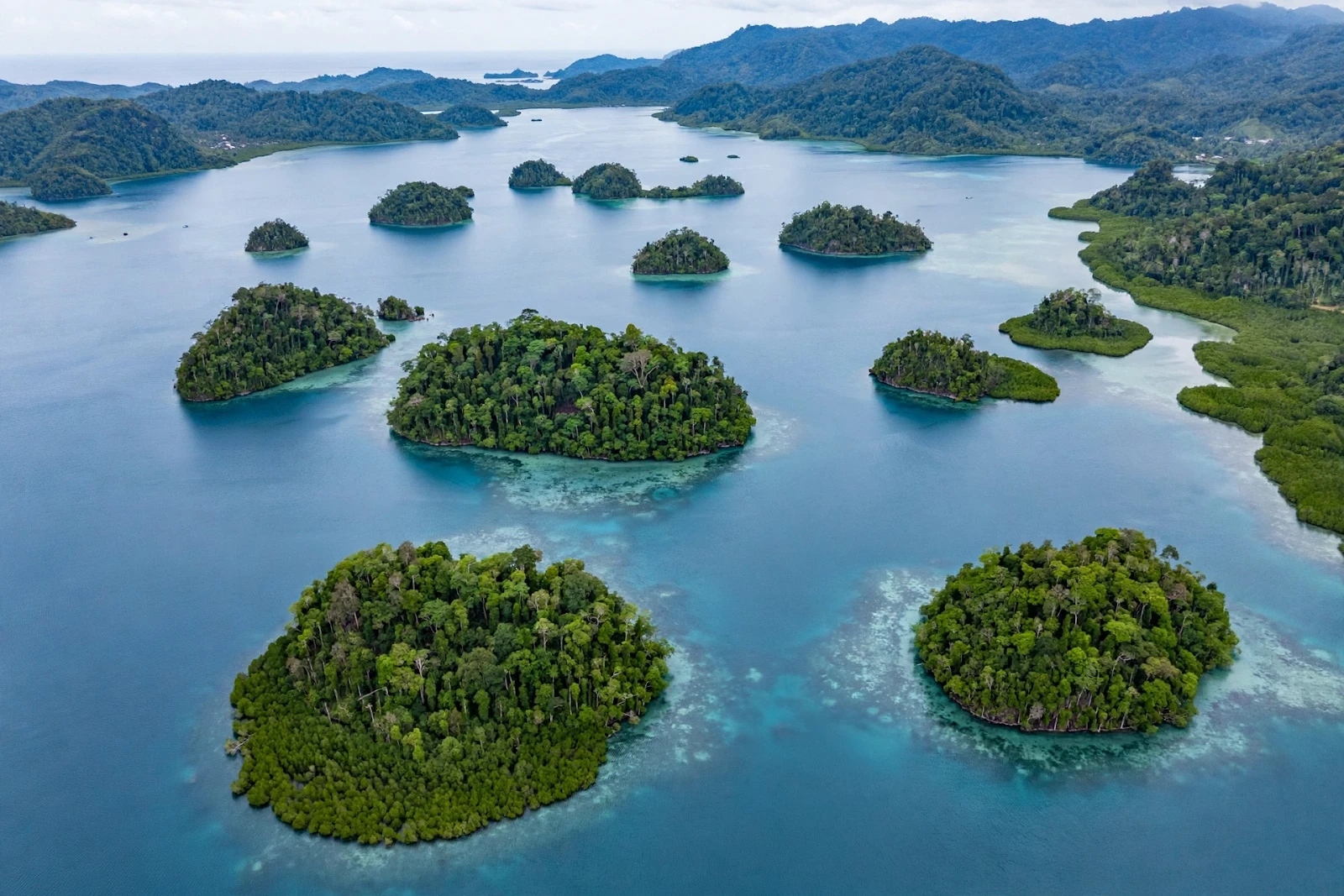
Mandeh Bay from above, where jungle-covered islets rise out of calm, sheltered water.
Why Visit the Mandeh Islands?
Mandeh's charm lies in its shelter. The bay's outer islands break the ocean swell, so the water inside stays calm and clear — ideal for boat trips, swimming, and relaxed island hopping. The islets themselves are small and green, rising steeply from the water, and the coastline alternates between mangrove forest, small beaches, and fishing settlements. It is a landscape made for slow exploration by boat.
Unlike the surf beaches further south or the busy islands near the big cities, Mandeh has stayed quiet. There are no large resorts and no crowds. What you find instead is a handful of viewpoints, a few simple places to eat, and boat captains who know every islet and channel. That quiet is the point: Mandeh is a place to unwind, take photographs, swim, and watch island life go by.
Mandeh also fits neatly into a West Sumatra itinerary. Spend a day or two in Padang eating your way through the city's rumah makan, take a day trip to Mandeh Bay, then head inland to Bukittinggi, Harau Valley, and Lake Maninjau. The coast-to-highlands combination is one of the best short routes in Sumatra.
Getting There: How to Reach Mandeh Bay
Mandeh Bay lies in Pesisir Selatan regency, south of Padang city. The drive from Padang takes around one to one-and-a-half hours, depending on your exact departure point and the boat jetty you use. The most practical approach is to hire a car with a driver from Padang for the day — the standard way to travel in West Sumatra — and arrange the boat through your driver, your hotel, or a local operator at the coast.
From Minangkabau International Airport, a car to the Mandeh coast is straightforward, and many Padang hotels can arrange the whole day trip, including the boat. Public transport exists but is slow and infrequent, so private transport is strongly recommended if your time is limited. Aim to reach the jetty in the morning: the light is best, the water is calmest, and you get a full day on the bay.
Once at the coast, local boats take you around the bay. The boat is the heart of the trip, so agree the route, the price, and the duration in advance. A typical day trip lasts from morning to late afternoon and includes several island stops, a viewpoint, and a seafood lunch.
Island Hopping: Islets, Viewpoints & Swimming Stops
The classic Mandeh day trip is a loop around the bay's islets. Your captain will steer between green islands, stopping at small beaches for swimming, at viewpoints for photographs, and at quiet coves for a break from the sun. The water is calm and shallow in many places, which makes swimming easy, and the islets' jungle slopes make a dramatic backdrop for every stop.
The viewpoints above the bay are a highlight. From the hills on the bay's edge, you look out over the whole scatter of islets — the classic Mandeh panorama that earns the area its Raja Ampat nickname. The climb to a viewpoint is usually short but can be steep, so wear good shoes and bring water. Early morning and late afternoon give the best light, and the viewpoints are at their quietest outside the middle of the day.
Swimming stops are the other pleasure of the route. Small beaches and sandbars appear between the islets, and the calm water makes them safe and relaxing. Bring your own snorkeling gear if you want to explore the shallows, though the snorkeling here is gentler than at dedicated reef destinations — Mandeh's strength is scenery, calm water, and island atmosphere rather than coral gardens.
Mangrove Forests & Fishing Villages
Mandeh's mangrove forests are one of its most distinctive features. In places, the bay's edge dissolves into a maze of mangrove channels, where boats glide between tangled roots and the birdlife is rich. A mangrove stop adds a different texture to the day — quiet, green, and alive with birds — and it is a reminder of how important these forests are to the bay's fish and to the villages that depend on them.
A boat trip through Mandeh's mangrove channels, where the bay's green edge meets the water.
The fishing villages around the bay are equally worth your time. Life here revolves around the sea: boats are repaired on the shore, fish are dried in the sun, and the day's catch sets the menu. Visitors are welcome, but these are working communities, so a respectful approach matters — dress modestly, ask before photographing people, and consider visiting with a local guide who can introduce you properly. A seafood lunch in or near a village is often the best meal of the trip: grilled fish, squid, and local vegetables, eaten within sight of the boats.
If you have time, ask your captain about the smaller settlements tucked into the bay's corners. These quiet corners, far from any road, are where Mandeh feels most like a discovery — and where a slow boat trip pays off most.
Where to Stay & What a Trip Costs
Most visitors experience Mandeh as a day trip from Padang, where hotels range from simple guesthouses to comfortable city hotels, and where the food scene alone is worth the stay. A day trip keeps costs low: a hired car for the day plus a boat for the bay, shared between travelers, makes Mandeh one of West Sumatra's most affordable island outings.
Staying closer to the bay is possible in simple guesthouses and homestays in the coastal towns, and an overnight stay lets you catch the bay at sunrise and sunset, when the light is at its best and the day boats have gone. Book ahead if you want to stay near the coast, as options are limited. For most travelers, though, a Padang base with a Mandeh day trip is the simplest and most comfortable plan.
Confirm what is included before you pay: the boat price should cover the route, the stops, and life jackets, and your car hire should cover the full day including waiting time. Carry cash, as card payments are rare at the coast, and bring water, sun protection, and snacks for the boat.
Best Time to Visit & Practical Tips
Mandeh can be visited year-round, but the drier months from roughly May to September offer the calmest seas and the most reliable weather. The wet season brings greener hills and fewer visitors, but also rougher seas and afternoon rain, which can disrupt boat trips. Mornings are the best time on the water in any season, so start early.
Sunset over a Mandeh fishing village, as boats return to shore at the end of the day.
Practical tips: wear shoes you can walk in and get wet; bring a dry bag for your camera and phone; use reef-safe sunscreen and a hat; and pack light, since boat space is limited. Respect the villages and the environment: take all rubbish back with you, do not disturb wildlife in the mangroves, and follow your captain's advice about where to swim. Mandeh's quiet is its treasure — travel gently, and it will stay that way.
Sponsored: see today's best travel deals and offers
Frequently Asked Questions About the Mandeh Islands
How do I get to Mandeh Bay from Padang?
The drive from Padang to the Mandeh coast takes around one to one-and-a-half hours. Hiring a car with a driver for the day is the most practical option, and your driver or hotel can arrange the boat for the bay.
Is Mandeh Bay good for swimming?
Yes. The bay is sheltered, so the water is usually calm and shallow in many places, which makes swimming easy and relaxed. Your boat captain will point out the best swimming stops on the day.
Can I visit Mandeh as a day trip?
Yes, most visitors come as a day trip from Padang, leaving in the morning and returning in the late afternoon. An overnight stay near the coast is possible and gives you sunrise and sunset on the bay.
What is the best time to visit Mandeh?
The drier months from May to September offer the calmest seas and most reliable weather. Mornings are best on the water in any season, and boat trips can be disrupted by bad weather, so keep plans flexible.
Is Mandeh really like Raja Ampat?
Locals call Mandeh the Raja Ampat of the west because of its scattered jungle islets and calm bay. The scenery shares that island-scattered feeling, though Mandeh is smaller, quieter, and far easier and cheaper to reach — a gentle island day rather than a remote expedition.
Mandeh Bay is West Sumatra's quiet coastal answer to its famous highlands: calm water, green islets, mangroves, and villages that still move at the pace of the tides. Pair it with Padang's food and Bukittinggi's valleys, and you have a Sumatra trip with real range. Have you visited Mandeh, or is it on your West Sumatra list? Share your plans and questions in the comments below.



Comments
Post a Comment