Tucked between Jakarta and Bandung in the cool highlands of West Java, Cianjur is one of those Indonesian destinations that rewards travellers who slow down. It does not shout for attention the way Bali or Yogyakarta does. Instead, it offers misty mountain mornings, one of the oldest botanical gardens in Southeast Asia, natural hot springs warmed by the same volcanoes that shape the landscape, and a towering national park that draws hikers from across Java. If you are looking for a nature-focused escape that is easy to reach from either of Indonesia's two biggest cities, Cianjur deserves a place on your 2026 travel list.
This Cianjur travel guide covers the three experiences that define the region: the Cibodas Botanical Gardens, the Cipanas hot springs, and Mount Gede in Gede Pangrango National Park. It also covers the local food worth seeking out, how to get here from Jakarta and Bandung, the best time to visit, practical tips, and a sample two-day itinerary you can follow as it is or adapt to your own pace.
Why Visit Cianjur
Cianjur Regency stretches from the mountainous border with Bogor in the north down toward the southern coast of Java, but most visitors focus on its northern highlands around the town of Cipanas. At an elevation of roughly 1,000 to 1,400 metres above sea level, the air here is noticeably cooler than in Jakarta, and the landscape is a patchwork of tea gardens, vegetable farms, pine forest, and volcanic peaks. The town of Cianjur itself is a busy regional centre, while Cipanas, about 15 kilometres to the north, is the resort area where most of the attractions cluster.
What makes Cianjur special is the combination. In a single weekend you can wander a world-class botanical garden in the morning, soak in a natural hot spring in the afternoon, and wake before dawn the next day to hike one of Java's most rewarding volcanoes. Few places in West Java pack that much variety into such a compact area, and even fewer do it without the crowds that fill nearby Puncak.
Cianjur is also a place with a distinct local identity. The regency is known across Indonesia for its rice, its traditional snacks, and its Sundanese culture. Markets here sell produce grown on the surrounding slopes, small warungs serve food you will not find in Jakarta restaurants, and the pace of life is unhurried. For travellers who want to see the Java that exists beyond the tourist trail, Cianjur is an excellent introduction.
Cibodas Botanical Gardens
The Cibodas Botanical Gardens (Kebun Raya Cibodas) are the crown jewel of Cianjur's highlands and the natural starting point for any visit. Founded in 1852 as an extension of the Bogor Botanical Gardens, Cibodas sits at about 1,300 metres above sea level on the slopes of Mount Gede, and its cool, damp climate allows it to grow plants from around the world that would struggle elsewhere in tropical Indonesia.
Cibodas Botanical Gardens in Cianjur, West Java, with manicured lawns, giant trees and Mount Gede in the background.
The gardens cover around 85 hectares and hold more than 10,000 plant specimens, including orchids, ferns, cacti, and an impressive collection of conifers. The most famous resident is the giant Amorphophallus titanum, the titan arum, whose enormous bloom appears only rarely but draws crowds when it does. Even on an ordinary day, though, the gardens are beautiful: broad lawns for picnics, a glasshouse of tropical orchids, a sakura garden planted with cherry trees that bloom in season, and avenues of towering trees that feel more like a temperate forest than a tropical garden.
One of the most popular walks leads to the Cibodas waterfall area and the small stream that runs through the lower gardens. Another highlight is the garden's location itself: on a clear morning, Mount Gede rises directly behind the gardens, and the combination of manicured beds in the foreground and a volcanic peak behind is one of the classic views of West Java. Give yourself at least two to three hours here, wear comfortable walking shoes, and bring a light jacket, as the mountain air stays cool even at midday.
Practical details for Cibodas: the gardens are open daily, usually from around 8 am to 4 pm, and the entrance fee is modest by international standards. The main gate is on the road between Cipanas and the national park entrance, so it pairs naturally with a Mount Gede hike or a Cipanas hot spring visit on the same day. Weekends and public holidays are the busiest times, so visit on a weekday if you want the paths to yourself.
Cipanas Hot Springs
Just a short drive from Cibodas, the town of Cipanas takes its name from the hot springs (air panas) that bubble up from the volcanic ground beneath it. For generations, Indonesians have come here to soak in the warm, mineral-rich water, and today the town offers everything from simple public pools to comfortable resort hotels with private hot spring baths.
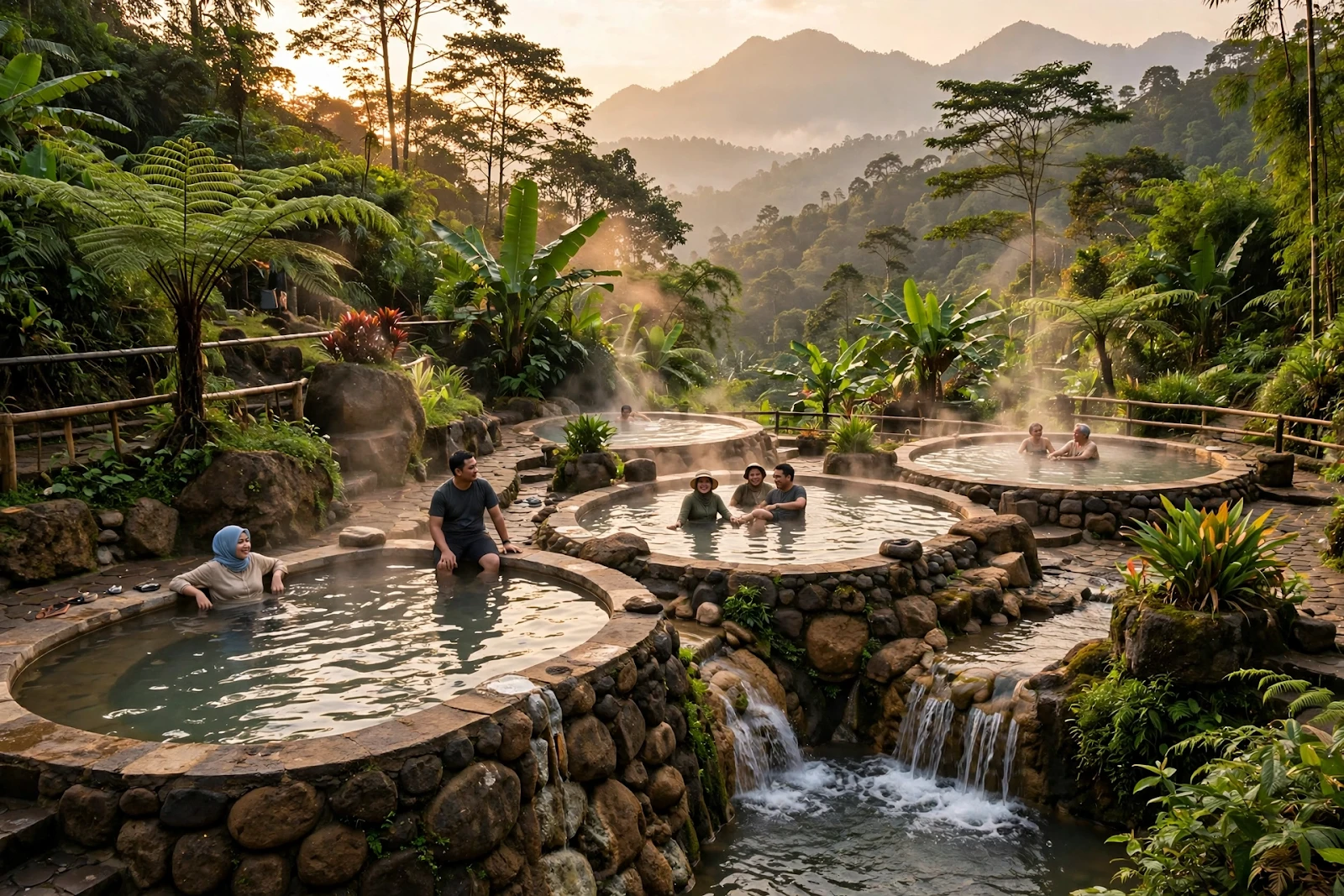
Steaming natural hot spring pools surrounded by tropical greenery in Cipanas, Cianjur, West Java.
The water in Cipanas is naturally heated by geothermal activity linked to Mount Gede, and many visitors swear by its relaxing and therapeutic qualities after a long hike or a long drive from the city. The most straightforward option is to book a hotel in Cipanas with its own hot spring pools, which lets you soak in the evening and again in the morning without going anywhere. Several well-known resorts line the main road, and many offer day passes for non-guests as well.
If you prefer a simpler experience, there are public bathing pools in the area where you can soak alongside local families. These are affordable and sociable, though facilities are basic, so bring your own towel and toiletries. Whichever option you choose, a few tips apply: drink plenty of water, limit each soak to 15 to 20 minutes at a time, and avoid the hottest pools if you have a heart condition or are pregnant. The best time to soak is in the late afternoon or evening, when the mountain air cools and the steam rising off the pools feels especially inviting.
Cipanas is also a convenient base for the whole region. Its hotels, restaurants, and markets serve travellers heading to Cibodas and Mount Gede, and the town's location on the main Jakarta-Bandung corridor means transport connections are straightforward. If you only have one night in Cianjur, spend it in Cipanas.
Mount Gede and Gede Pangrango National Park
For hikers, the main event in Cianjur is Mount Gede (2,958 metres), the twin-peaked volcano that dominates the skyline. Together with neighbouring Mount Pangrango (3,019 metres), it forms Gede Pangrango National Park, one of the most biodiverse protected areas in Java and a UNESCO Biosphere Reserve. The park protects montane rainforest that shelters Javan gibbons, Javan lutungs, the Javan hawk-eagle, and hundreds of bird species, along with the famous alpine meadow of Alun-Alun Suryakencana.
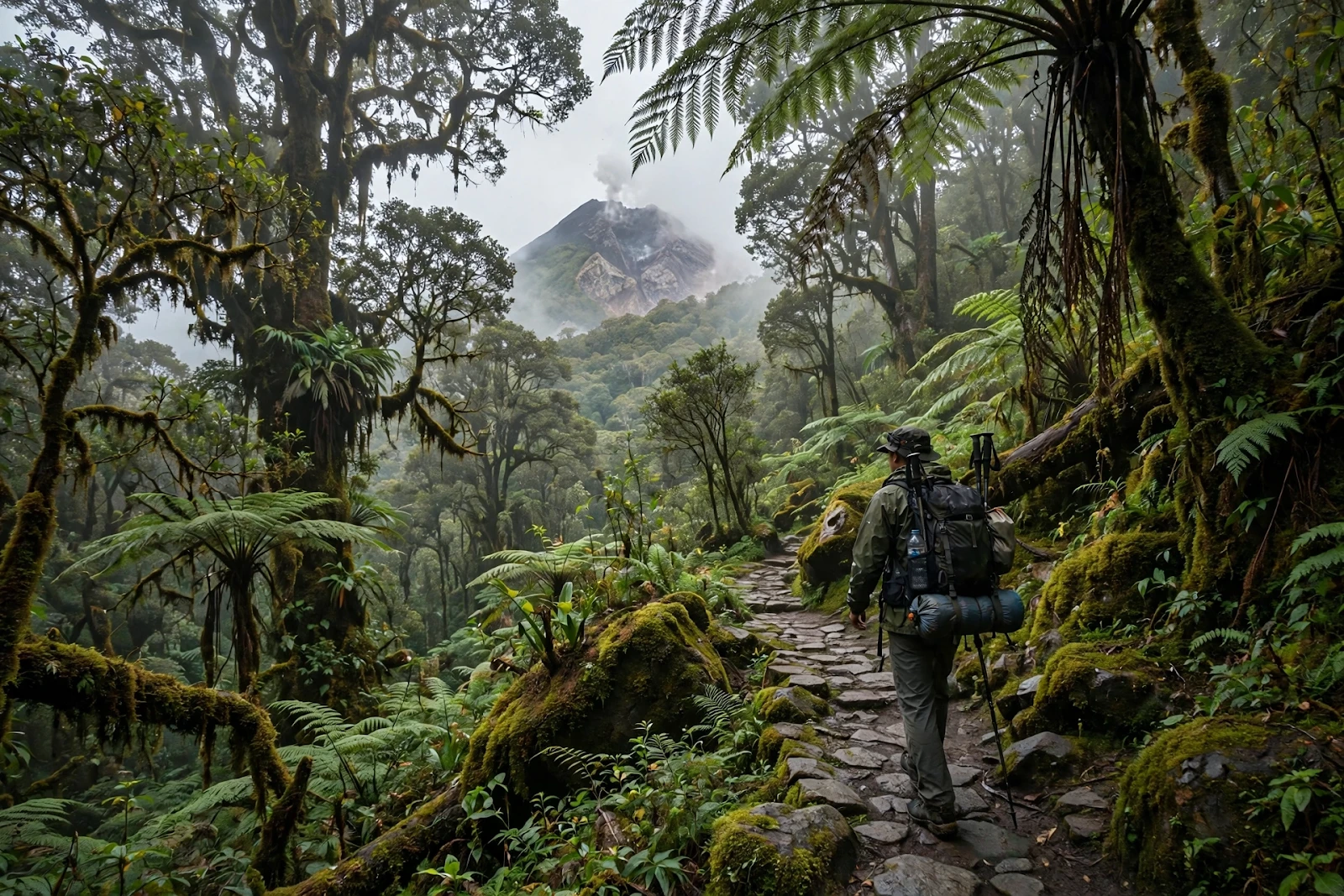
Hikers on a mossy forest trail on Mount Gede in Cianjur, West Java, beneath tall trees and mist.
The most popular route starts at the Cibodas trailhead, right beside the botanical gardens. From here, the trail climbs through dense forest, past waterfalls and moss-draped trees, to the crater area and the summit. Most hikers take two days for the round trip, camping overnight at the Kandang Badak saddle or pushing on to Alun-Alun Suryakencana, the wide edelweiss meadow near the summit that turns golden in the dry season. Fit and experienced hikers sometimes complete the climb in a single very long day, but the two-day option is far more enjoyable and far safer.
Climbing Mount Gede requires planning. Since the park limits daily visitor numbers, you need to book your hiking permit in advance through the park's official online booking system, and you should register at the Cibodas entrance before starting. The trail is well marked but steep and slippery in places, especially after rain, so proper hiking boots, a rain jacket, warm layers for the summit, and at least two litres of water per person are essential. A local guide is not mandatory for experienced hikers on the main Cibodas route, but first-timers will benefit greatly from hiring one, and guides can be arranged through the park office or local hiking communities.
If a full summit climb sounds like too much, the park still has plenty to offer. Shorter walks from the Cibodas entrance lead to waterfalls such as Curug Cibeureum, a rewarding half-day hike through beautiful forest that requires no permit beyond the park entrance ticket. The area around the botanical gardens also gives you a taste of the montane forest without any serious climbing. Whatever your level, the rule is the same: start early, respect the weather, and leave no trace.
Mount Gede Safety Notes
Mount Gede is an active volcano, and the park authorities occasionally close trails when volcanic activity increases or during extreme weather. Always check the current status before your trip, follow the instructions of park rangers, and never stray from the marked trails. Altitude is a real factor too: at nearly 3,000 metres, the summit is cold and the air is thin, so ascend gradually, stay hydrated, and turn back if you feel unwell.
Where to Eat: Cianjur Local Food
No Cianjur travel guide would be complete without the food. The regency is famous across West Java for its rice, and the local dish to try first is nasi liwet, fragrant rice cooked with coconut milk and spices and served with side dishes such as fried chicken, salted egg, and sambal. Another Cianjur signature is sate maranggi, skewers of marinated beef or lamb grilled over charcoal and served with a sweet soy and tomato sambal.
For snacks, look for tauco Cianjur, a fermented soybean paste used in local cooking, and the region's sweet treats made from cassava and glutinous rice. The markets in Cianjur town and Cipanas are the best places to sample these: arrive in the morning when the produce is freshest, and do not be shy about pointing and asking. Sundanese food in general leans fresh and light, with raw vegetables (lalapan), sambal, and grilled fish or chicken, so even simple warungs serve meals that feel wholesome after a day outdoors.
In Cipanas, restaurants along the main road cater to weekend visitors from Jakarta and Bandung, with a mix of Sundanese restaurants, simple cafes, and hotel dining rooms. Prices are reasonable, portions are generous, and most places are happy to adjust spice levels if you ask. Finish a meal with a cup of hot tea made from leaves grown on the surrounding slopes: the highland tea of West Java is one of the region's quiet pleasures.
How to Get to Cianjur from Jakarta and Bandung
Cianjur sits roughly halfway between Jakarta and Bandung, which makes it one of the easiest mountain escapes in West Java. From Jakarta, the drive to Cipanas takes around two to three hours in light traffic via the Jagorawi toll road and the Puncak route, though weekend traffic on the Puncak road can add considerably to that time. Leaving Jakarta very early in the morning, or travelling on a weekday, is the best way to avoid the worst of the congestion.
From Bandung, the journey is shorter, usually around two hours by car via the Cipularang toll road and the Cianjur exit. Public transport is also an option: regular buses run between Jakarta's Kampung Rambutan terminal and Cianjur, and between Bandung and Cianjur, while trains on the Jakarta-Bandung line stop at Cianjur station for some services. Once you arrive, angkot (shared minivans) and motorcycle taxis cover the short distances between Cianjur town, Cipanas, and Cibodas, though hiring a car with a driver for the day gives you the most flexibility if you plan to combine the gardens, hot springs, and a trailhead.
For international visitors, the simplest approach is to fly into Jakarta's Soekarno-Hatta Airport, spend a night in the city if needed, and then travel to Cianjur the next morning. The region works well as a two or three-day side trip from either Jakarta or Bandung, and it pairs naturally with a longer West Java itinerary that includes Bogor, Puncak, and Bandung itself.
Best Time to Visit Cianjur
Cianjur can be visited year-round, but the dry season from May to September is generally the best time for hiking Mount Gede and exploring the gardens. Trails are drier, mornings are clearer, and the edelweiss meadow of Alun-Alun Suryakencana is at its most photogenic. The wet season from November to March brings heavier rain, muddier trails, and more cloud over the peaks, though the gardens are at their lushest and the hot springs are arguably even more appealing when the air is cool and damp.
Temperature is a big part of Cianjur's appeal in any season. Daytime temperatures in Cipanas and Cibodas typically sit in the low to mid-20s Celsius, dropping to the mid-teens at night and colder still on the summit of Mount Gede. Pack a jacket whatever the forecast says. Weekends and Indonesian public holidays are the busiest times, especially in Cipanas, so a weekday visit will give you quieter gardens, emptier pools, and a better chance of securing a Mount Gede hiking permit.
Practical Tips for Visiting Cianjur
A few practical points will make your Cianjur trip smoother. First, book Mount Gede permits well in advance, especially for weekends, as daily quotas fill quickly. Second, carry cash: while hotels and larger restaurants accept cards, small warungs, markets, and park fees are often cash-only. Third, pack for mountain weather, including a rain jacket, warm layer, sun protection, and sturdy shoes, even if you only plan to visit the gardens.
Fourth, be prepared for limited English outside the main hotels. A few basic Indonesian phrases, or a translation app on your phone, will go a long way in markets and on local transport. Fifth, respect local customs: Cianjur is a predominantly Muslim area with a strong Sundanese culture, so dress modestly when visiting villages and markets, and ask before photographing people. Finally, give yourself more time than you think you need on the roads: mountain traffic in West Java is unpredictable, and the journey is part of the experience.
Sample 2-Day Cianjur Itinerary
Day one starts early from Jakarta or Bandung, arriving in Cipanas by mid-morning. Head straight to the Cibodas Botanical Gardens and spend two to three hours wandering the lawns, the orchid house, and the sakura garden, with Mount Gede as your backdrop. After lunch in Cipanas, spend the afternoon soaking in the hot springs, letting the warm mineral water work out the stiffness from the drive. In the evening, enjoy a Sundanese dinner of nasi liwet and sate maranggi, then sleep early in a Cipanas hotel.
Day two is for Mount Gede. If you are doing the full climb, you will have started before dawn or the day before, so this version of the itinerary assumes a half-day option: an early morning walk to Curug Cibeureum waterfall from the Cibodas trailhead, followed by a late breakfast and a visit to the Cianjur town market for snacks and souvenirs. After lunch, drive back to Jakarta or Bandung, arriving by late afternoon. If you have a third day, use it for the full two-day Mount Gede summit climb, with an overnight camp at Kandang Badak and sunrise over the crater rim.
Sponsored: see today's best travel deals and offers
Frequently Asked Questions
How many days do I need in Cianjur?
Two days is enough to see the highlights: Cibodas Botanical Gardens, the Cipanas hot springs, and a short waterfall walk, with time for local food and markets. Add one or two more days if you want to climb Mount Gede to the summit, which is best done as a two-day hike with an overnight camp.
Do I need a permit to hike Mount Gede?
Yes. Gede Pangrango National Park limits daily hiker numbers, so you must book a hiking permit in advance through the park's official online booking system and register at the Cibodas entrance before starting. Shorter walks such as the Curug Cibeureum waterfall trail require only the standard park entrance ticket.
Is Cianjur suitable for families with children?
Absolutely. The botanical gardens and hot springs are very family-friendly, with easy paths, picnic areas, and pools suitable for children. The full Mount Gede summit climb is demanding and best suited to older children and teenagers, but the waterfall walks offer a gentler taste of the national park for younger kids.
What should I pack for a trip to Cianjur?
Pack a light jacket and warm layer for the cool mountain air, a rain jacket, comfortable walking shoes or hiking boots, sun protection, insect repellent, cash for small vendors, and at least two litres of water per person if you plan to hike. A towel and swimwear are essential for the hot springs.
Is Cianjur easy to reach without a car?
Yes, though a car gives you more flexibility. Buses run regularly between Jakarta, Bandung, and Cianjur, and trains stop at Cianjur station on some services. Once there, angkot and motorcycle taxis cover the short distances between Cianjur town, Cipanas, and Cibodas, and many Cipanas hotels can arrange local transport for guests.
Cianjur may not be the first name that comes to mind when planning a trip to Indonesia, but that is exactly why it is worth visiting. Between the botanical gardens, the hot springs, and the great volcano that watches over them both, this West Java highland town offers a complete nature escape within easy reach of Jakarta and Bandung. Plan your visit for the dry season, book your Mount Gede permit early, and leave room in your itinerary for unhurried meals and market wandering. Have you visited Cianjur, or is it on your list for 2026? Share your plans, questions, and tips in the comments below — we would love to hear about your Cianjur adventure.




Comments
Post a Comment