Ciamis, in the eastern part of West Java, is the kind of place travelers pass through on the way to Pangandaran and later wish they had stopped to explore. Green hills roll toward the coast, a legendary heritage site hides among the trees, a clear river winds through a limestone valley, and Sundanese kitchens serve some of the most satisfying food in the province. This Ciamis travel guide for 2026 shows why this quiet regency deserves a full day or two of its own.
Ciamis was once the heart of the Galuh Kingdom, one of the great Sundanese kingdoms of old Java, and that history still shapes the town today. Ancient stones, local legends, and a proud cultural identity sit alongside rice terraces, rivers, and warm village hospitality. It is a destination for travelers who like their nature mixed with a good story.
Why Visit Ciamis in 2026
Ciamis offers a gentler pace than its famous coastal neighbor. The landscape is classic Priangan countryside: terraced rice fields, forested hills, and rivers that run clear and green. The air is cooler than on the north coast, the roads are quiet, and prices are refreshingly low. It is also a natural stopover: Ciamis lies on the main road between Bandung and Pangandaran, so it pairs perfectly with a beach trip or a highland journey.
The dry season, from May to September, is the best time for river visits and hill walks. The wet season brings lusher rice terraces and stronger river flows, though trails can get muddy. Either way, bring a camera: the light over the Ciamis hills in the early morning is beautiful.
Ciung Wanara: Legend and Heritage Site
The Ciung Wanara site is Ciamis's most storied attraction. According to Sundanese legend, Ciung Wanara was a prince of the Galuh Kingdom, set adrift as a baby on the Citanduy River and raised in a village before reclaiming his throne. The site at Karangkamulyan preserves stones, ruins, and a sacred atmosphere linked to that tale, and it remains an important cultural landmark for the Sundanese people.
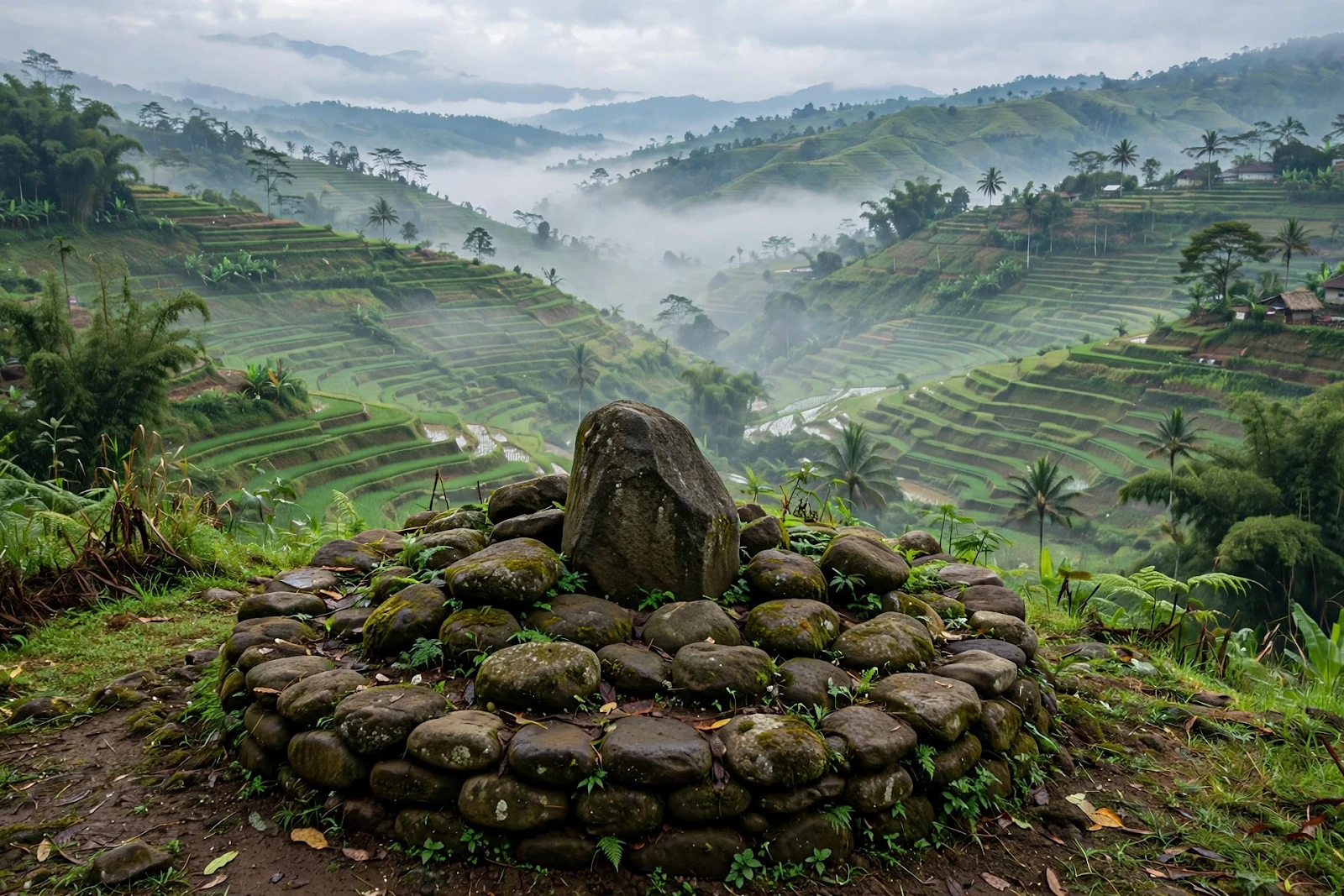
Morning mist over the green hills and rice terraces around Ciamis.
Walk the grounds slowly, read the information boards, and take in the old trees and stone remains. Local guides can tell the full Ciung Wanara legend, which adds greatly to the visit. Combine it with a stop at the nearby river valley, and you have a morning that blends history and nature in a way few West Java destinations manage.
Karangkamulyan and the Green River Valley
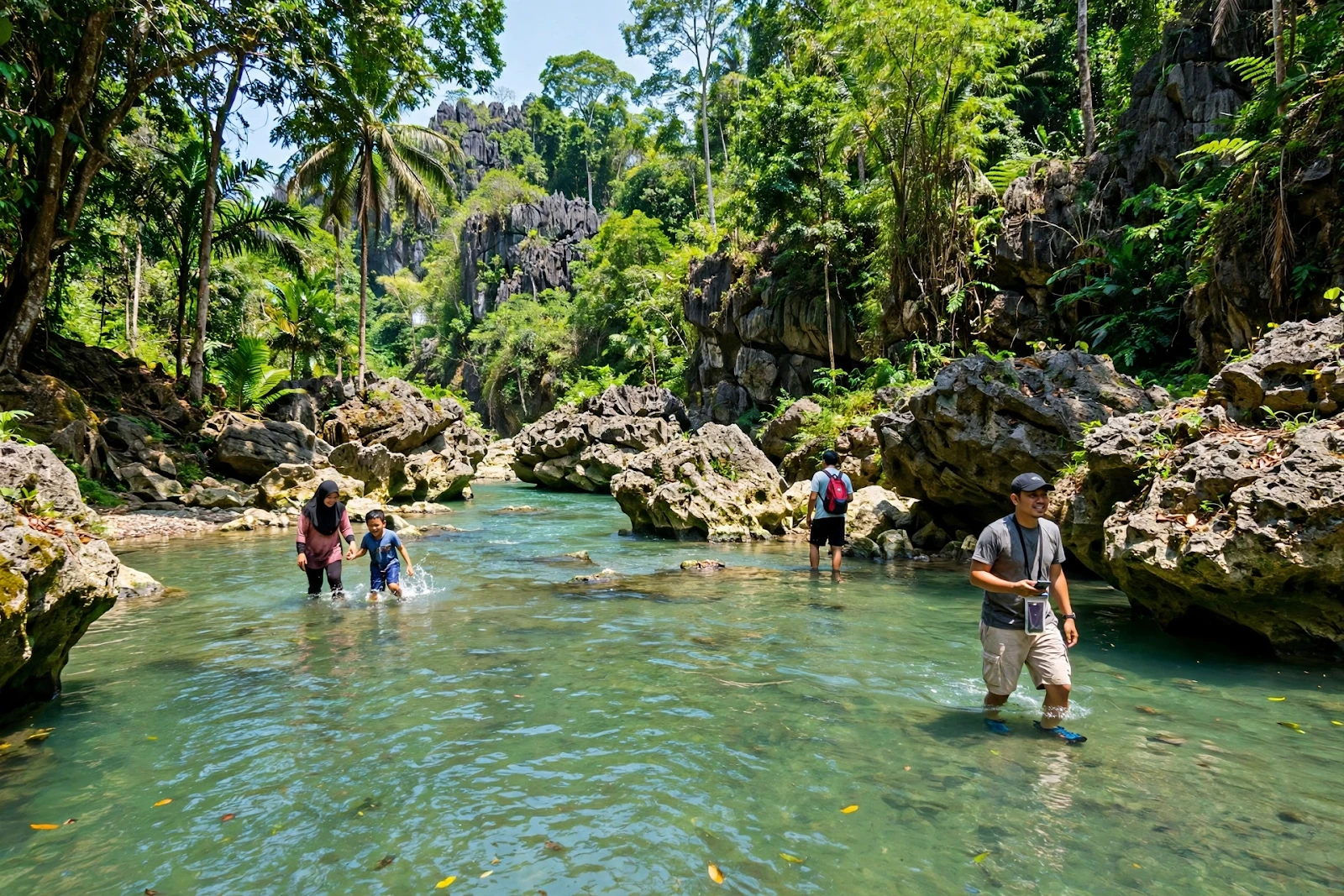
Near the heritage site, the Karangkamulyan area is known for its clear green river, limestone rocks, and shady trees. On warm days, locals wade in the shallow water, and the valley makes a lovely picnic spot. It is also a gateway to the wider Citanduy river landscape, where small boats and riverside paths reveal a quieter side of West Java.
The clear green waters of Karangkamulyan, a favorite natural escape near Ciamis.
If you have more time, continue south toward Pangandaran for the famous Citumang body-rafting river, or explore the waterfalls and hill viewpoints scattered around the regency. The countryside rewards wandering: every turn seems to offer another rice terrace, another village, another view.
Galuh Heritage and Sundanese Culture
The Galuh Kingdom's legacy runs deep in Ciamis. The town's museums and cultural sites tell the story of a kingdom that shaped Sundanese language, art, and governance centuries ago. Even if you are not a history buff, the pride locals take in this heritage is infectious, and it shows up in festivals, dance performances, and everyday conversation.
Time your visit for a local festival if you can. Traditional Sundanese music, jaipong dance, and wayang golek puppet shows still appear at celebrations, and they are far more intimate here than at big-city events. Ask at your hotel or a local tourism office about what is on during your stay.
Sundanese Food in Ciamis
Ciamis is a wonderful place to eat Sundanese food the way it is meant to be eaten: fresh, generous, and shared. The classic Sundanese meal arrives with steamed rice, grilled or fried fish, lalapan (fresh raw vegetables), sambal, and sometimes fried chicken or tofu and tempeh. Meals are often served on banana leaves, and the best restaurants are simple, busy, and full of locals.
A classic Sundanese meal in Ciamis — rice, grilled fish, fresh vegetables, and sambal.
Beyond the classic meal, look for local specialties: nasi liwet (rice cooked in coconut milk), grilled freshwater fish from the Citanduy, and sweet snacks sold at morning markets. Coffee lovers should try the local West Java coffee at a small warung, and fruit lovers will find bananas, mangosteen, and rambutan in season at roadside stalls.
Where to Eat
The town center has the widest choice of Sundanese restaurants, while the roads toward Pangandaran are lined with riverside eateries serving grilled fish. Eat where the parking lot is full of local cars, and do not be shy about asking what is fresh today.
Two-Day Ciamis Itinerary
Day 1 — Heritage and hills. Start at the Ciung Wanara site in the morning, then explore the Karangkamulyan river valley for a picnic and a paddle. In the afternoon, drive through the rice terraces to a hill viewpoint for sunset, then enjoy a Sundanese dinner in town.
Day 2 — Food and countryside. Visit a morning market for breakfast and snacks, then take a slow countryside drive through villages and terraces. Stop for grilled fish lunch by the river, and in the afternoon either continue to Pangandaran's beaches or return toward Bandung, with a coffee stop on the way.
Practical Travel Tips for Ciamis
Getting there: Ciamis lies on the main Bandung–Pangandaran road, about 4 to 5 hours from Bandung and under an hour from Pangandaran. Buses from Bandung and Jakarta serve Ciamis town, and a private car gives the most freedom for countryside exploring.
Getting around: Hire a car with a driver for the day if you want to cover the heritage site, river valley, and hill viewpoints efficiently. Within town, walking and short rides are easy.
Where to stay: Ciamis town has comfortable hotels and guesthouses at good prices. For a beach extension, stay in Pangandaran and visit Ciamis as a day trip, or split your nights between the two.
What to pack: Comfortable walking shoes for the heritage site and river valley, swimwear and a towel for river wading, sunscreen, insect repellent, and cash for markets and small restaurants.
Local etiquette: The Ciung Wanara site is a respected cultural place, so behave quietly, dress modestly, and follow any local guidance. When eating Sundanese style, it is fine to eat with your right hand, and sharing dishes is the norm.
Sponsored: see today's best travel deals and offers
Frequently Asked Questions
What is Ciamis known for?
Ciamis is known for the Ciung Wanara heritage site, the Galuh Kingdom's history, the Karangkamulyan river valley, green rice-terrace hills, and excellent Sundanese food. It is also a gateway to Pangandaran's beaches.
How many days do you need in Ciamis?
One full day covers the Ciung Wanara site, the river valley, and a Sundanese dinner. Two days let you explore the countryside, markets, and waterfalls at a relaxed pace, or combine Ciamis with a Pangandaran beach stay.
What is the Ciung Wanara legend?
Ciung Wanara is a Sundanese legend about a prince of the Galuh Kingdom who was set adrift on the Citanduy River as a baby, raised in a village, and later reclaimed his throne. The heritage site at Karangkamulyan preserves stones and ruins linked to the tale.
Is Ciamis worth visiting on the way to Pangandaran?
Absolutely. Ciamis lies directly on the Bandung–Pangandaran road, and a stop for the heritage site, a river picnic, and a Sundanese lunch turns a simple transfer into one of the highlights of the trip.
When is the best time to visit Ciamis?
The dry season from May to September is best for river visits and hill walks, with clear skies and comfortable temperatures. The wet season offers lusher terraces but muddier trails and stronger river flows.
Ciamis does not compete for attention with its famous neighbors, and that is precisely why it charms. A legendary prince, a green river valley, a kingdom's proud memory, and a table full of Sundanese food make for a West Java stop that lingers in the memory. Add Ciamis to your 2026 itinerary, and give yourself time to linger. Have you explored Ciamis or the Galuh heritage trail? Tell us about it in the comments below — your tips help fellow travelers discover this quiet gem.



Comments
Post a Comment