Boyolali Travel Guide 2026: Merbabu Foothills, Susu Segar & Mountain Villages
Tucked between the volcanic giants of Central Java and the cultural city of Solo, Boyolali is one of those destinations that rewards travellers who slow down. It does not shout for attention. Instead, it offers misty mornings over green foothills, villages where dairy farming shapes daily life, warm springs hidden in the hills, and food that tastes like it came straight from the farm next door. If you are planning a Central Java trip in 2026 and want somewhere peaceful, affordable, and genuinely local, this Boyolali travel guide will help you plan it well.
Boyolali sits on the western side of Solo, with Mount Merbabu rising above its northern edge and Mount Merapi visible on clear days. The regency is known across Indonesia for its fresh milk, earning it the nickname of a milk-producing region, and for its cool mountain air, terraced fields, and friendly farming villages. It is an easy side trip from Solo or Yogyakarta, yet it feels a world away from city traffic. This guide covers why Boyolali deserves a place on your itinerary, the best sights, what to eat, how to get there, where to stay, and a relaxed two-day itinerary you can adapt to your own pace.
Why Visit Boyolali in 2026
Boyolali is the kind of place travellers describe as "still authentic". Tourism here grows slowly, which means you can walk through a morning market, sit in a hillside cafe, or soak in a village hot spring without crowds. The landscape changes quickly as you climb: rice fields and small towns give way to vegetable terraces, pine forests, and dairy farms where cows graze on cool green slopes.
The region is also wonderfully practical for travellers. Roads from Solo are good, distances between sights are short, and the cost of eating and staying here is generally gentle on a budget. Because Boyolali is compact, you can combine nature, food, and village life in a single weekend without rushing. For photographers, the light in the foothills is a gift: early mornings often bring a sea of mist in the valleys, while late afternoons turn the terraces gold.
Perhaps the best reason to visit is the food culture. Boyolali's identity is tied to fresh milk, and tasting susu segar at its source — warm, plain, or flavoured — is a small ritual every visitor should try. Add in Javanese home cooking, hillside coffee, and snacks from village stalls, and you have a destination that feeds curiosity as much as appetite.
Mount Merbabu Foothills and Natural Sights
The foothills of Mount Merbabu are Boyolali's great natural playground. The Selo area, on the slopes between Merbabu and Merapi, is the classic starting point for mountain views, cool air, and hiking. Even if you do not plan a full summit climb, the drive up through Selo is worth it on its own: terraced fields, pine trees, and viewpoints where both volcanoes can appear at once on a clear morning.
Morning mist over the green foothills of Mount Merbabu, Boyolali.
Serious hikers do tackle Mount Merbabu itself, usually as an overnight trek with a local guide. The mountain is known for its savanna-like upper slopes, wildflowers in season, and sunrise views across Central Java. If you are considering a climb, go with an experienced guide, check local conditions before you set out, and pack warm layers — temperatures drop sharply at altitude, even in the dry season. For a gentler experience, choose a foothill viewpoint or a short forest walk instead; you still get the mountain atmosphere without the overnight effort.
Beyond Merbabu, Boyolali's countryside is dotted with springs, small waterfalls, and reservoirs that locals visit on weekends. Ask at your guesthouse about the nearest options, since small natural sites can change with the season and local access rules. The joy of exploring Boyolali is often in these unplanned stops: a roadside viewpoint, a pine forest path, or a village spring where children play in the afternoon.
Hot Springs in the Hills
After a day in the foothills, few things beat a soak in a mountain hot spring. Boyolali has natural warm-water pools set among hills and greenery, often run as simple local attractions with pools of varying warmth. They are best visited in the late afternoon, when the air cools and the steam rises into the trees. Bring a towel, a change of clothes, and modest swimwear, and check locally for current entry arrangements before you go.
A quiet hot spring pool tucked into a Boyolali mountain village.
Mountain Villages and Local Life
The villages of Boyolali are the heart of the region. Life here moves with the farming day: milk collected in the morning, vegetables carried to market, and neighbours gathering at small warungs in the evening. Walking through a mountain village, you will see dairy barns beside family homes, terraced gardens, and mosques and small shops that anchor community life.
Visit a village market if you can. Morning markets are the best place to see Boyolali at its most alive, with fresh produce, snacks, and household goods laid out by local sellers. Be respectful when taking photos — a smile and a greeting in Indonesian go a long way, and asking permission before photographing people is always appreciated. If you speak a little Bahasa Indonesia, even simple greetings will open doors and conversations.
Some villages also welcome visitors to dairy farms and small producers. A farm visit might include seeing how milk is collected and processed, tasting fresh milk and yoghurt, and learning how dairy farming supports local families. These visits are best arranged through your accommodation or a local guide, who can confirm which farms are open to guests on the day you visit.
What to Eat in Boyolali: Susu Segar and Javanese Favourites
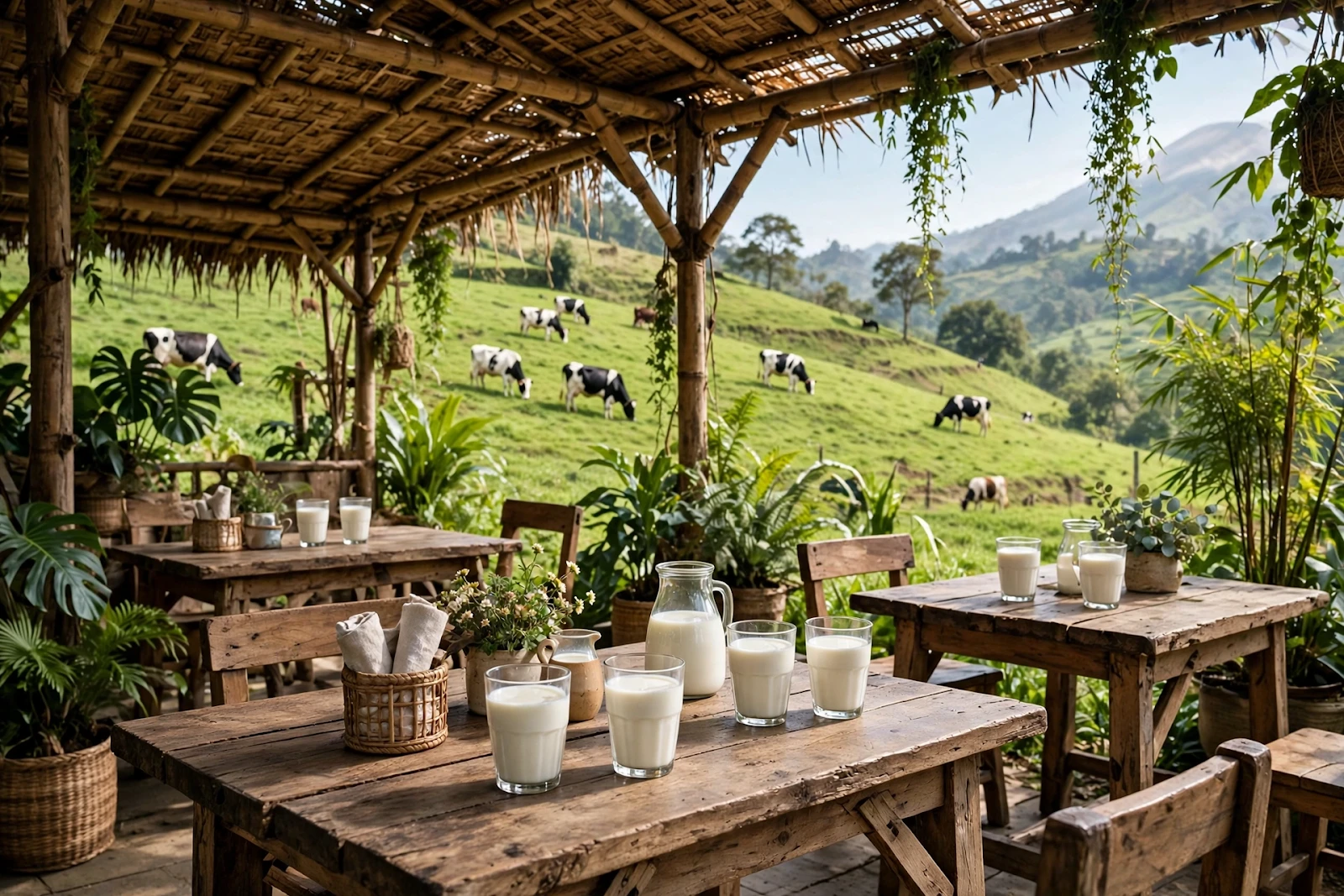
No Boyolali trip is complete without susu segar, the fresh milk the region is famous for. You will find it served warm or chilled at dedicated milk stalls and farm cafes, plain or mixed with flavours such as chocolate, strawberry, ginger, or coffee. Many visitors make a ritual of it: a glass of fresh milk, a plate of fried snacks, and a view over the hills.
A fresh-milk farm cafe in Boyolali, where susu segar is the local star.
Beyond milk, Boyolali's food scene is classic Central Javanese home cooking. Look for nasi liwet, a fragrant rice dish often served with chicken, egg, and vegetables; soto, the comforting Indonesian soup; and grilled or fried chicken served with rice and sambal. Village warungs are usually the best bet for authentic flavours, while hillside cafes offer a more relaxed setting with coffee, milk drinks, and light meals.
For snacks, try local fried treats, steamed cakes, and fresh fruit from market stalls. If you have a sweet tooth, ask for dairy-based desserts and yoghurt drinks at farm cafes. As with anywhere in Indonesia, eat where locals eat, choose freshly cooked food, and carry drinking water on day trips into the hills.
Getting There and Getting Around
The easiest gateway to Boyolali is Solo, also known as Surakarta, which has a train station, an airport, and good road connections across Java. From Solo, Boyolali town is a straightforward drive, and the mountain areas around Selo are a scenic climb further north. Yogyakarta is another practical gateway, a longer drive away but easy to combine with a wider Central Java itinerary.
Within Boyolali, the most flexible option is a rented car with a driver or a motorbike if you are confident on rural Indonesian roads. Public transport exists between towns, but mountain villages and viewpoints are far easier to reach with your own transport. Roads in the foothills can be steep and winding, so take your time, especially in rain or fog, and set out early to enjoy the clearest morning views.
If you are travelling without a driver, base yourself in Boyolali town or near Selo and arrange day trips through your hotel. Local drivers know the mountain roads, the best viewpoints, and which small sites are worth a stop on a given day.
Where to Stay in Boyolali
Accommodation in Boyolali ranges from simple guesthouses in town to hillside lodges and homestays near Selo. Staying in town puts you close to markets, milk stalls, and restaurants, and makes a good base if you prefer comfort and easy transport. Staying in the hills, on the other hand, gives you cool air, sunrise views, and a slower rhythm — ideal if your focus is nature and village walks.
Homestays are a lovely option here. Hosts often share local tips, home-cooked breakfasts, and introductions to nearby farms and viewpoints that you would not find on your own. Whatever you choose, book ahead for weekends and public holidays, when hillside stays fill up with visitors from Solo and Yogyakarta. Pack a light jacket for the hills, even if the lowlands feel warm.
Practical Tips for Visiting Boyolali
The best time to visit Boyolali is generally the dry season, when mountain views are clearest and roads are easiest. The wet season brings lush green terraces and fewer visitors, but also rain, mist, and slippery paths — still beautiful, just plan with more flexibility. Mornings are usually the clearest time for volcano views, so set an early alarm if Merbabu is on your list.
Pack for two climates: light clothes for the town and lowlands, plus a jacket, long trousers, and sturdy shoes for the hills. Sun protection matters even on cool days, and a rain layer is wise year-round. Cash is useful in villages and markets, as small stalls may not accept cards, so carry small notes. Mobile signal is generally fine in towns but can be patchy on mountain roads, so download offline maps before heading uphill.
Respect local customs as you travel. Dress modestly when visiting villages and religious sites, remove shoes where asked, and greet people politely. If you visit a farm or a hot spring, follow local rules and leave the place as you found it. A little courtesy goes a long way in a region where visitors are still warmly welcomed rather than taken for granted.
2-Day Boyolali Itinerary
Day 1: Town, Milk, and Markets
Start your first day in Boyolali town with a morning market walk and breakfast at a local warung. Spend the late morning tasting susu segar at a milk stall or farm cafe, and visit a dairy farm if your host can arrange one. In the afternoon, explore the town at a relaxed pace, try Javanese dishes for lunch and dinner, and finish the day with coffee or warm milk as the evening cools.
Day 2: Merbabu Foothills and Hot Springs
On day two, head uphill early toward Selo and the Merbabu foothills. Stop at viewpoints along the way, take a short walk through pine forest or terraced fields, and enjoy lunch at a hillside cafe. In the afternoon, unwind at a mountain hot spring before driving back down, stopping for snacks and fresh milk on the way. If you have a third day, add a longer village walk or a guided Merbabu trek — Boyolali rewards travellers who stay a little longer.
Sponsored: see today's best travel deals and offers
Frequently Asked Questions
Is Boyolali worth visiting?
Yes, especially if you enjoy nature, village life, and food travel. Boyolali offers Merbabu foothill scenery, fresh-milk culture, hot springs, and quiet mountain villages within easy reach of Solo, without the crowds of better-known destinations.
How many days do you need in Boyolali?
Two days is a good introduction: one day for the town, markets, and milk culture, and one day for the Merbabu foothills and a hot spring. Add a third day if you want a longer hike, more village walks, or a slower pace in the hills.
What is Boyolali famous for?
Boyolali is best known for its fresh milk and dairy farming, its position in the foothills of Mount Merbabu, and its cool mountain villages. Visitors come for susu segar, hillside views, hot springs, and Javanese home cooking.
How do you get to Boyolali from Solo?
The simplest route is by road from Solo, which is the nearest major city. A car with a driver is the most convenient option, especially for the mountain areas, while confident riders can also reach the region by motorbike. Check locally for current road and transport options before you travel.
When is the best time to visit Boyolali?
The dry season generally offers the clearest mountain views and the easiest travel, while the wet season brings lush green landscapes and fewer visitors. Mornings tend to be clearest for volcano views at any time of year, so plan foothill trips early in the day.
Final Thoughts
Boyolali is not a destination of grand monuments or headline attractions. Its charm is quieter and more lasting: mist over terraced hills, a glass of fresh milk at the farm where it was produced, a warm spring at the end of a mountain road, and villages where daily life is the attraction. For travellers exploring Central Java in 2026, it is a perfect pause between Solo and the volcanoes — a place to breathe, eat well, and see rural Java at its most genuine.
Have you visited Boyolali, or is it on your Central Java list? Share your favourite foothill viewpoint, milk stall, or village stop in the comments below — your tips could help the next traveller discover this underrated corner of Indonesia.




Comments
Post a Comment