Far to the east of Indonesia's better-known island routes, the Babar Islands sit quietly in Maluku's Barat Daya island chain, close to the edge of the map and far from crowds. These are islands for travellers who love the feeling of arriving somewhere genuinely remote: long empty beaches, small fishing villages, clear seas, and days shaped by tides, weather, and conversation rather than by timetables and tour buses. Tepa, the main town and the natural base for most visitors, is modest and welcoming, and from there the rest of the archipelago opens up slowly, one boat ride and one village at a time.
This guide brings together what you need to plan a trip to the Babar Islands in 2026: the highlights, the practical realities of getting there, where to stay, when to go, and how to travel respectfully in communities that see relatively few visitors. Because this is a remote destination, flexibility matters more than a rigid plan. Schedules change, boats depend on the sea, and the best experiences often come from slowing down and accepting the islands on their own terms.
Why Visit the Babar Islands?
The Babar Islands are part of the Barat Daya Islands, a scattered chain in Maluku province that stretches toward Timor-Leste. Unlike Bali, Lombok, or even the Banda Islands, Babar has no mass tourism industry, no resort strip, and no busy nightlife. What it does have is space: wide skies, long coastlines, and a sense of distance from the modern world that is increasingly hard to find.
Travellers come here for the same reasons people seek out other remote Indonesian islands: to swim in clear water, walk beaches without meeting anyone else, watch sunsets over open sea, and learn about island life in Maluku. The islands are also a rewarding stop for island-hopping travellers exploring the far east of Indonesia, offering a very different atmosphere from the busier ports of Ambon or the diving centres of the Banda Sea.
It is worth being honest about what a trip here involves. Facilities are basic, English is not widely spoken outside a small number of contacts, and transport can be slow and unpredictable. If you are comfortable with simple accommodation, local food, and days without a fixed schedule, Babar can be one of the most memorable trips in Indonesia. If you need reliable Wi-Fi, resort comfort, and guaranteed daily departures, it may not be the right destination yet.
Tepa: The Main Town and Your Base
Tepa is the administrative centre of the Babar Islands and the most practical base for visitors. It is a small, working town rather than a tourist hub, with a harbour, markets, small shops, places of worship, and government offices. Life here revolves around fishing, farming, inter-island trade, and family life, and visitors are generally welcomed with curiosity and warmth.
Staying in or near Tepa makes sense for several reasons. Transport connections arrive here, basic supplies are easier to find, and local boat owners and drivers can be arranged through guesthouses or community contacts. Tepa is also a good place to get your bearings: walk the waterfront, visit the market in the morning, and talk to locals about sea conditions and village visits before heading further afield.
Do not expect a tourist information office or a row of tour agencies. In Tepa, planning happens through conversation. Ask at your accommodation, at the harbour, or at small eateries, and be prepared to wait, confirm, and reconfirm. A little patience and a few words of Indonesian go a long way, and they often lead to introductions that turn into the best parts of a trip.
A quiet turquoise beach near Tepa in the Babar Islands, Maluku.
Beaches: Quiet Sand, Clear Water, and Open Horizons
The beaches of the Babar Islands are one of their greatest draws, and they remain blissfully undeveloped. Expect pale sand, clear water in calm weather, and long stretches where the only footprints are your own. Some beaches are close to villages and easy to reach on foot or by motorbike, while others require a boat ride and a local guide.
Swimming is best in calm conditions, and it is wise to ask locals about currents, tides, and safe spots before getting in the water, especially on exposed coasts. Snorkelling can be rewarding around reefs and sheltered bays, but conditions vary by season and location, and equipment is not widely available for hire, so bring your own mask and snorkel if you plan to explore underwater. Always treat the reef gently, avoid standing on coral, and take all rubbish back with you.
Beaches here are also places of everyday island life. Fishermen mend nets, children play at the water's edge, and boats come and go with the tide. Visitors should respect this: keep noise low, dress modestly when walking through villages to and from the beach, and ask before photographing people. The quiet of a Babar beach is part of its charm, and keeping it that way is a shared responsibility.
Villages and Island Culture
Beyond Tepa, the Babar Islands are made up of small villages spread across several islands, each with its own character. Village life is shaped by the sea and the land: fishing, gardening, weaving, church and community gatherings, and strong family ties. Visiting a village is often the most rewarding part of a trip, but it should always be done with respect and, ideally, with a local introduction.
When visiting, dress modestly, greet people politely, and accept hospitality graciously if it is offered. A small gift is not expected, but buying local food, crafts, or services directly from residents is a good way to support the community. If you are invited to a ceremony, a church service, or a family meal, follow the lead of your host and ask what is appropriate. Photography should always be done with permission, especially of people, homes, and ceremonies.
Language is part of the experience. Indonesian is widely understood, while local languages are used in daily village life. Learning a few polite phrases in Indonesian, and being comfortable with smiles, gestures, and patience when communication is slow, will open far more doors than any guidebook. Travellers who take time to listen, rather than rushing from sight to sight, tend to leave Babar with the strongest memories.
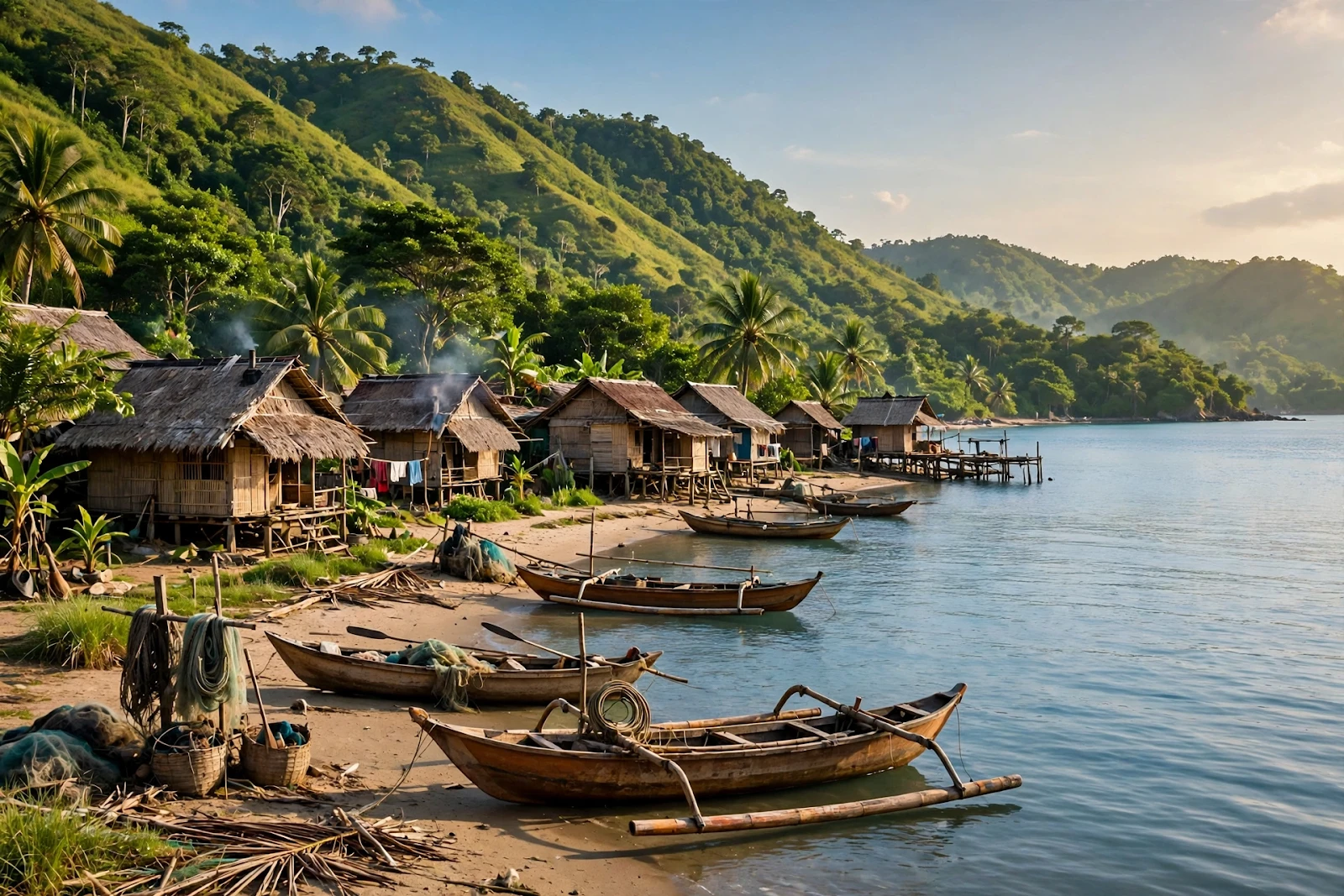
A coastal village in the Babar Islands, where daily life moves at the pace of the sea.
Nature in the Barat Daya Islands
The natural landscape of the Babar Islands is varied and quietly dramatic. Green hills rise behind coastal villages, dry grasslands and gardens stretch inland, and the coastline shifts between sandy bays, rocky headlands, and mangrove-fringed shores. Birdlife, butterflies, and marine life reward patient observers, especially in the early morning and late afternoon when the light is soft and the heat eases.
Walking is one of the best ways to appreciate this landscape. Short walks between villages, along beaches, and up to viewpoints can be arranged with local guides, who know the paths, the weather, and the places to avoid. Bring sun protection, plenty of water, and sturdy footwear, and never set out on a long walk without telling someone where you are going. In remote areas, mobile signal can be unreliable, so a guide is not just helpful but important for safety.
Conservation matters here precisely because the islands are still relatively untouched. Avoid taking shells, coral, or wildlife as souvenirs, do not disturb nesting areas or reefs, and carry out everything you carry in. Travellers who leave no trace help keep Babar's beaches and seas as beautiful for the next visitor, and for the communities who live here, as they were on arrival.
How to Get There
Getting to the Babar Islands takes time and planning, and that journey is part of the adventure. Most travellers reach Maluku first through Ambon, the provincial capital, which has air links from other Indonesian cities. From Ambon, onward travel to the Barat Daya Islands typically involves a combination of flights, ferries, or smaller boats, depending on the season, availability, and current services.
Because routes to remote islands in Maluku can change, it is essential to check locally and close to your travel dates rather than relying on old timetables found online. Schedules vary, services can be delayed by weather, and some connections run only on certain days. Allow generous buffer days at both ends of your trip, keep your plans flexible, and confirm each leg as you go rather than assuming a connection will wait for you.
Within the Babar Islands, travel is mainly by boat and, on larger islands, by motorbike or small vehicle. Boat trips should only be made in suitable weather and with experienced local operators, and life jackets should be worn when provided. If the sea looks rough or local advice is to wait, wait. No schedule is worth risking a crossing in bad conditions, and an extra day in Tepa is far better than a difficult journey.
Where to Stay
Accommodation in the Babar Islands is simple and limited. Expect small guesthouses, homestays, and basic lodgings in and around Tepa, rather than hotels or resorts. Rooms are usually clean and functional, with fans rather than air conditioning, and facilities may be shared. Hot water, Wi-Fi, and card payments should not be assumed, so bring cash in Indonesian rupiah and be prepared for a simpler standard of comfort.
Booking ahead can be difficult, as many small places are not listed on major booking platforms. Where possible, arrange accommodation through local contacts, community recommendations, or by asking on arrival, and confirm prices and what is included before settling in. Prices vary by season and availability, so check locally and agree on costs in advance to avoid misunderstandings.
Homestays, where available, are an excellent choice for travellers who want to understand island life. Staying with a family offers home-cooked food, local knowledge, and a level of welcome that no hotel can match. In return, be a considerate guest: respect household routines, keep your space tidy, and communicate clearly about meals, departure times, and any needs you have.
Practical Tips and Best Time to Visit
The best time to visit the Babar Islands is generally during the drier months, when seas are calmer and travel between islands is easier, but exact conditions vary from year to year and from island to island. Even in the drier season, rain and rough seas can occur, so check local forecasts and advice before boat trips, and build flexibility into your itinerary. Travellers who visit in wetter or windier periods should expect more delays and plan accordingly.
Packing for Babar is about practicality. Bring sun protection, insect repellent, a reusable water bottle, a basic first-aid kit, any medicines you need, and a dry bag for boat trips and beach days. Cash is essential, as ATMs may be limited or unavailable, and card payments are rare. A power bank, a torch, and offline maps or notes are useful, since electricity and signal can be intermittent.
Health and safety basics apply as they do anywhere in remote Indonesia. Drink safe water, eat freshly cooked food, protect yourself from the sun and mosquitoes, and take care on boats and unfamiliar roads. Travel insurance that covers remote travel and medical evacuation is strongly recommended, and you should know where the nearest health facility is in Tepa. Respect local customs, dress modestly in villages and places of worship, and remember that you are a guest in communities that value courtesy and calm behaviour.
A wild, remote shoreline in the Babar Islands, far from the usual tourist routes.
Suggested Itinerary: Planning a Babar Islands Trip
A trip of five to seven days gives a good introduction to the Babar Islands without rushing. Start with a day or two in Tepa to settle in, explore the town and nearby beaches, and arrange boats and guides. Use this time to learn about sea conditions, confirm onward plans, and enjoy the slower pace of the main town before heading further out.
Next, spend a couple of days visiting nearby villages and beaches by boat or road, depending on what local guides recommend. Mix beach time with village visits and short walks, and leave at least one day completely unplanned. That free day is often when the best things happen: an invitation to a meal, a calm morning perfect for snorkelling, or a sunset walk that was not on any itinerary.
If time and conditions allow, add a longer boat excursion to a more remote shore or neighbouring island, always with a local operator and with weather in mind. End your trip back in Tepa with a buffer day before your onward journey, so a delayed boat does not mean a missed flight. For travellers with more time, Babar can also be combined with other Maluku destinations, but each addition needs its own buffer days, because remote island travel rarely runs to a tight schedule.
Sponsored: see today's best travel deals and offers
Frequently Asked Questions
Where are the Babar Islands?
The Babar Islands are in Maluku province, Indonesia, in the Barat Daya island chain in the far east of the country. Tepa is the main town and the usual base for visitors exploring the islands.
How do I get to the Babar Islands?
Most travellers reach Maluku through Ambon and then continue by a combination of flights, ferries, or boats, depending on current services and the season. Because schedules change, check locally close to your travel dates and allow buffer days for delays.
When is the best time to visit the Babar Islands?
The drier months are generally the best time, when seas are calmer and inter-island travel is easier. Conditions still vary year to year, so check local advice before boat trips and keep your itinerary flexible.
What should I pack for a trip to Babar?
Pack light but practically: sun protection, insect repellent, a reusable water bottle, a first-aid kit, medicines, a dry bag, a power bank, and cash in Indonesian rupiah. Snorkelling gear is worth bringing, as hire options are limited.
Is the Babar Islands trip suitable for first-time visitors to remote Indonesia?
Yes, if you are comfortable with basic facilities, flexible schedules, and simple transport. Travellers who enjoy slow travel, village visits, and quiet beaches will love Babar, while those who need resort comfort and fixed timetables may prefer a less remote destination first.
The Babar Islands will not try to impress you with attractions or entertainment. They offer something quieter and rarer: empty beaches, open sea, small villages full of warmth, and the feeling of being a long way from everywhere. Travel slowly, respect the communities you visit, leave no trace, and let the islands set the pace. If this kind of journey appeals to you, start planning with flexible dates, local contacts, and an open mind, and Babar may become one of the trips you talk about for years. Have you visited the Babar Islands, or are you planning a trip to Maluku's remote east? Share your experiences, questions, and tips in the comments below, and help other travellers discover this remarkable corner of Indonesia.




Comments
Post a Comment