Just a short ferry ride from Ambon City lie three islands that most travelers
to Indonesia have never heard of — yet they hold some of the most pristine
beaches, richest reefs, and most dramatic colonial history in all of Maluku.
Saparua, Haruku, and Nusa Laut, known collectively as the Lease Islands, are
where the story of Indonesia's spice wars was written in stone forts and
cannon fire. In 2026, they remain delightfully off the beaten track: you can
walk a 17th-century fortress in the morning, snorkel over untouched coral
gardens at noon, and eat grilled fish with rujak on a white-sand beach by
sunset.
This complete guide covers everything you need to plan an Ambon and Lease
Islands trip: how to get there, a day-by-day island-hopping plan, where to
stay, the best time to visit, costs, and practical tips for island life in
central Maluku.
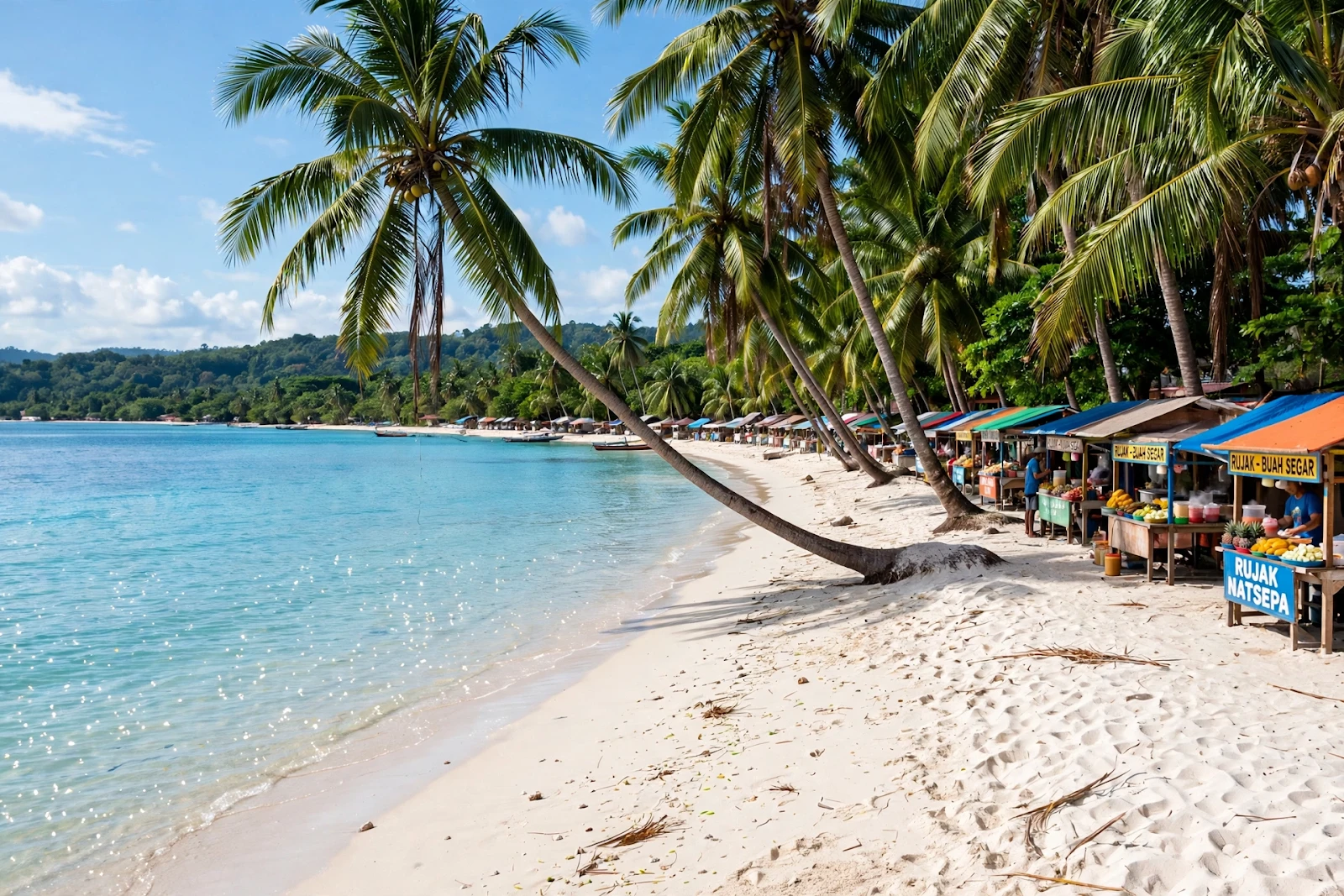
Natsepa Beach's white sand and turquoise water, Ambon's favorite beach
escape.
Getting There: Ferries and Fast Boats from Ambon
Your journey starts at Pattimura International Airport (AMQ) in Ambon, which
has direct flights from Jakarta, Makassar, and Surabaya. From the airport, it
is about 45 minutes by taxi to the ferry harbors of Ambon City.
Two harbors serve the Lease Islands. Tulehu Harbor on the northeast coast of
Ambon Island runs fast boats to Saparua and Haruku several times a day; the
crossing takes roughly 1 to 1.5 hours. For Nusa Laut, public boats are less
frequent, so most visitors charter a speedboat or join a day trip arranged
through a homestay or dive operator in Ambon. Tickets are bought at the harbor
on the day of departure — arrive early, as schedules shift with the tides and
demand.
Travel Mon tip: buy a local SIM card with data in Ambon City
before heading to the islands. Coverage on Saparua and Haruku is decent, but
Nusa Laut is patchy, so download offline maps and your return ferry
information in advance.
Things to Do: A 4-Day Island-Hopping Plan
Day 1 — Ambon Island: Natsepa Beach and Ambon City
Ease into Maluku at Natsepa Beach, the island's most famous white-sand beach,
about 20 minutes from the city. Swim in the calm turquoise water, then try the
beach's signature snack — rujak Natsepa, a sweet-and-spicy fruit salad sold
from colorful stalls lining the shore. In the afternoon, walk Ambon's
waterfront, visit the World Peace Gong and the Siwalima Museum, and sample
papeda (sago porridge) with yellow fish soup at a local warung.
Day 2 — Saparua: Fort Duurstede and Spice History
Take the morning fast boat from Tulehu to Saparua. The island's star
attraction is Fort Duurstede, a 17th-century Dutch fort in the town of Saparua
that guarded the clove trade of the Lease Islands. Wander its coral-stone
walls, peer through the cannon embrasures at the bay below, and picture the
era when nutmeg and cloves were worth more than gold.
Saparua was also the stage for one of Indonesia's most celebrated acts of
resistance: in 1817, local hero Thomas Matulessy, known as Pattimura, led a
revolt against Dutch colonial rule from this very island. Ask a local guide to
show you the Pattimura memorial sites around the town. End the day with a
sunset walk along the black-sand stretches on the island's west coast.
Day 3 — Haruku: Beaches, Hot Springs, and Village Life
Haruku sits just across a narrow strait from Ambon and is famous among Maluku
locals for its beaches. Visit Liang Beach and the secluded coves on the
island's eastern shore, where the sand is fine and the water glassy. Haruku
also hides a geothermal surprise: natural hot springs bubble up near the shore
in a few spots, perfect for a soak after a swim.
Time your visit for a village festival if you can — Haruku's Christian and
Muslim villages are known for their hospitality, and guests are often invited
to share in communal feasts. Rent a motorbike in the main village to explore
the island's quiet roads and coconut groves at your own pace.
Day 4 — Nusa Laut: Snorkeling and Diving
Save the best underwater day for last. Nusa Laut is ringed by some of the
healthiest coral reefs in Maluku — marine scientists have long considered its
reefs among the most biodiverse in the Coral Triangle. Visibility is often
excellent, and you can expect to see turtles, reef sharks, schooling
fusiliers, and gardens of hard and soft corals in shallow water.
Snorkeling and Diving in the Lease Islands
The Lease Islands are a sleeper hit for underwater lovers. Nusa Laut's house
reefs are accessible straight from the beach, making it one of the easiest
places in Indonesia to snorkel over truly world-class coral. Certified divers
can arrange trips to wall dives and current-swept points around the island's
southern tip through operators based in Ambon.
Snorkeling over pristine coral gardens off Nusa Laut island.
Saparua and Haruku also offer rewarding snorkeling — ask boatmen at the
harbors for the clearest spots, which change with the season and wind
direction. Bring your own mask and snorkel if you have them; rental gear on
the islands is basic. Reef-safe sunscreen is a must, and never stand on the
coral — much of it is still pristine precisely because so few visitors come
here.
History and Culture: The Spice Islands' Forgotten Front Line
To understand the Lease Islands, you have to understand cloves. In the 1600s
and 1700s, these small islands produced the cloves that flavored the world's
food and medicine, and the Dutch East India Company built forts like Duurstede
to control every harvest. Walking the fort today, with its weathered
coral-stone walls and rows of antique cannons, you can feel the weight of that
history — the wealth, the violence, and the resistance it provoked.
Duurstede Fort's coral-stone walls and antique cannons overlooking the bay
on Saparua Island.
Beyond the colonial story, the islands preserve a living culture of their own.
The people of Saparua, Haruku, and Nusa Laut speak distinct local dialects
alongside Indonesian, and many villages still organize life around traditional
customs. Visit a clove or nutmeg garden with a local farmer, and you will hear
how the spice trade shaped — and still shapes — daily life here. If you are
offered sopi (palm wine) or a plate of freshly grilled ikan bakar, accept
graciously: hospitality is the islands' proudest tradition.
Where to Stay
Accommodation in the Lease Islands is simple but welcoming. Ambon City has the
widest range, from budget losmen to comfortable mid-range hotels — a good base
for your first and last nights. On Saparua, several family-run homestays and
small guesthouses cluster around the main town, and some will arrange boat
trips and motorbike rentals for you.
Haruku has a handful of beachside homestays where you can fall asleep to the
sound of the waves. Nusa Laut is the most rustic: a few basic homestays and
the option to arrange a stay through dive operators. Wherever you sleep, book
ahead in the dry season and confirm whether meals are included — many
homestays serve excellent home-cooked Maluku food.
Best Time to Visit
The Lease Islands are best visited in the dry season, roughly from
October to March, when seas are calmer, visibility for
snorkeling is at its best, and ferry schedules are most reliable. The wet
season from April to September can bring rough crossings, especially to Nusa
Laut, and some fast-boat services are cancelled in bad weather.
That said, Maluku's weather is famously changeable — pack a light rain jacket
year-round and keep your island-hopping plans flexible. Mornings are usually
the calmest time for boat crossings, so plan your inter-island travel early in
the day.
Costs and Practical Tips
The Lease Islands are refreshingly affordable. Fast-boat tickets between Ambon
and Saparua or Haruku typically cost the equivalent of a few US dollars each
way. Homestays run from budget to mid-range prices, and a full day of fresh
seafood at a warung costs less than a single restaurant meal in Bali.
-
Cash is king: ATMs are scarce outside Ambon City — withdraw
enough rupiah before leaving for the islands.
-
Pack reef shoes: some beaches have coral rubble at the
waterline.
-
Respect local customs: dress modestly in villages, ask
before photographing people, and remove your shoes when entering homes.
-
Stay flexible: boat schedules depend on weather and
passenger numbers; build buffer days into your itinerary.
-
Learn a few words: a cheerful "selamat pagi" goes a long
way in these friendly islands.
Sponsored:
see today's best travel deals and offers
Frequently Asked Questions
How do I get from Ambon to the Lease Islands?
Fast boats depart from Tulehu Harbor on Ambon Island to Saparua and Haruku
several times daily, taking about 1 to 1.5 hours. Nusa Laut has fewer public
boats, so most visitors charter a speedboat or join an organized day trip from
Ambon. Buy tickets at the harbor on the day of travel and go early in the
morning for the calmest crossing.
How many days do I need for the Lease Islands?
Four to five days is ideal: one day on Ambon Island, one day for Saparua's
history, one day for Haruku's beaches, and one to two days for Nusa Laut's
snorkeling and diving. Add buffer days if you are traveling in the wet season,
when boat schedules can be disrupted.
Is it safe to travel to Ambon and the Lease Islands?
Yes. Ambon and the Lease Islands are peaceful and welcoming to visitors today.
The islands have a strong tradition of hospitality, and violent crime against
tourists is extremely rare. As anywhere, use common sense: secure your
valuables, respect local customs, and check sea conditions before boat
crossings.
What is Fort Duurstede?
Fort Duurstede is a 17th-century Dutch colonial fort on Saparua Island, built
to protect the lucrative clove trade of the Lease Islands. Its coral-stone
walls, bastions, and antique cannons are remarkably well preserved, and it
stands as one of the most atmospheric colonial sites in Maluku — closely tied
to the 1817 Pattimura revolt against Dutch rule.
Do I need a guide to visit the Lease Islands?
Not necessarily, but a local guide greatly enriches the experience —
especially for Saparua's history and finding the best snorkeling spots around
Haruku and Nusa Laut. Homestay hosts can usually arrange guides, boatmen, and
motorbike rentals. For diving, book through a certified operator based in
Ambon.
The Lease Islands prove that Indonesia's greatest treasures are not always the
ones on the postcards. Come for the forts and the reefs, stay for the warmth
of the people — and leave with a corner of Maluku that feels like it belongs
to you alone. Have you explored the Lease Islands? Share your tips in the
comments below.



Comments
Post a Comment